I want to start with something very small – and quite trivial.
There are certain tiny pleasures in life that are far more satisfying than they have any right to be.
The smell of a brand-new book when you open it for the first time.
That faint crack when you break the seal on a new jar of coffee.
Peeling the plastic off a new phone – carefully, so it comes off in one piece.
Or discovering that the mug you’ve picked up is exactly the right weight in your hand.
None of these things are important. And yet – they’re oddly satisfying.
The writer Peter Paphides writes beautifully about moments like this: small, sensory pleasures that don’t impress anyone else, don’t earn praise, don’t go on a CV – but quietly anchor us in the present. You only notice them if you’re paying attention.
And that idea – attention – turns out to matter far more than we might think.
Because a few weeks ago, I had one of those mornings where the day felt loud before it had even properly begun. Emails stacking up, messages coming in, a mental list of things that needed doing – some urgent, some important, all clamouring for attention at once. I suspect that feeling isn’t unfamiliar to many of us here.
At some point, I found myself standing in the kitchen with a cup of tea. And for once – and this is not my usual habit – I wasn’t doing anything else. No phone. No planning. No multitasking. I just stood there, holding the mug, for perhaps half a minute longer than strictly necessary.
Nothing dramatic happened. No revelation.
But I noticed something shift. My shoulders dropped. My breathing slowed. The sense of being chased by the day eased slightly. And I felt – very quietly – more like myself again.
That tiny moment stayed with me. Not because it was impressive, but because it was grounding.
And it made me reflect on something I think is increasingly important – especially for young people, but also very much for adults:
How do we stay authentic – and mentally well – in a world that is relentlessly noisy?
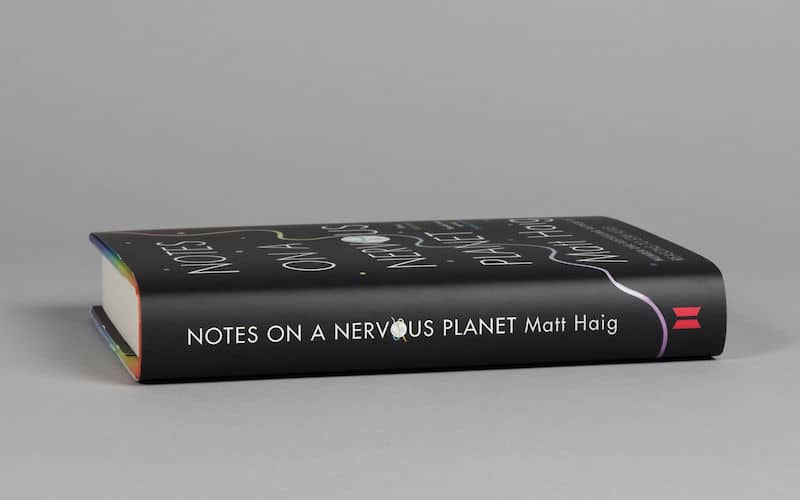
Matt Haig, in Notes on a Nervous Planet, describes modern life as one long state of overstimulation. We are constantly exposed to comparison, outrage, opinion, performance, and urgency. We’re encouraged to react instantly, measure ourselves endlessly, and treat every moment as if it should be optimised, shared, or judged.
His argument is not that technology is evil, or that ambition is wrong – but that the human nervous system was not designed for this level of input.
And when the world gets louder, we don’t become calmer or wiser. We become more anxious, more reactive, more unsure of ourselves.
Haig makes a simple but unsettling point: when everything is competing for your attention, it becomes harder to hear your own thoughts – let alone know who you are.
So here’s a question worth sitting with – and I’d invite you not to answer it too quickly: how much of what you’re currently striving for genuinely belongs to you – and how much has been absorbed from the noise around you?
That question is not new.
If you go back nearly two thousand years to the Stoic philosophers, you find people worrying about exactly the same thing. One of the most famous of them is Marcus Aurelius – an emperor, a general, and arguably one of the busiest, most pressured people imaginable.
And yet his private writing is full of reminders to himself to slow down, to notice, to resist being swept away by status, applause, and other people’s expectations. Again and again, he returns to the same idea: that peace doesn’t come from recognition or achievement, but from alignment – between what you value and how you live.
Not noise.
Not admiration.
But coherence.
What’s striking is that Marcus Aurelius didn’t withdraw from responsibility. He didn’t opt out of ambition. He stayed fully engaged with the world – but he was deeply suspicious of anything that pulled him away from his moral centre.
In other words, he understood something vital: that constant busy-ness can make you lose sight of who you are.
Centuries later, the same concern appears in different language. The Buddhist teacher Thich Nhat Hanh talks about mindfulness not as a lifestyle trend, but as a moral practice. Paying attention, he argues, is how we stop living on autopilot. When every moment is rushed, filled, or distracted, we lose touch with what we feel, what we believe, and what we actually need.

There’s a literary work that brings all of this together for me more powerfully than almost anything else – and it’s a book I love precisely because of its beauty and stillness.
It’s On the Black Hill by Bruce Chatwin.
The novel is set on a remote sheep farm on the Welsh–English border – a place shaped by weather, seasons, repetition, and long silences. It follows twin brothers who spend almost their entire lives on that same stretch of land. They don’t travel far. They don’t chase success in any conventional sense. The modern world passes them by at a distance.
What stays with me is not that their lives are small, but that they are deeply attentive.
They know the land intimately. They notice tiny shifts in weather, the behaviour of animals, the rhythms of daily work. Their identity isn’t built through visibility, comparison, or performance – but through continuity, care, and familiarity.
Chatwin isn’t romanticising this life. The brothers’ lives are not easy, and they are not free from regret or conflict. But he is asking a serious question: what happens to people when life is not constantly interrupted, measured, or performed? What happens when attention is allowed to settle?
That question matters – especially in environments like this one.
Because schools are full of momentum. Targets. Grades. Predicted grades. League tables. Offers. CVs. Comparison. Much of it is necessary. Much of it is motivating. But it is also relentless.
And in that environment, it’s very easy to confuse movement with meaning.
This is where those small pleasures – the ones we started with – matter more than they sound.
Not because they’re cosy or trivial, but because they are often signals.
The things that quietly restore you – music, walking, training, reading, cooking, sitting with a friend, moments without an audience – these are not distractions from real life. They are often clues to who you are beneath the performance. They don’t attract applause. But they do bring you back into alignment.
And this is where the Christian tradition speaks with surprising clarity.
Throughout the Bible, stillness and attention are treated as spiritual disciplines. “Be still, and know that I am God.” Jesus repeatedly withdraws from crowds, noise, and pressure – not because he is avoiding responsibility, but because he understands that clarity comes from attentiveness.
Christian theology talks about vocation – not simply what you do, but who you are called to be. And vocation is not discovered through noise, comparison, or performance. It is discovered through listening – to God, to others, and to yourself.
In that sense, stillness is not laziness.
Paying attention is not weakness.
And stepping back from the noise is not failure.
It is often where truth becomes audible.
Which brings me back – finally – to that cup of tea.
What mattered wasn’t the tea itself – though trust me, it was good – but the reminder that attention changes experience. Those thirty seconds didn’t remove the workload or fix the world. But they brought me back to myself. They reminded me that I am not just a collection of tasks, grades, or expectations – but a person moving through a day. It was a reminder that attention changes experience. It did something small and surprisingly useful: they brought me back to myself, and made the day feel a bit more manageable.
And that’s something I think we all need to remember – pupils and staff alike.
So perhaps the question to take away this morning is a simple one: where, in your own life, do you feel most yourself – and when was the last time you allowed yourself to really notice that?
If the answer is “I’m not sure,” that’s fine. Start small. Notice one tiny pleasure today – the crack of the coffee lid, the cold air, a good conversation, a piece of music, the smell of a new book – and let it be just that: a moment of calm in the middle of everything else.
And if all else fails: make a cup of tea. Pay attention for thirty seconds. It helps.