

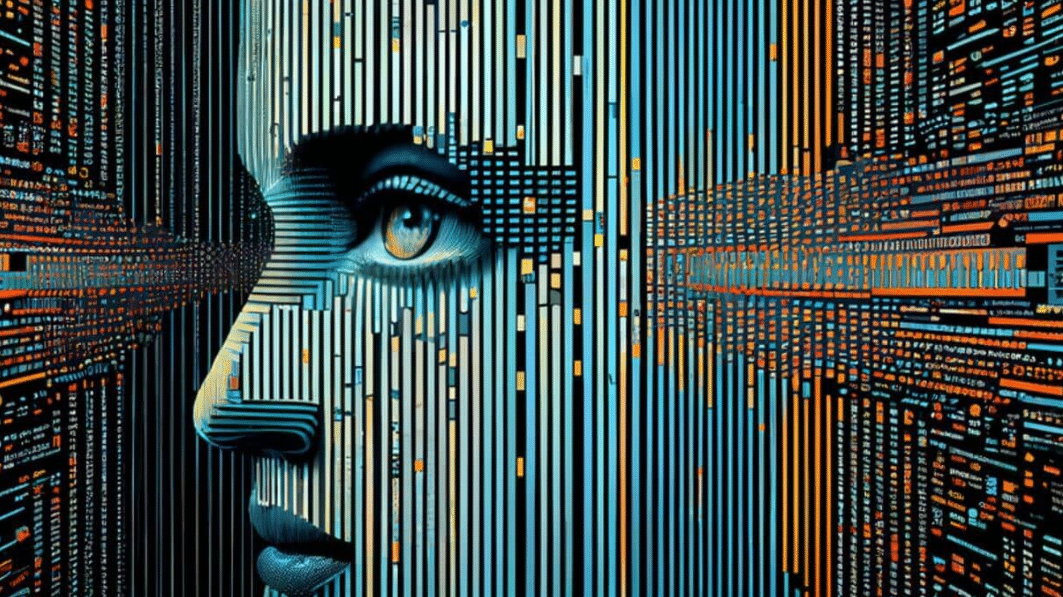
The French philosopher Jean Baudrillard (1929-2007) spent much of his professional life exploring how societies thrive on the production and consumption of images. He developed the post-modern theory of hyperreality within which the division between reality and that which is illusionary or imaginary completely disappears. Of course, social media and AI are potential engines of hyperreality for they all too often serve to blur the lines between that which is real and that which is fake. The classical philosophical explanation of knowledge as being ‘justified true belief’ seems slightly less certain in a digital world which is awash with fake news, synthetic content and AI videos.
Last week, Pope Leo released Magnifica Humanitas, his much-anticipated first encyclical as pope. His central argument is that technology should support human dignity rather than replacing or controlling it. Pope Leo argues that AI potentially reduces critical thinking skills and our capacity to reach meaningful judgements independently. He also observes that AI has the potential to undermine authentic human relationships and lead to mass unemployment. The production of autonomous weapons and novel forms of warfare also causes the Pope considerable disquiet. As if all this is not bad enough, Pope Leo argues that AI risks increasing wealth inequality and concentrating power in the hands of unscrupulous tech giants.
Interestingly, the Pope does not call for the abolition of AI but argues that it should be controlled within an ethical framework which priorities human dignity, justice and accountability. He argues that AI has the potential to be a compellingly positive force so long as its applications are carefully governed. For instance, it may enhance communication and healthcare and even help us to solve some of humanity’s most intractable problems.
The apparent suddenness with which AI has manifested itself in our lives has left us woefully unprepared to deal with its consequences. There are plenty of compelling examples of mankind being unprepared for the consequences of its own ingenuity. The Industrial Revolution was a period of rapid transformation during which economies shifted from agrarian systems to industrialized machine-driven production. Whilst few would wish to ‘undo’ the impact of industrialisation, the exploitation of factory workers and the rapid development of sprawling urban slums caused untold misery and suffering. Regulation has a habit of trailing innovation at some considerable distance.

Unregulated technological innovation often leads to unforeseen consequences. For much of the latter half of the nineteenth century, my great–great–great grandfather, Ralph Moore, was the appointed mines inspector for the eastern district of Scotland. His investigative accounts of the frequent explosions which took place underground make for disturbing reading. In 1877, he submitted a surprisingly brief and matter of fact report to the House of Commons on the catastrophic explosion which occurred at Blantyre Colliery. The disaster left ninety-two widows and two hundred and fifty fatherless children. At the time of the explosion, there were just twelve inspectors for Britain’s three thousand collieries and boys were permitted to work underground from the age of twelve. It was a largely unregulated industry.
Artificial intelligence presents humanity with plenty of opportunities so long as it is developed within an ethical framework with commonly accepted principles. It is important that we educate young people to harness AI’s power to manage processes efficiently without enabling them to outsource or substitute their intellectual and creative faculties.
I have a strong sense that the search for authentic connection and what it means to be human will become increasingly pertinent in the years ahead. The optimist in me discerns this ‘reconnection’ in the popularity of live musical performances and record attendance at sporting events. I think it is also possible to discern this desire for authenticity in a renewed interest in the natural world. There is a real surge of interest in writing specifically about nature.
Many schools are limiting or banning the use of mobile phones and extolling the virtues of living in the moment and embracing new opportunities. Increasingly, excessive screen time is perceived to be a barrier to living a full life. Commentators such as Jonathan Haidt argue that the digital revolution has caused a marked decline in our mental health. In an illusionary world where nothing is certain, it should not come as a surprise that our anxiety levels are becoming unmanageable.
Bradfield College has always prided itself on being a community that is authentically ‘grounded’. We are a school that does not trade on grandeur or entitlement. I believe parents choose us because we are a compassionate and creative community which values the primacy of human relationships.
The handshaking service is a symbolic manifestation of an enduring commitment to living lives that are connected. Being human and living a life that is of purpose is largely dependent upon our ability to be intuitive, expressive, and empathetic. Chatbots, avatars, and algorithms may have their uses, but they are no replacement for human interaction. In a world of increasing artifice, a Bradfield education is more relevant and more precious than ever before. As the academic year begins to draw to a close, I do hope you will come and join us for the joy and magic at events such as the Greek Play or Jazz on a Summer’s Evening, which are dependent upon being present in the moment. Increasingly, our responsibility is to educate young people about what it means to be human and why living in the moment really does matter. AI is an extraordinarily powerful tool but unless we are careful, we risk losing ourselves to it completely. All too often, pedagogical practice is enthralled by the potential of AI and feels obliged to bend to its will rather than harnessing its power selectively to enhance aspects of teaching and learning.


