

There was a time, not so long ago, when the ethos and values promoted by independent schools tended to be far from inclusive. Muscular Christianity was exalted as a practical ideology entirely fitting for those destined to serve in the military or govern some distant colony. Also, such robust attitudes seemed to provide an appropriately challenging context within which future politicians and clergymen could develop their skills and attributes. Above all else, emotional resilience on the rugger field (and in life) mattered. Belonging meant ‘fitting in’ rather than being celebrated on account of one’s own uniqueness. Some children thrived under such circumstances and look back on their schooldays with a sense of nostalgia. Others suffered lifelong trauma. Of course, there was an arrogant conceit in the notion that one could develop a specific ‘type’ of person without subjugating individualism.
In his autobiography, Last Man Standing, the Labour politician Jack Straw, describes in some detail the death of a fellow pupil at the grammar school that he attended in Essex. The boy concerned was gay and took his own life in an act of tragic desperation. Jack writes about the episode with sensitivity and provides a compelling insight into the social and cultural context of the times. It strikes a chord for me for it is a school that I know rather well. Of course, we have come a very long way since the 1960s, but many of us grew up in a world that was actively hostile to homosexuality and stubbornly resistant to embracing humanity in all of its glorious diversity.
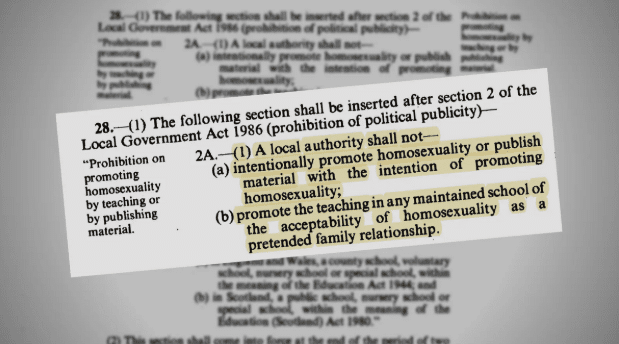
Six months before I started secondary school, Margaret Thatcher’s government passed a series of laws, collectively known as Clause 28. This prohibited the ‘promotion of homosexuality’ in schools. In effect, Clause 28 shut down all meaningful discussions about sexuality for any form of consideration could be deemed ‘promotion’. It was a socially and culturally regressive piece of legislation that was demonstrably homophobic. The legislation remained in place until the turn of the Millennium. Throughout this period, discussions regarding sexuality were overtly politicised and, at times, cynically leveraged by those seeking to appeal to different sections of the electorate. It was a battlefield upon which reactionary and progressive forces frequently tussled. Sadly, it often seemed the case that human stories at the heart of this issue seemed to get lost in an ocean of rhetoric. More recent discussions regarding gender have been considered through the same distortive prism.
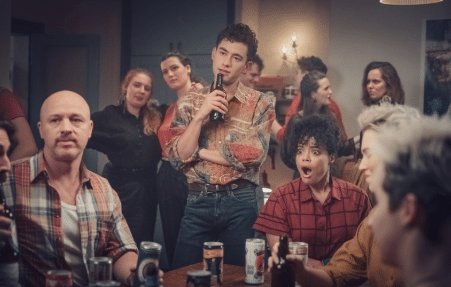
Those who have watched Channel Four’s ‘It’s a Sin’ or Netflix’s ‘Hating Peter Tatchell’ will have some idea of just how hard pressed the gay community felt during the 1980s. Beset by social intolerance, repressive legislation and the AIDS epidemic, 1980s Britain was an extraordinarily difficult time to grow up gay. An interesting but fairly depressing piece of social history is referenced in Reverend Richard Coles’ autobiography, ‘Fathomless Riches, or How I went from Pop to Pulpit’. In 1983, a young Richard took part in a documentary called ‘Framed Youth’ which explored the views of young gay people living in London. Still viewable on YouTube, it is a howl of despair against a society that was intolerant and had little interest in embracing those who did not adhere to heteronormative expectations. Those youths were marginalised in every sense and only found compassion and acceptance with each other. Bronski Beat’s ‘Smalltown Boy’ captures the experience of many young men during the 1980s in five depressing minutes of synthpop.
There was only one boy in my Sixth Form who had the courage to be openly gay. I remember being secretly impressed by his courage. I wish I had told him so. Even in the mid-nineties, it was still a difficult time to be openly gay in school. I guess that he was a trailblazer in some regards, and I do not doubt that his openness made the rest of us think more deeply about love, acceptance and equality. Others quietly ‘came out’ once they had entered the relative freedom of university. Sometimes one would hear whispered comments about someone being out at college but firmly in the closet when at home with family. Of course, some of my friends did confide in their parents, but others felt forced to continue living the most intimate part of their lives in the shadows. Familial expectations, generational differences and the prevailing tone of the media all served to create a context within which being anything other than straight was likely to be met with disapproval or outright hostility.
In my first yer at university, a friend of mine became very seriously ill and ended up receiving life-saving surgery in Addenbrookes Hospital. He suffered from a degenerative life-shortening illness and died in his early thirties. During his time at university, he was supported by his wonderful partner Tom. The intolerant public rhetoric that had been a part of my social and educational landscape during my younger years, looked remarkably ugly and mean-spirited when measured alongside the extraordinary love that my friend and his partner shared. It was a love that transcended the very significant daily challenges that my friend was sadly forced to endure. It was an utterly compelling example of a love that was strong enough to conquer everything.
Consequently, as my university years progressed, it became increasingly clear to me that we all have a role to play in creating a fairer and more equal society. Whilst a student in Dublin, I got to know, and felt privileged to count as a friend, Senator David Norris. In 1988, David took the Irish Government to the European Court of Human Rights in order to challenge the state’s ongoing criminalisation of homosexuality. He won the case and the government was found to be in breach of Article 8 of the European Convention on Human Rights. Along the way, he dealt with death threats from the IRA and condemnation from the Catholic Church.
We have come a long way since my childhood and early adult years but those of who lead schools should not rest until all young people in our care can say with absolute confidence that all forms of intolerance (whether it be sexism, homophobia or racism) have been consigned to the dustbin of history. If there is one young person at Bradfield College who believes that this is not the place for them on account of their gender or sexuality, then we should feel a collective sense of shame. As parents, we should hope for our children to grow up in a context which celebrates the unique value of every child and not just our own. All children deserve to know that they will always be loved unconditionally and that their sexuality has no bearing on the strength of the love that they will receive.
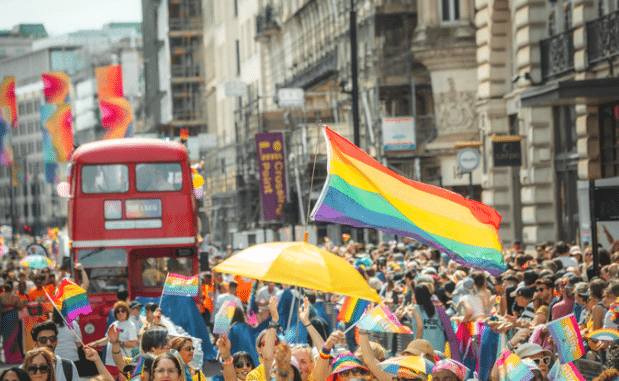
There is a ‘fun’ and visual dimension to ‘Pride Week’ which might appear tokenistic, were it not the absolute seriousness of the issues being highlighted. The struggle for equality is far from over, and there have been many tragic casualties along the way. Inevitably, there are those who believe that reflecting upon what it means to be an inclusive society is somehow ‘woke’ or overtly ‘trendy’. That is fine for it is a very small price to pay when measured against the lived reality of young people who feel marginalised and/or grow up in a state of utter despair. Those of us who are fortunate to live our lives within a context where love and acceptance seem all but guaranteed should not forget that what we take for granted is still a distant dream for some young people in the LGBT community.

