

Head, Jeremy Quartermain’s address at the Admission of Scholars Service on Thursday 8th October 2026.
One drizzly afternoon in the Lake District, I found myself mooching around the small dusty secondhand bookshop at Sizergh Castle. Much to the frustration of my family, I find it almost impossible to pass a bookshop without making at least one purchase. I hesitate to say that I am addicted to books, but my bibliophilic tendencies might be considered somewhat obsessive by those who do not share my passion for reading.
If you were to scan the bookshelves in Crossways, you would doubtless be struck by the eclectic nature of my interests. From Byzantine history to Irish fiction, from the paintings of Stanley Spencer to nineteenth century German economic history, from medieval ecclesiastical history to superbike racing, my thirst for knowledge reflects my fascination with all areas of human endeavour. I am endlessly inquisitive, and I find an undeniable thrill in learning about areas of knowledge of which, previously, I have been wholly ignorant. The only barrier to my commitment to lifelong learning is the comparative brevity of life itself. There are too many books to read in one lifetime.
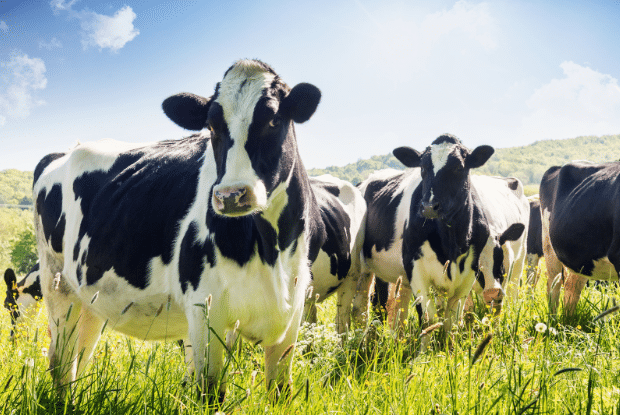
On that rainy afternoon in Sizergh Castle, my eyes alighted upon a book by Philip Walling called, ‘Till the Cows Come Home’. I love the feel of a book and this one was a handsome hardback with a colourful and luxuriously textured dust jacket depicting a herd of Holstein cows grazing in a field of delightfully lush looking grass. Leafing through the book, my attention was captured by a series of glossy photographic images depicting a glorious diversity of cow breeds including the English Longhorn, Old Gloucester and (a personal favourite of mine) the Belted Galloway.
Despite once being tossed into the air and trampled by an angry cow on my parents-in-law’s farm in the west of Ireland, I find myself naturally drawn to these majestic creatures. Over the years, I have often been roped in to feed and water the cattle on the farm. Moving cattle from one field to another is often stressful, and many times have I stood helplessly in the corner of a field as my father-in-law has bellowed and gesticulated seemingly unfathomable instructions to us. I might know how to mix feed, and I might even be able to predict the way a herd will behave when moving down a country lane but, until recently, I knew next to nothing about the evolution of specific breeds. I knew nothing about robotic milking parlours, artificial insemination or the fascinating social relationships that exist between cows. Similarly, I knew nothing about the management of cattle on the great ranches of the mid-West or the cultural importance of bullfighting in Spanish history. I had given little thought to the environmental impact of intensive farming or the accumulative effect of flatulent cows filling the atmosphere with 142 million tons of methane every year. Certainly, I would have struggled to explain to you the difference between pasteurised milk and homogenised milk, or the processes involved in producing either. I had given little consideration to the monotonous tyranny of a dairy farmer’s daily routine and the difficulty of taking time off work.
I had no idea that cows are sophisticated animals and engage in behaviour which looks remarkably like hide-and-seek. Little did I know that cows need a good night’s sleep or hold grudges against other cows. They can be intelligent, bossy, silly and boisterous. They like to have fun and indulge in a variety of activities such as babysitting and blackberry-picking. If much of this behaviour seems familiar to us humans, then it is probably because cows share 80% of the 22,000 genes with humans.
A good milking cow might produce up to 12,000 litres of milk a year. ‘Stinking Bishop’, the cheese immortalised by Wallace and Gromit in The Curse of the Were-Rabbit would not have existed were it not for the fact that Charles Martel, a West Country livestock haulier, made it his business to track down the very last surviving Gloucester cow in existence and reassemble a herd that had been sold off and fragmented. Charles Martel singlehandedly saved one of the UK’s most distinctive breeds of cow from oblivion.
Why am I telling you all this? Why am I so delighted and intrigued by animals that you may think are ubiquitous and mundane? After all, we have all driven past fields of cows without giving them a great deal of thought.
I guess the point is this. If I had not purchased a copy of Philip Walling’s book for the very reasonable sum of one pound, a whole area of knowledge would have remained beyond my grasp. I would not have watched a YouTube documentary on the psychological disposition of cows on a farm in southern Bavaria and I would not have been compelled to educate myself properly about the extraordinary versatility of English breeds of sheep. Life on a farm has taught me how to dose animals and treat ailments like foot rot and pneumonia but my practical working knowledge of how to respond to specific problems was entirely divorced from any understanding of cows or sheep in a historical, scientific or cultural context.
My journey into the wonderful world of cows has been intellectually stimulating and incredibly enjoyable. Even the most unpromising moments have the potential to be transformative. Being endlessly inquisitive and being able to discern that which is miraculous and awe-inspiring in the world around us enables us to live lives full of colour and excitement. The world is beautiful, challenging and enchanting. Scholarship of any sort is dependent upon discipline, practice and an uncompromising desire to pursue excellence. The acquisition of knowledge is often motivated by a deep sense of moral purpose but there are times when learning should be motivated by an intrinsically joyful desire to ask questions and to understand the world around us. Those who never lose the wonderment and curiosity of a small child enjoy the blessing of a life which delights, fascinates and inspires.
This is an evening of celebration and you should be proud of all that you have accomplished thus far. It is also a call to arms and an opportunity to reflect upon your responsibility to enrich the life of this community by the commitment that you demonstrate in your scholarly endeavour. The award of a scholarship is like the planting of a seed and it is now up to you to make sure that the garden grows.

