The Vega Archipelago is a group of islands in Nordland Country which lies just south of the Arctic Circle. The outer islands of the archipelago are all but deserted. The once plentiful stocks of fish have become depleted due to overfishing, and it has become increasingly difficult to make a sustainable living this far north. During summer, the sun only dips beneath the horizon for half an hour or so, and the winters are unremittingly harsh. Unsurprisingly, the young people of Vega have tended to drift towards cities such as Oslo and Trondheim in search of employment and perhaps a little excitement.
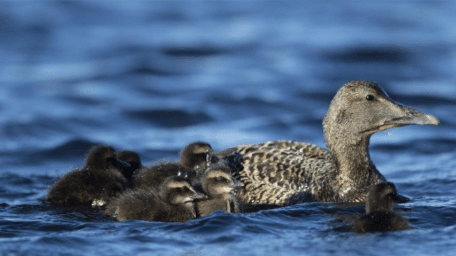
Alongside fishing and farming, this area was associated with the collection of eider feathers. These much sought after feathers are collected from the nests of ducks who return to the archipelago every year to rear their young on the region’s islands and skerries. It takes the feathers from at least sixty nests to fill just one eiderdown duvet, and a king size 13.5 tog eiderdown duvet may cost anything up to thirty thousand pounds. In any given year, only four thousand kilos of eiderdown feathers are harvested globally.
After the Second World War, the Norwegian government encouraged those living on the outer islands to move to the mainland and so abandoned houses and rotting barns are all that remain of once vibrant communities. Consequently, the traditional skills of the ‘duck women’ who harvested these eider feathers were, until relatively recently, in danger of becoming entirely lost. One should not over-romanticize the work of these women as it constitutes an exceptionally hard way of life. Nesting boxes needed to be built and maintained, and predators such as sea eagles, gulls and rats need to be kept at bay. The dirty feathers need to be collected and cleaned so that they are ready for sale. Of course, there is no guarantee that the Eider ducks will return to the same nesting grounds each year, and, in any case, the number of ducks in the area has declined sharply in recent years. Without the attentiveness and vigilance of the ‘duck women’, the archipelago can be a hostile environment for the Eider ducks.
A few years ago, despite his enormous success, the Cumbrian hill farmer and celebrated author, James Rebanks, sensed that his life was in danger of unravelling. He writes that he felt increasingly disconnected from his authentic self. In modern parlance, he was suffering from ‘burnout’. On a previous visit to Norway, James had encountered a so called ‘duck woman’ named Anna. In the midst of his despair, he wrote to Anna and asked Anna if he could come and spend a season with her so that he might experience the harvest of feathers.
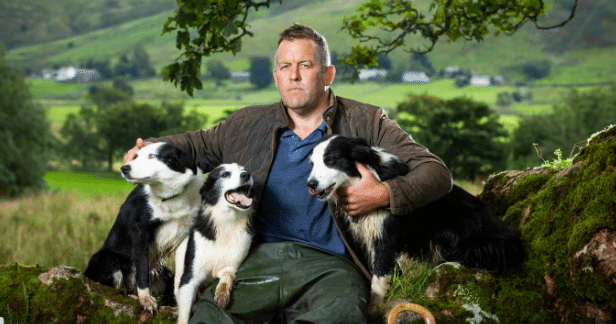
It is not clear what James was hoping to discover, but he details his transformational summer with Anna in his extraordinary book, The Place of Tides. It is a book that should provide inspiration to all those who fear that they are in danger of becoming detached from their true selves because they are constantly striving and constantly searching. There are many of us who struggle to live in the moment. James writes:
There is a point where hard work and striving flips from something noble, making the lives of the people around you better, to something too intense, making their lives worse, and for a year or two I'd been on the wrong side of that line.
James Rebanks, 'The Place of Tides'
Modern life tends to be noisy and uncertain. Our senses are constantly overloaded with anxiety inducing information and images. James contrasts the frenetic and constant motion of the modern world with what he perceives to be the grounded reality of traditional agricultural work.
Human life is full of projection, like we are constantly being filmed in the movie of our own lives. We endlessly shape and reshape our own stories to make ourselves feel relevant or seen - desperate to be the major character. But we don't end up feeling seen, we end up drowning in noise, because everyone else is as desperate to be heard as we are. The world has become a mad shouting match, making us distracted and anxious.
James Rebanks, 'The Place of Tides'
I am sure that this observation resonates with many of us. I am a great believer in the restorative power of nature and the benefits of feeling connected and in harmony with a world that is authentically beautiful and wondrously miraculous. For much of my adult life, I have sought out places that feel wild and deserted; the fjords of Eastern Iceland and the mysterious lunar landscape of The Burren in County Clare hold a particular appeal to me. So too does the nature reserve on the southern tip of Walney Island in Cumbria. It is an entirely desolate place which feels suspended between the wild beauty of the Irish Sea and the industrial bustle of Barrow. The gas terminals and hulking enormity of the BAE Systems submarine building provide an obvious contrast with the majestic views of the Lake District and the vastness of the seascape. On a clear day you can see the Isle of Man and Blackpool Leisure Beach. It is a place where it is possible to feel both entirely alone but utterly connected, and that is surely a contradiction or duality that lies at the heart of what it is to be human.
What useful messages can we take from James Rebanks’ time with the duck women of Vega?
- Sometimes you need to have the courage to make bold changes in your life if you are resolved to become your authentic self. The duck farmer Anna abandoned her steady employment as a cook in a residential care home in order to embrace the uncertainty of life on the outer islands. This might seem unremarkable but within the context of her life it was supremely brave.
- Traditional ways of life are worth preserving. We should cherish our cultural heritage recognise that ‘progress’ may run the risk of things of real value slipping from our grasp for all eternity.
- Perseverance really does count. Anna’s mission to bring ducks back to a previously abandoned island contributed to the Vega region being designated as a UNESCO world heritage site. Many Norwegians are now showing an active interest in a way of life that was often scorned for its harshness and simplicity.
- We all need to take time to be still and to live in the moment. To feel the sun upon our arms or the cold winter wind upon our cheeks is a beautiful thing. To watch birds flying in formation, or to trudge through an upland fell as sheep graze nearby is truly life affirming.
- Whilst it is good to strive to lead purposeful lives, we should not do so with an intensity that impacts negatively upon those around us. It is good to be ambitious, but we should not risk losing sight of all that is precious in the pursuit of unobtainable goals or questionable ideals.
I am aware that this is all advice that I should usefully reflect upon. Perhaps Rebank’s writing resonates with me precisely because I have a tendency to be impatient. Certainly, I struggle to be still and to live in the moment.
Of course, at Bradfield we can immerse ourselves in the tranquil beauty of the Pang Valley and, for us, the natural world is omnipresent and an endless source of inspiration. Bradfieldian writers such as Louis de Bernières and Richard Adams demonstrate a tremendous appreciation of the power of place.
Promoting a strong sense of wellbeing is dependent upon adopting an all-encompassing approach. Positive wellbeing is not something that can be ‘taught’ solely in the abstract or as a theoretical subject in the classroom. It is dependent upon the food that we put into our bodies, the exercise that we take, and our ability to live in harmony with the natural world. It is dependent upon our ability to be reflective and creative. It is dependent upon our ability to complement that part of us that is constantly striving with the ability to be still and live authentically in the moment. It is about accepting that we are all flawed and complex – a chaotic myriad of contradictory emotions. It is about demonstrating generosity and kindness to others whilst seeking nothing in return. It is about ensuring that we do not become swallowed by a world that is transactional and governed by algorithms. It is about being appreciative of what we have rather than lamenting what we have lost. It is about purposefully reconnecting with a world of infinite beauty.