

My friend’s parents drove home from Australia with an owl and a couple of wallabies in the back of their car. It was the Sixties and so travelling with such a menagerie was relatively easy, although I believe that they encountered some difficulties with some Pashtun militia whilst travelling through the Khyber Pass. My friend’s mother sadly passed away several weeks ago, having lived a long life which was very much in tune with the natural world. Her family home in rural Hampshire became a wonderful sanctuary for numerous wild animals including otters and deer.
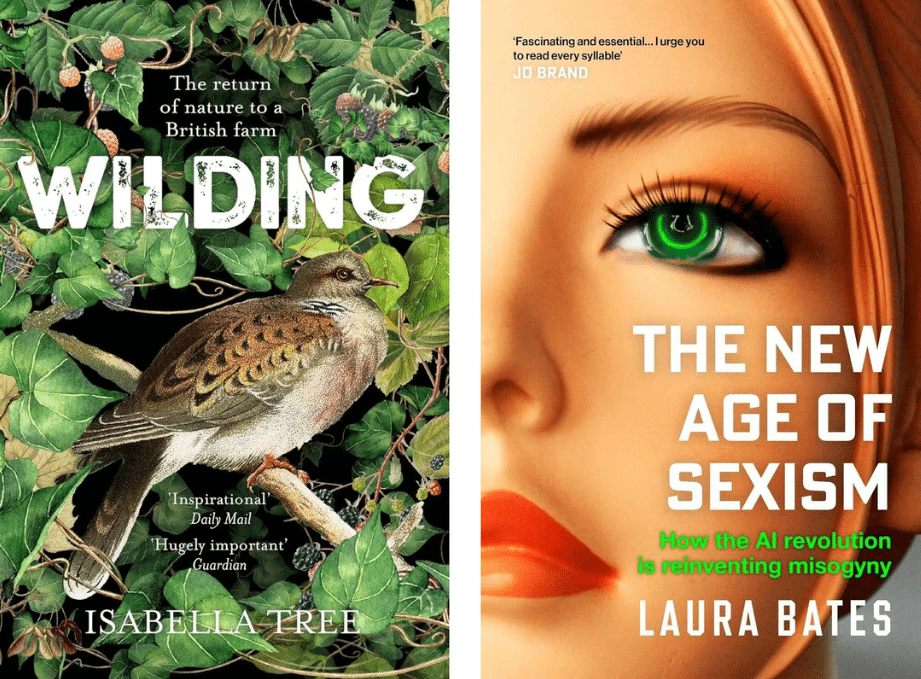
The funeral was held in a beautiful graveyard in an unspoiled valley not so far from here. During the service, I was struck by the power of the three readings which her children had chosen so perfectly well. George Orwell’s joyful ‘Thoughts on the Toad’ was followed by a wonderful seventeenth century poem about the desire to retire to a humble cottage garden in old age. However, I was particularly moved by a passage from ‘The Wilding’ by Isabella Tree.
Isabella Tree and her husband, Sir Charles (Charlie) Burrell inherited the extensive estate of Knapp Castle in West Sussex in the 1990s. They farmed the 3,500 acres of marginal arable land around the castle very intensively, but they found that the heavy clay soil was both exhausted and extremely unforgiving. Yields fluctuated but tended towards the low, and Isabella and Charlie became disillusioned with the impact that such an intensive approach to farming was having upon their land.
They visited Oostvaardersplassen in the Netherlands and witnessed the extraordinary impact of the government sponsored re-wilding experiment which was taking place within fifty-six square kilometres of reclaimed polder. Over time, the polder’s wetlands had become a haven for red kite, little egret, great cormorant and bittern. Large grazing animals such as Konik horses, red deer, and Heck cattle were introduced to stop the emergence of dense woodland. The original plan was to create an ecosystem similar to that which would have existed in European delta regions before the dawn of human disturbance. Of course, as much as we might long to return to the past, the past really is a foreign and unknowable land. In Oostvaardersplassen, the absence of large predators such as wolves, brown bears and lynx was compounded by the fact that the entire area was fenced off and so there were no wildlife corridors to other areas. Unable to migrate, and with no predators to keep their numbers under control, a significant number of grazing animals simply starved to death. Despite its many successes, the experiment has attracted significant controversy since its inception.
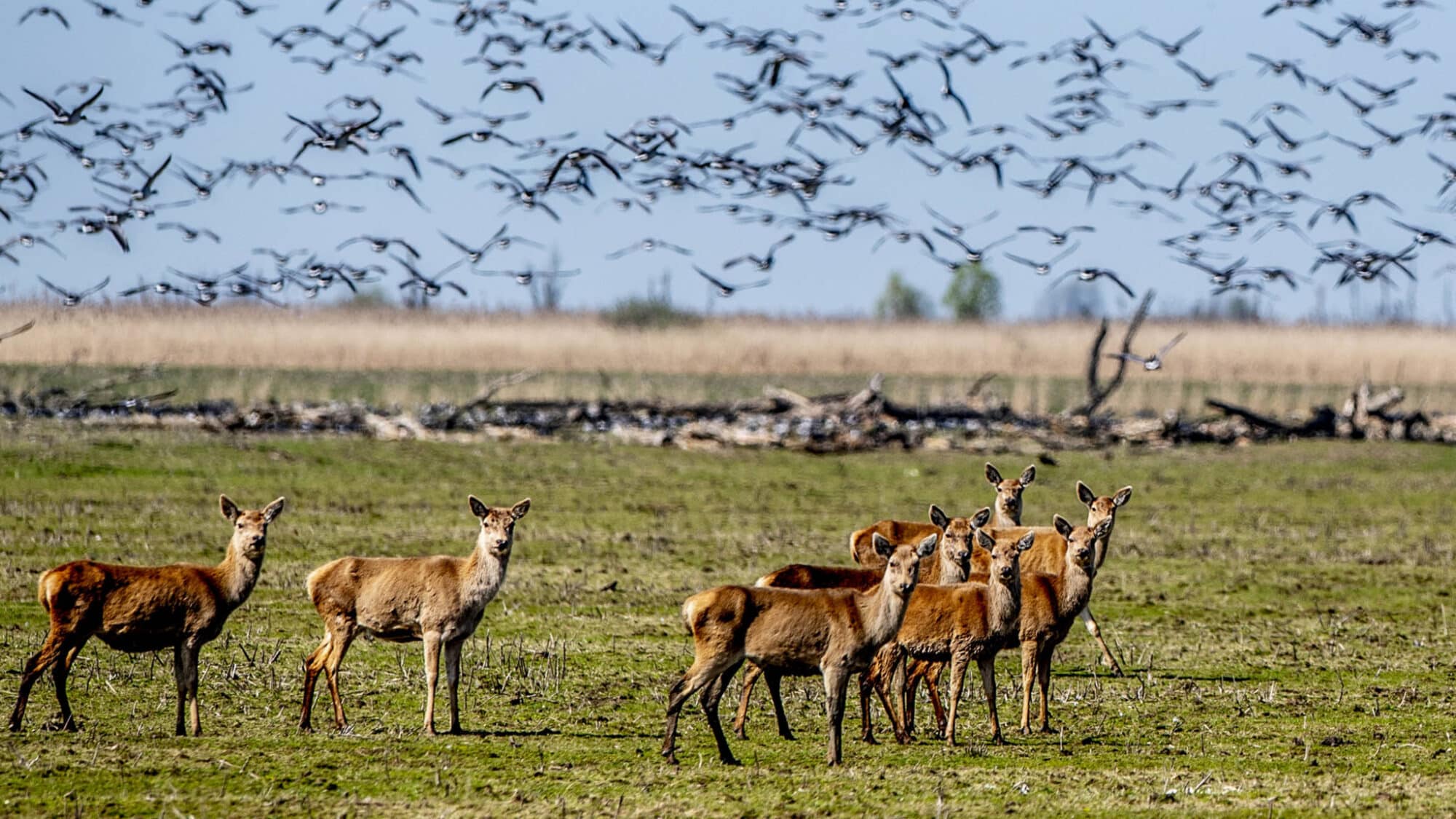
By contrast, the wilding experiment that is still in full operation at Knapp Castle has had many triumphs. Species that have become endangered, such as the migratory turtle dove, have made Knapp Castle and its environs their home. Most recently, a family of six beavers has had an astonishingly positive impact upon the hydrology and ecology of their enclosure. They have coppiced trees and they have built dams, thus transforming an entire area into a wetland teeming with life. Isabella and Charlie’s journey has not been without its difficulties and setbacks, but the ambitious wilding experiment at Knapp Castle provides a startlingly compelling vision of a future replete with possibility. Isabella writes that:
“Children who spent time in green spaces between the ages of seven and twelve tend to think of nature as magical. As adults they are the people most likely to be indignant about lack of nature protection, while those who have had no such experience tend to regard nature as hostile or irrelevant and are indifferent to its loss. By expurgating nature from children's lives, we are depriving the environment of its champions for the future.”
Isabella Tree, 'Wilding'
Richard Adams, Louis de Bernières and Robert Winder have all written beautifully about the natural world, and I do not think that it is coincidental that all three are Bradfieldians. I believe that the importance that we place upon environmental education and sustainability is a response, in part, to living within this beautiful valley of ours. Bradfieldians tend to have an especially keen appreciation of the natural world, and the intangible impact that nature has had upon generations of Bradfieldians is not easily understood by those who have not lived here. Of course, our children’s wellbeing is supported enormously by living in such a beautiful and relatively unspoiled place.
I picked up a copy of Laura Bates’ new book, ‘The New Age of Sexism’ in Stanstead Airport last week. It was a potentially gloomy choice for a wet weekend in rural Ireland. However, Laura’s previous works on incels and everyday sexism are essential reading for educators and parents alike. This new book explores the world of deep-fake pornography, the metaverse, chatbots, and online sexual abuse. She argues that artificial intelligence is leading to the systematic codification of well-established forms of misogynistic behaviour. There is no doubt that the intersection of technology and gender inequality is creating a dangerous virtual world that is especially destructive for adolescents. Laura paints a bleak picture of seedy transactional encounters in a virtual dystopian world where everything is possible, but nothing is real.
It is a wild west scenario and there is surprisingly little legal redress for individuals experiencing online abuse. If legislation has failed to keep pace with technological advances, then it is not surprising that schools have also struggled to cope with the all too devastating consequences of online abuse. Laura observes that digital teenagers are being parented by analogue parents and that compounds the problem. Consequently, children have all too often been left to roam freely through the dark corners of the internet; a space which is intrinsically unsafe.
Governments are belatedly waking up to the risks that children face online. In 2024, Australia banned social media for children under sixteen. It is reassuring to note that the first draft of ‘Keeping Children Safe in Education 2026’ is much more alive to the risks posed by abusive online behaviour. Similarly, the UK government’s guidance around mobile phone use in schools is to be welcomed.
We have a responsibility to protect our children whilst ensuring that they are well-prepared for life within a digital age. Artificial intelligence will impact all our lives and so we must not bury our heads in the sand. Here at Bradfield, we review our policies very regularly and take our responsibility to educate our children to use technology safely very seriously. Educating young children to use digital technology with a degree of critical discernment is essential.
It might appear that there are few links to be made between Isabella Tree and Laura Bates. However, reading both their works over the recent break made me reflect deeply upon the sort of world that we want our children to inherit. As educators, our responsibility is to encourage our children to lead authentic lives predicated upon meaningful relationships. Living vicariously through the auspices of an online avatar will always be a woefully poor substitute for the real thing. Similarly, if there has ever been a time for humanity to strive to live in greater harmony with the natural world, then it must surely be now. Both works made me reflect upon the fact that we need to embrace the challenges of the present to prepare our children for the future.

