A LEVEL LINEAR PROGRAMME AND EXTENDED PROJECT QUALIFICATION (EPQ)

Those opting for the A Level route will chose three subjects (Further Mathematics counts as a fourth) as well as the Extended Project Qualification (EPQ).

Learn more about the Extended Project Qualification (EPQ)

EXTENDED PROJECT QUALIFICATION (EPQ)

The EPQ is a personal research project that is largely self-directed and self-motivated. The project may take the form of:

  • a research-based written report
  • a production (e.g. charity event, fashion show or sports event)
  • an artefact (e.g. piece of art, a computer game or realised design).

The EPQ is awarded UCAS points and therefore provides huge support to a university application. You can find out more about the EPQ on the AQA website.

The EPQ represents an important opportunity to undertake genuine academic research as a pupil would do at university and enables the development of transferable skills such as time management, independence, public speaking, as well as vital interpersonal skills (e.g. through conducting interviews).

EPQ titles have been impressively diverse in recent years and have included: Managing an investment portfolio during difficult market conditions; The effect of Crossrail on the London property market; Designing a ‘green’ home in Hong Kong; Investigating slapstick comedy through directing OZ by Don Zolidis and To what extent is the Black Panther Party a terrorist organisation?

A Level Subject Choices

Art


Why Study Art?

The Art course begins with observation of the real world: recording, analysis, and creation of a visual response to the surroundings. Art makes pupils look at things anew – even mundane ordinary aspects of the world. The ‘feel good’ reasons that are usually given for selecting Art as a subject are given because they are right. Art does fill the soul.

There is something about making marks with a pencil, applying paint across a piece of paper or sculpting form with your hands. Communicating with colour and shape and form awakens the imagination; it opens a door to ‘now’. If you love making Art, you’ll miss it when it’s gone. And if you do choose to study Art, chances are, it will be your favourite lessons of the day. Just ask a current Art student.


Course Content

All A Level students in the Sixth Form will learn how to do things in more detail than at GCSE level. Students will work on more ambitious natured projects and will decide on their own way of working and topics studied. Students may choose to work in traditional methods or with more experimental materials such as installation or moving image.

Although the department will supply all the materials and media required at a small termly cost, sketch-books, colour printing and extra materials will be recharged, but at a significantly lower cost than if bought elsewhere. Trips to galleries and other destinations will also be recharged as additional costs.

If you want to find out more about studying Art in the Sixth Form why not pop into the department and speak to a teacher, who will be more than happy to give you a course overview. Alternatively, you can find out more about the curriculum here:

A Level ART AND DESIGN SPECIFICATION


Beyond the Classroom

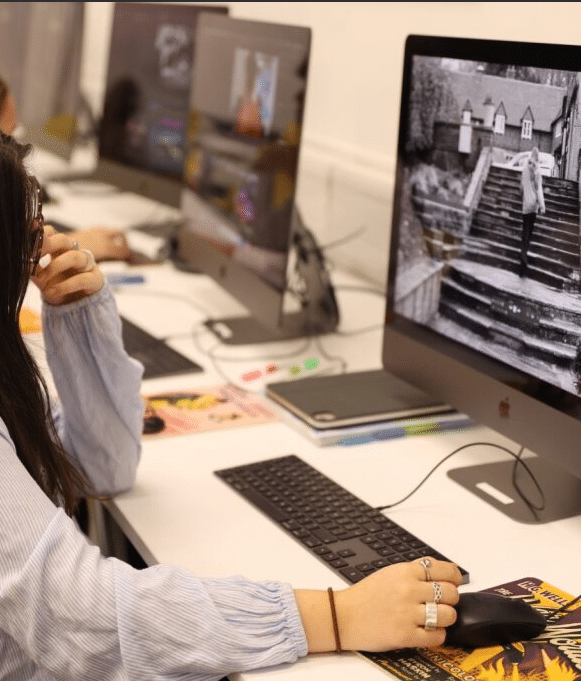
Outside of the classroom, most students will choose to complete their work in our excellent Art Schools facilities where teachers are always on hand on days of their choice. They will learn of its great benefits and atmosphere.

All will be able to see Art first hand on trips to exhibitions locally, nationally and internationally. Every Sixth Form student who opts for the trip will be able to go to New York to see the very best in contemporary work.


Careers

While Art continues to be a desirable and obvious option for students wishing to pursue ‘traditional’ creative careers, such as Fine Art related courses, Architecture or Design, the internet has seen an explosion of new roles emerge, including:

  • Web Designers
  • App Designers
  • Software Designers
  • Graphic Designers
  • Digital Illustrators
  • Multimedia Artists
  • Video Producers
  • Online Publishers
  • Animation Artists
  • Game Designers

Art is also a subject that enhances fine motor skills, hand-eye coordination, problem solving skills, lateral thinking, complex analysis and critical thinking skills. No matter what career you choose, those who can arrange, present and display material in a way that is aesthetically pleasing have an advantage.


Student Views

The Art Department at Bradfield is incredible, the teachers are not only supportive but also genuinely passionate and full of creative energy. They really help you push your ideas and develop your own artistic voice. I love Art because it’s such a powerful outlet for self-expression and being surrounded by such a vibrant, encouraging environment makes it even more rewarding.

Bella (K)


Art seems like a break in the day. It allows you to express yourself and study topics of your own choice in materials you most enjoy. It seems like a subject that is as much pupil-led as possible.

Biology


Why Study Biology?

Biology is a rapidly developing Science, as is evident from the daily reporting of Biology related stories in the media. The advancement in our understanding of the subject is having great impact on our lives. For example, at the cellular and molecular end, developments in neuroscience and modern genetics will have an impact on our laws and ethics. Meanwhile, our understanding of ecology and the economic impact of the rapid decline in global biodiversity is crucial for the sustainability of our own species. Biology provides you with a perspective on the world unlike any other.

Biology is one of the most popular subjects for Sixth Form Bradfieldians. The course covers a wide range of biological topic areas that are the norm for most post-16 programmes of study in this subject. Various teaching and learning styles are used in the department including videos, self-study, presentation and computer research.

The course is very hands-on and includes a large proportion of practical investigative work. ICT is part of the non-assessed practical work and includes data logging, graph plotting, spread sheets, using databases and computer simulations.


Course Content

  • Cellular and Molecular Biology
  • Physiology
  • Human Health and Disease
  • Genetics
  • Ecology
  • Evolution

Field work is an important experience for Sixth Form Biologists and there will be opportunities to take part in off-site visits. The ecology and statistical analysis sections will partly be covered when visiting field studies centres locally or further afield.

If you want to find out more about studying Biology in the Sixth Form why not pop into the department and speak to Miss Rhodes, who will be more than happy to give you a course overview. Alternatively, you can find out more about the curriculum here:

A LEVEL Biology Specification


Beyond the Biology Classroom

We believe strongly in offering students the opportunities to explore the aspects of Biology that inspire and motivate them; this not only fuels their enthusiasm for the subject but also helps them go above and beyond syllabus requirements, which is something that universities are very keen on.

These opportunities include:

  • BioSoc
  • The Anatomy and Dissection Society
  • MedSoc
  • Biology Olympiad
  • Biology in Action Lectures
  • Gresham College Lectures


Careers

Studying Biology can lead to a range of careers both linked directly to the subject but also building on the transferable skills acquired through such a discipline.

Such careers include:

  • Medical careers
  • Pharmacy
  • Physiotherapy
  • Biomedical Engineering
  • Research Science
  • Microbiology
  • Marine Biology
  • Conservation and Ecology
  • Environmental Management
  • Food Science
  • Agricultural Engineering
  • Zoology
Business


Why Study Business?

Business provides students with an in-depth knowledge of how small businesses are set up and run by entrepreneurs. The course also looks at larger organisations, such as Tesco, Walmart, JLR and Gym Shark and provides an understanding of the challenges MNC’s face when expanding into global markets. Students study key economic indicators, such as inflation and economic growth, and how the external environment can impact business performance. The subject is very dynamic and company examples are used throughout the teaching, giving the course a practical feel.


Course Content

The Business course is broken down into four themed areas:

  • Marketing and People
  • Finance and Operations
  • Business Strategy
  • International Business

Paper 3 incorporates a Research Theme provided by the exam board in December. Past sectors include the markets for: travel, gyms, chocolate and Sports events.

If you want to find out more about studying Business in the Sixth Form why not pop into the department and speak to Mr Rippon, who will be more than happy to give you a course overview. Alternatively, you can find out more about the curriculum here:

A Level Business SPECIFICATION


Beyond the Classroom

Coming at the end of January 2026, our visiting speaker is Sean Peche, Founder and Fund Manager at Ranmore Equity. He will speak to the students about investing, compounding, and the need to start investing in early life. We are very excited to invite Sean back to the college after his children left in 2022.


Careers

  • A Business-type degree is the most popular degree course chosen by Bradfield students.
  • Business degrees will contain some of the A Level material providing students with an excellent head start to their higher education.
  • A Business degree will open up a huge number of doors post university.
  • Whatever your career choice, most will end up working for an organisation of some description.


Student Views

I find the subject very interesting as I believe it relates to real life scenarios and I can carry it with me throughout my life in so many different aspects. As well as it being interesting and engaging, I also get along very well with my teacher.

Gabe (D)


Business is an eye opening, current and interesting subject which has impacted positively on how I see the world and how it works.


As a student you can see the teacher’s passion for the subject and that makes the subject so much more interesting. Lessons are interactive and you leave each lesson wanting to research more about content that has been covered.

Chemistry


Why Study Chemistry?

Sometimes referred to as the ‘Central Science’, Chemistry helps to connect physical Sciences, like Maths and Physics, with applied Sciences, such as Biology, Medicine and Engineering. In fact, Chemistry is all around us and an understanding of the subject can help to answer many simple questions about everyday life!

Chemistry is one of the Russell Group universities’ ‘facilitating subjects — so called because choosing them in the Sixth Form allows a wide range of options for degree study.


Course Content

  • Physical Chemistry
  • Inorganic Chemistry
  • Organic Chemistry

Specific areas of study may include aspects such as atomic structure, energetics, kinetics, oxidation, alkanes and alkenes, thermodynamics, polymers and amino acids, proteins and DNA.

If you want to find out more about studying Chemistry in the Sixth Form why not pop into the department and speak to Mr Singh, who will be more than happy to give you a course overview. Alternatively, you can find out more about the curriculum here:

A LEVEL CHEMISTRY SPECIFICATION


Skills Developed:

As Chemistry is a Science subject, the process of learning it helps a student to learn how to:

  • Be objective
  • Be analytical
  • Be methodical
  • Process, and in turn solve problems

You can apply these skills outside academia, and the study of Chemistry can help to understand current events.


Careers

There are a wide range of Chemistry-related degrees available, including

  • Analytical Chemistry
  • Biochemistry
  • Environmental Chemistry
  • Inorganic Chemistry
  • Organic Chemistry
  • Physical Chemistry
  • Polymer and Materials Chemistry

These degrees can in turn lead to a range of Scientific careers as varied as:

  • Medicine
  • Dentistry
  • Forensic Chemistry
  • Geochemistry
  • R&D Management
  • Pharmacy
  • Chemical Engineering
  • Petroleum Engineering
  • Perfumery

Chemistry teaches you to be numerate, logical, and analytical, so many Chemistry graduates are well-suited to careers in finance, management, engineering, and business if they want to explore routes outside of the Sciences.

Classical Civilisation


Why Study Classical Civilisation?

Classical Civilisation focuses on the civilisations of Greece and Rome and is a wide-ranging subject involving the study of literature, material culture, ancient thought and ideas, and the ancient historical context. You don’t need to know any languages, all the texts are in translation, and it doesn’t matter if you haven’t studied the Greeks and Romans since primary school; all you need is an interest in the ancient world and its cultures. From women in the ancient world to the study of religious beliefs and ancient acts of intolerance, Classical Civilisation involves interesting discussions that are directly relevant to today’s world. Men grappled with exactly the same issues that we do: life, death, gods, sex, love, family, children, education, the nature of the world, our origins and development, the past, money, health, status, other cultures, friendship, power, patriotism, politics, law, crime, justice, empire, war.

Classical Civilisation combines well with almost any subject, but strong combinations include History, English (Language or Literature), History of Art and Latin or Greek.


Course Content

Classical Civilisation provides the chance to study both Greece and Rome, and their surrounding worlds. Familiar topics are joined by innovative, exciting new ideas to form a creative approach to the study of the classical world.

For A Level, the important and ever popular literary genre of epic forms the basis of our mandatory component – ‘The World of the Hero’. The study of the physical remains of the ancient world is crucial to a comprehensive understanding of it and the components within the ‘Culture and the Arts’ component group make the classical world more tangible for pupils.

In the ‘Belief and Ideas’ component group, students have the opportunity to explore some of the ideas and ideals important not only to the ancient world but also to the modern one.

Unit 1: The World of the Hero

  • Compulsory unit
  • The Odyssey studied in the Lower Sixth, The Aeneid studied in the Upper Sixth
  • 2hour 20min exam
  • 40% of the course

Unit 2: Invention of the Barbarian

  • Option from Group 2 (Culture and the Arts)
  • Studied in the Lower Sixth
  • 1hour 45minute exam
  • 30% of the course

Unit 3: Democracy and The Athenians

  • Option from Group 2 (Ideas and Beliefs)
  • Studied in the Upper Sixth
  • 1hour 45minute exam
  • 30% of the course

If you want to find out more about studying Classical Civilisation in the Sixth Form why not pop into the department and speak to Mr Armstrong, who will be more than happy to give you a course overview. Alternatively, you can find out more about the curriculum here:

A LEVEL CLASSICAL CIVILISATION SPECIFICATION


Beyond the Classroom

Classical subjects offer a wide range of opportunities for trips and societies outside the classroom which bring the subject to life and add colour and enjoyment to the subject.

  • Classical Studies tours to: Rome, Pompeii and Herculaneum; Athens, Delphi and Olympia; Sicily.
  • Sophocles Society provides opportunities for readings of Medea, Bacchae and Hippolytus.
  • Visits to The Ashmolean Museum and The British Museum.
  • Theatre trips to watch Medea (West End) and KCL/UCL/Cambridge Greek Play.


Careers

According to the UCAS website:

A good reason to consider classical studies is to invest in yourself and your future career – classics graduates have a reputation for being intelligent, analytical, and articulate, given the nature of their studies. They are also widely employable, and well regarded by potential employers for their broad skillset, knowledge, and logic.

Many go on to enjoy varied careers, from fiction writers (J. R. R. Tolkien and Virginia Woolf) and prominent figures in the arts and entertainment industries (Chris Martin of Coldplay, actor Tom Hiddleston, and Stephen Fry), to careers in law, banking, heritage, academia, and many, many more.

Computer Science


Why Study Computer Science?

We all use computers every day. In all likelihood, you have one in your pocket right now! There are limits to what a computer can do, but these are pushed every year by students like you.

The Computer Science course focuses on the skills students need to progress to higher education or thrive in the workplace. It is not just about programming, although that is a major component. The emphasis is also on computational thinking – a kind of reasoning used by both humans and machines. Thinking computationally is an important life skill and means using abstraction and decomposition.

If you want to find out more about studying Computer Science in the Sixth Form why not pop into the department and speak to Mr Gumbs, who will be more than happy to give you a course overview. Alternatively, you can find out more about the curriculum here:

A LEVEL COMPUTER SCIENCE SPECIFICATION


Beyond the Classroom

  • School of Coding deliver workshops covering Virtual Reality and Robotics which enhances students’ problem-solving skills.
  • A trip to Bletchley Park to understand how encryption and the Turing Machine are linked.
  • Previous Minevra Lectures have included Machine Learning and VR.
  • Robotics Club using Raspberry Pis is run weekly.
  • Bebras Challenge is run once a year which introduces computational thinking to students. There are different stages depending on student performance.

Learn to code interactively for free on Codecademy, linked below. Students can build their confidence in programming prior to completing their NEA (Non-Exam Assessment)

Codecademy

There are several free online course to develop programming skills and learn programming concepts. You will need to keep up to date with technology advances via the news and have a keen interest in what is happening around the world.

Computer Science Journals provide information on all the recent breakthroughs within technology and Computer Science.

Students can revise topics and interactive activities taught in class to consolidate their learning via the links below:

Craig and Dave revision videos

Isaac Computer Science


Careers

  • Software Development
  • Games Development and Testing
  • Armed Forces
  • Project Management
  • Teaching
  • Website Development

And many more!

Design


Why Study Design?

Design is the most immediate, the most explicit way 0f defining what products become in people’s minds.

Jony ive, former cheif design officer at apple


Studying Design offers a challenging, but supportive, environment where excellence and enterprise make up the core of the curriculum. As designer’s we are problem solvers, looking to produce the next best thing to take the world by storm. Ultimately though, products need to be bought and so not only need to function well, but to look attractive too.

By the end of the course Design students will have used a wide range of equipment and machinery, gained experience of using materials such as woods, metals, plastics and modelling materials, and produced two final projects, with a portfolio alongside.

Clients depend on designers to execute a vision or develop new ideas, but the qualities they acquire not only help create the best designs, but are transferrable to other university courses or disciplines.

A great designer:

  • Has excellent communication skills, is a good listener and able to engage in meaningful conversations
  • Has a strong sense of humility and recognises that people have varying tastes
  • Is not afraid of criticism and can handle recommendations for change
  • Works well with others – often designs require the input of other designers and a great designer must be able to work well with anyone involved in the design process
  • Has an excellent sense of vision and can grasp what it is a client is asking for
  • Is able to visualise the end result and set a clear goal


Good design is making something intelligible and memorable, great design is something memorable and meaningful.

Dieter rams, industrial designer


Course Content

The word Design means different things to different people, often associated with how things look or used at a noun such as ‘that’s a good design’; but really, it’s a verb, it’s not an ‘it it’s a ’how’ a way of doing things, it’s a way of thinking and above all it’s a way of thinking creatively. You will be shown how you can develop this key skill.

60% assessed by Design project and essay

  • Design against disability (live project)
  • Problem solving design brief of choice
  • Linked 1500-word essay to your project

40% externally set task

  • Exam board set theme that is responded to in a portfolio of work and a 15-hour exam.

You will explore the use of drawing for different purposes, using a variety of methods and media on a variety of scale. We encourage you to explore relevant images, artefacts and resources relating to a range of designs, from as wide a context as possible. The final outcome will be a chance for you to really explore a wide variety of fabrication methods in our well-resourced workshop.


If you want to find out more about studying Design in the Sixth Form why not pop into the department and speak to Mr Mills, who will be more than happy to give you a course overview. Alternatively, you can find out more about the curriculum here:

A LEVEL DESIGN SPECIFICATION


Beyond the Classroom


Careers

Studying Design develops a methodical approach to solving problems that is widely appreciated by employees. Design can lead into university courses such as:

  • Engineering
  • Product Design
  • Industrial Design
  • Architecture
  • Interior Design
  • Graphic Design
  • Fashion Design
  • Jewellery Design
  • Three Dimensional Design

As a graduate in one of the above courses, you will have acquired a high-level skill set, equipping you to see from the start of a design right the way through to manufacture. Almost all degrees in Design offer a sandwich course with placement opportunities, the leading universities offer placements with large multinational companies such as Sony, Unilever and Boots.


Student Views

STUDYING DESIGN HAS HELPED ME TO EXCEL IN MY OTHER A LEVELS.


I AM NOW MORE OPEN-MINDED TO TRY THINGS AND NOT BE AFRAID OF FAILURE.


Read more reflections from our Design students:

Design pupils reflect on their education for life

Drama and Theatre Studies


Why Study Drama and Theatre Studies?

Drama and Theatre Studies is a mix of practical creativity and theoretical understanding. Students will see and analyse live theatre, make their own theatre and study important genres, practitioners and texts from the history of theatre.

Those who study Drama and Theatre Studies refine their collaborative skills, their analytical thinking, their approach to research and reflection and also develop their confidence and creative thinking. The transferable skills Drama offers makes it an ideal subject for any future career path.

It is helpful to have studied Drama at GCSE.


Course Content

Drama and Theatre Studies consists of three components that complete over two years.

Component One – Drama and Theatre

Students study two set texts and the skills to analyse of live theatre. Culminates in a three hour open book written exam and is worth 40% of the final grade.

Component Two – Creating Original Drama (Practical)

Students create an original piece of theatre in a studied style and accompany their performance with a written logbook. Worth 30% of the final grade and completed in Lower Sixth.

Component Three – Making Theatre (Practical)

Students practically explore extracts from three different plays and apply the work of an influential theatre practitioner. Students accompany their work with a reflective report. Worth 30% of the final grade and competed in Upper Sixth.

If you want to find out more about studying Drama and Theatre Studies in the Sixth Form why not pop into the department and speak to Mr Saunders, who will be more than happy to give you a course overview. Alternatively, you can find out more about the curriculum here:

A LEVEL DRAMA AND THEATRE STUDIES SPECIFICATION


Beyond the Classroom

  • Students will have the opportunity to visit the theatre to see live productions.
  • There are regular workshops with visiting professionals.
  • Students attend the annual Drama Minerva Lecture.
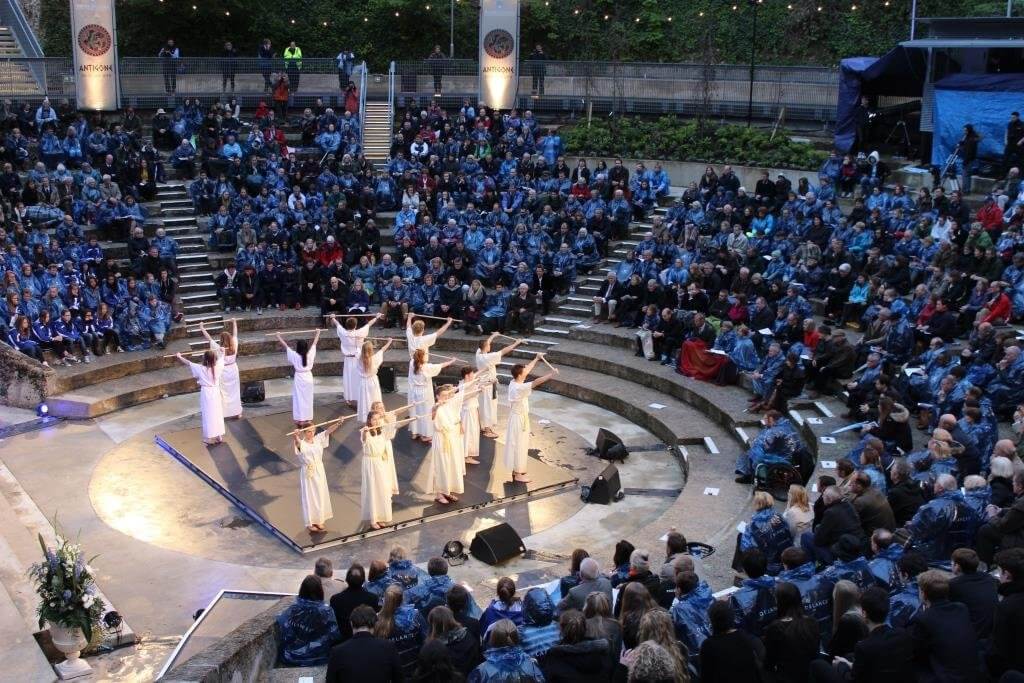
  • There are multiple co-curricular opportunities offered during the Sixth Form including the Senior Production, and the Summer Play (either a Musical, Shakespeare, or Greek play).


Careers

Students who study Drama and Theatre Studies often follow the subject into Higher Education at university as a discrete subject or part of a combined subject degree. Some continue their studies at Drama School. Drama and Theatre Studies provides students with a range of transferable skills suitable for whatever path they follow after Bradfield.


Student Views

GCSE Drama gave me a great foundation in the subject, but the A Level really developed that and it was interesting to dig deeper and study plays and practitioners in much more detail. I left the course feeling like I really understood what makes theatre such an amazing art form. Creating our own piece of theatre as a group and performing it to an audience was awesome and I really think it did more to help my confidence and self-belief that anything else I did at school.


My class is really friendly and the teachers make the course easy to understand.

Ginny (M)

Economics


Why Study Economics?

Economics is a modern, dynamic and relevant subject, which focuses on the events of the last decade. It is an interesting mixture of current affairs, the more abstract field of Economic Theory and the role of specific institutions such as the EU, the World Bank, the MPC at the Bank of England, the IMF, the WTO, OAFC, etc.

Anyone studying the subject at Bradfield is not simply taught Economics; they should expect to develop skills of investigating, understanding, analysing, interpreting and evaluating the arguments put forward by Economists and Politicians.


Course Content

  • What is the most efficient way to organise the world’s resources?
  • Why are some countries wealthier than others?
  • What does Brexit mean for the UK economy?
  • What sort of economic policies are being offered by different political parties?
  • Who wins and who loses from globalisation?
  • Are we likely to have higher living standards than our parents?

If you want to find out more about studying Economics in the Sixth Form why not pop into the department and speak to Mrs Chia, who will be more than happy to give you a course overview. Alternatively, you can find out more about the curriculum here:

A LEVEL ECONOMICS COURSE SPECIFICATION


Beyond the Classroom

  • Each term, the student-led Econ Society invites in guest speakers to delve deeper into what is going on around the world from an Economics perspective.
  • Our Lower Sixth also head into London for two days in the Summer Term, and have the opportunity to visit various leading industries and get a taste of what it’s like working in the city.
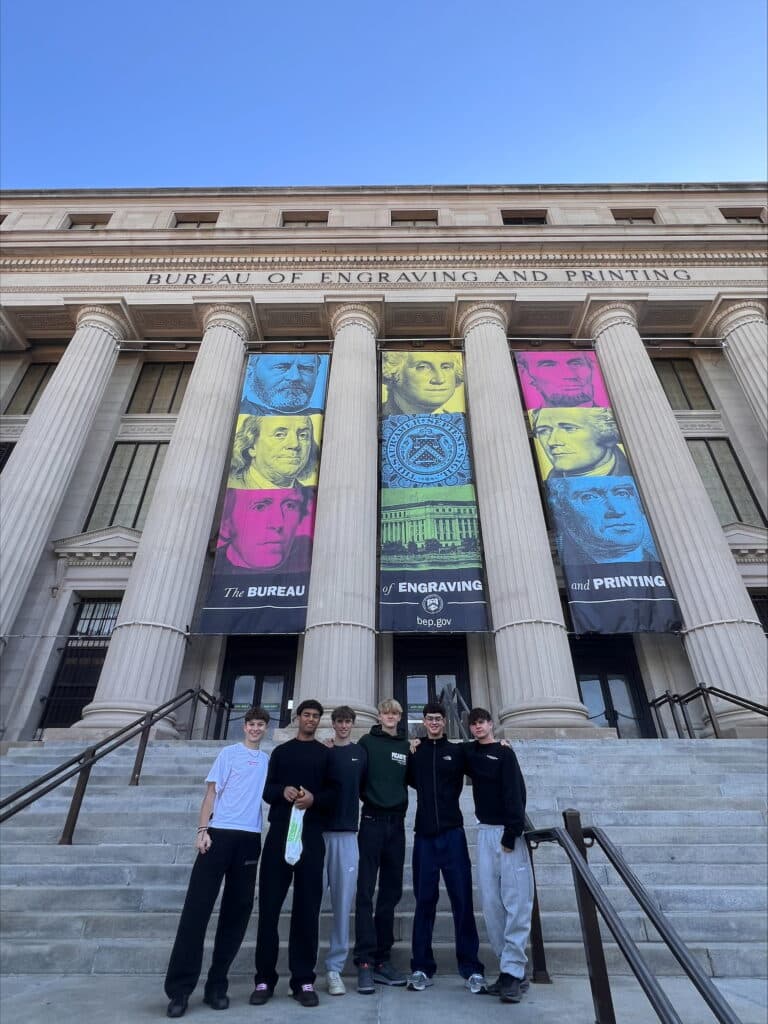
  • In the Autumn of 2025, our Economics students headed to Washington DC and New York City and visited Union Market, the Bureau of Engraving and Printing, the Statue of Liberty and the 9/11 Memorial and Museum.


Careers

You will find Economics a very useful and relevant qualification for many degree courses in:

Studying Economics is highly regarded by Universities, and it can lead to many different degree courses in:

  • Economics
  • Business Studies
  • Accountancy
  • Law
  • Management

And many more! It also opens doors to a wide range of careers.


Student Views

I find the concepts fascinating and lessons interactive which keeps me engaged and interested.

Emma (M)


Economics has given me a better idea of what’s going on in the global economy. I now have a deeper understanding of terms like inflation, interest rates and economic growth.

English Language


Why Study English Language?

English Language in the Sixth Form enables you to explore language and social contexts or language in use in the world around you. You will learn how advertising works, explore language and gender, language and power, language and technology, child language acquisition and language change.


Course Content

You will learn valuable skills which will prepare you for university and beyond:

  • Analysis
  • Evaluation
  • Creativity
  • Communication
  • Information Technology
  • Extended Projects

If you want to find out more about studying English Language in the Sixth Form why not pop into the department and speak to Ms Bebbington, who will be more than happy to give you a course overview. Alternatively, you can find out more about the curriculum here:

A LEVEL ENGLISH LANGUAGE SPECIFICATION


Beyond the Classroom

The English Language Department run a range of enrichment activities for Sixth Form students including talks by visiting lecturers, and trips.


Careers

Studying English Language or Linguistics at university is not only fascinating in itself but offers a range of excellent career prospects:

  • Advertising
  • Journalism and Media
  • Law
  • Business

And many more! Having an in-depth understanding of the relationship between language and society is invaluable in many fields.

English Literature


Why Study English Literature?

A Level English Literature is a fascinating blend of literature, history, and philosophy. If you’re interested in exploring how historical events, philosophical and moral questions are explored by writers, you’ll enjoy English Literature.

This is a subject that rewards students with inquisitive minds and encourages independent thought. There are numerous opportunities to have a strong personal engagement with the texts and issues being studied which will suit students with a creative or interesting perspective on the world.


Course Content

Students study a variety of texts (poetry, drama, and prose) from a variety of time periods and explore the contextual factors that influence writers and their audiences for both examination and coursework. Students will learn to express complicated ideas in a way which demonstrates a balanced appreciation of a variety of viewpoints having considered critical appreciation and alternative interpretations ranging through Marxist, Feminist, and Freudian theories to name but a few.

Students complete a study of a specific literary genre (the Gothic, Women in Literature, Dystopia, and American Literature have been popular study areas), coursework, worth 20%, focusses on more modern contemporary textual choices and the Drama and Poetry Pre-1900 component includes a Shakespeare text and less well-known plays and poetry collections.

If you want to find out more about studying English Literature in the Sixth Form why not pop into the department and speak to Mrs Stegeman, who will be more than happy to give you a course overview. Alternatively, you can find out more about the curriculum here:

A LEVEL ENGLISH LITERATURE SPECIFICATION


Beyond the Classroom

  • Students are invited to attend numerous academic enrichment societies and events to engage in exciting student-guided discussions of both classical and contemporary literature and issues raised by writers past and present.
  • There are also screenings and theatre trips for set texts and enriching off-curriculum plays.
  • The Department’s Minerva Lectures on wider literary ideas and thought-provoking concepts are thoroughly enjoyed by all students.


Careers

English is a versatile subject which compliments many others and adds a critical, expressive and creative approach to engagement with external material making it an incredibly adaptable course when considering careers. English fosters and develops empathy and emotional intelligence, essential to any career in any sector.

Thanks to the adaptability of the skills offered through literary study, careers can include, but are not restricted to:

  • Broadcasting
  • Publishing
  • Journalism
  • Teaching
  • Law
  • Recruitment
  • Marketing and Public Relations
  • Business Management
  • Media


Student Views

It is really enjoyable as English also includes looking at history and religion and social structures of different periods which makes it quite a broad subject and very interesting.


I really enjoyed English at GCSE…People always spoke highly of their experience at A level, particularly about how in-depth you study the texts compared to GCSE. My other subjects complimented it nicely, and I liked that it had a coursework component to it which slightly eases the pressure of exams.


[English is beneficial because it] covers a plethora of subjects including psychology, philosophy, politics, history, drama, RS and art history.

Film


Why Study Film?

In an increasingly media-saturated world, the study of Film is integral to a critical understanding of our society. Studying Film in the Sixth Form will develop your intellectual, practical and academic ability and equip you with transferrable skills that employers find attractive. The course promotes independent thought and encourages creativity, innovation and initiative. It is designed to harness and develop visual literacy through introducing you to a wide variety of films which broaden your knowledge and understanding of cinema and the range of responses films can generate. You will study British, American and World Cinema, developing your awareness of social, cultural, political and economic contexts covering historical periods from early cinema to the digital era.

Bradfield’s Film Department has been recognised by the exam board as a Centre of Excellence for Film Production. Many of our students have won national Film awards and go on to have careers in the industry.

The following short Film was produced by Ava (I) in 2025. It has been shortlisted at 7 national Film festivals and won the Best Student Short Film at Dorking Film Festival this year.

‘Lament’ by Ava


Course Content

The course is designed to introduce students to a wide variety of films in order to broaden their knowledge and understanding of Film within their social, cultural, political, historical, and technological contexts.

Areas of study include:

Varieties of film and filmmaking perspectives

  • Hollywood 1930-1990
  • American Film since 2012
  • British Film since 1995
  • Global Film
  • Documentary Film
  • Film movements – silent Film and experimental Film (1960-2000)

Film production

  • Exploring Film production roles
  • Producing short Films and screenplays
  • Evaluating and reflecting on the process of Film production

Assessments

  • Two exams, a Film production project and a Film evaluative analysis
  • 70% examination
  • 30% coursework
    The coursework module provides the opportunity for you to develop a creative idea from script to screen. Through the production of a Short Film and screenplay you will gain project management expertise, have experience with sophisticated equipment and technology, and acquire the ability to reflect and analyse your own work; all valuable skills in any profession.

If you want to know more about studying Film in the Sixth Form, why not pop into the department and speak to Ms Stables who will be more than happy to give you a course overview. Alternatively, you can find out more about the curriculum here:

A LEVEL FILM SPECIFICATION


Beyond the Classroom

Students are offered both academic and practical enrichment opportunities, which include:

  • Independent and multiplex cinema trips.
  • Study days at London’s British Film Institute (BFI).
  • Off-site location shoots.
  • Opportunities to attend bespoke masterclass workshops, talks, and Q&A sessions from industry professionals.
  • The highlight of the year is the Annual Bradfield Film Production Awards (BRAFTAs), featuring guest judges from the industry.

Braftas


Careers

Film students develop excellent reading, writing, research, and communication skills, providing the foundation for a wide range of career opportunities, as well as for careers directly connected with Film and media. These include:

  • Film and TV Production, Distribution, and Curation.
  • Media and Content Producer
  • Videographer
  • Screenwriter
  • Producer and Director
  • VFX Specialist
  • Actor
  • Digital Content Creator
  • Cinema and Business Management
  • Film Festivals and Arts Programmer
  • Advertising and Public Relations
  • Marketing, Digital and eCommerce
  • Journalism and Media
  • Publishing and Education

Students have gone on to study Film on the following University courses:

  • Film
  • Film and TV Production
  • Film and Photography
  • Film and Theatre
  • Film and English Literature
  • Film and Archeology
  • Media and Communications
  • Journalism
  • Business and Marketing
  • International Development
  • Liberal Arts
  • Photography and Media
  • Digital Media Production
  • Media Arts

Students have gone on to study Film, Media and Communications at the following Univerisites:

  • Bournemouth
  • Bristol
  • Boston (US)
  • Cardiff
  • Chapman (US)
  • Edinburgh
  • Exeter
  • Falmouth
  • Leeds
  • Madrid (Spain)
  • Manchester
  • NYU – Tisch (US)
  • Newcastle
  • Oxford
  • Queen Mary’s
  • Trinity (Ireland)
  • Westminster
  • York

Student Views

Film gives us the chance to experience life, in the most creative way possible. Not only does it depict art that satisfies the senses, it also depicts how imaginative and expressive our minds and hearts can be.


Film makes me understand myself, people and life. One good film can make my life better.

French


Why Study French?

  • Learning a World Language: More than 200 million people speak French on the five continents. French is the second most widely learned foreign language after English.
  • A Language for the Job Market: An ability to speak French and English is an advantage on the international job market, opening doors to French companies around the world. France is a key economic partner of the UK.
  • The Language of Culture: French is the international language of cooking, fashion, theatre, the visual arts, dance, and architecture. French is the language of Victor Hugo, Molière, Edith Piaf, Jean-Paul Sartre, Alain Delon and Zinedine Zidane.
  • The Other Language of International Relations: French is both a working language and an official language of the United Nations, the European Union, UNESCO, NATO, the International Olympic Committee, the International Red Cross and international courts.
  • A Language for Learning Other Languages: French is a good base for learning other languages, as well as English, since 50% of current English vocabulary is derived from French.
  • The Language of Love and Reason: First and foremost, learning French is the pleasure of learning a beautiful, rich, melodious language, often called the language of love. French is also an analytical language that structures thought and develops critical thinking, a valuable skill for discussions and negotiations.

Learning a foreign language is a liberation from insularity and provides an opening and access to other people and cultures. People who speak a foreign language are better placed to get a good job in today’s global workplace but there is, of course, also an enriching side to learning a language. Nobody ever says: “I wish I couldn’t speak a foreign language.” Along with not being able to play a musical instrument, the inability to speak a foreign language is one of the most common regrets amongst adults.

The benefits of learning another language include:

  • Access to other people and cultures – being able to speak a foreign language opens doors and builds connections locally and globally.
  • Communication skills – according to a UCAS survey, good communication skills were rated by employers as the most important proficiency an employee should have, and the one thing that is most frequently lacking.
  • Employability – University admissions tutors and employers appreciate languages as they provide students with sought-after soft skills such as teamwork, organisation, and flexibility.
  • Open mindedness – linguists appreciate the fact that other nationalities think in different ways, and there is a responsibility on all of us to accept differences and to build bridges. Learning the language is the first and most important step on this journey.
  • Breadth – learning a language brings with it many things: culture, music, travel, humour, cuisine, art, sport, cinema… there is so much to discover.
  • Real life – a modern language is not just a school subject, it is used by millions of people every day.


Course Content

You will study language content from the areas of Social issues and trends and Political and artistic culture in the context of the francophone world, as well as grammar, film and literature. The current 5 areas are:

  • Identities – health and wellbeing, beliefs and values.
  • Experiences – travel, customs and traditions.
  • Human Ingenuity – communication and media, science and technology.
  • Social Organisation – education, law and order.
  • Sharing the Planet – the environment, human rights, and equality.


Skills Developed

  • Cultural understanding, adding an international dimension to everything you do.
  • Confidence in conversation, presentations, and communication.
  • Teamwork and problem-solving.
  • Flexibility and adaptability.
  • A broader understanding of key global issues.


If you want to know more about studying French in the Sixth Form, why not pop into the department and speak to Mrs Rowntree-Beech, or any French teacher, who will be more than happy to give you a course overview. Alternatively, you can find out more about the curriculum here:

A LEVEL FRENCH SPECIFICATION


Beyond the Classroom

  • Foreign language debating event – test your debating skills against other non-native speakers of French from Sixth Forms in the UK.
  • MFL Club – get creative as you help to enthuse about languages with the lower year groups.
  • MOSAIC Night – showcase a part of your culture, such as music, art and literature or enjoy as others perform.
  • Working closely with Foreign Language Assistants – regular speaking practice with native speakers of French.
  • Memrise Competition – win prizes for learning your vocabulary.
  • Trip to London Institut Francais – an immersive French-speaking trip to London to see a French film with relevant themes to the course of study.
  • Trip to France – a chance to experience France and French culture with your peers.


Careers

Possible courses that include French at university:

  • French Studies
  • European Law and French
  • International Relations and French
  • French and International Business
  • French and Politics
  • Art History with French
  • Accounting and French

Beyond Higher Education – possible jobs as a French graduate after university:

  • Education (teaching both French and English in English speaking countries and English abroad)
  • The Diplomatic Service
  • Security Services
  • Accountancy
  • Business
  • Journalism
  • Law
  • Industry
  • Finance
Geography


Why Study Geography?

Geography provokes and answers questions about the natural and human worlds, using different scales of enquiry to view them from different perspectives. It develops knowledge of places and environments throughout the world, an understanding of maps, and a range of investigative and problem-solving skills both inside and outside the classroom.

Geography is a focus within the curriculum for understanding and resolving issues about the environment and sustainable development. It is also an important link between the natural and social sciences. There is a greater emphasis on the physical side of Geography at A Level than at IB.

As students study Geography, they encounter different societies and cultures. This helps them to realise how nations rely on each other. It can inspire them to think about their own place in the world, their values, and their rights and responsibilities to other people and the environment.


Course Content

Geographical Questions:

  • What are the implications of coastal processes on tourism and settlements in the UK?
  • How will African villages maintain a sustainable energy supply?
  • What are the impacts of student ghettos in modern cities?
  • What are the consequences of the growing demand for water in California?
  • Is the Arctic Ocean the next zone of global conflict?
  • How can Asian palm oil production be sustainable?
  • Is China recolonising Africa by stealth?
  • How easy is it to survive an earthquake?

If you want to know more about studying Geography in the Sixth Form, why not pop into the department and speak to Mr Kidson who will be more than happy to give you a course overview.

A LEVEL GEOGRAPHY SPECIFICATION


Beyond the Classroom

Field Trips to:

  • Manchester;
  • Chichester and the Witterings;
  • Oxford;
  • Christchurch Bay;
  • East London.


Careers

Studying Geography at university

Why you should study Geography

In recent years, there have been record numbers of A Level Geographers going on to study the subject, and other related subjects (such as International Development; Sustainable Business Management) at universities including Bristol, Exeter, Edinburgh, Durham, Southampton, Newcastle, Manchester, Leeds and SOAS amongst others.

German


Why Study German?

  • Knowledge of German opens doors to business, science, academia, arts, media, tourism and a rich and colourful cultural heritage, not to mention green and creative industries.
  • German and English share the same roots, with many similar words, the structure is logical and pronunciation is straightforward.
  • German is the language employers look for and German companies are global market leaders.
  • Course content is flexible, adaptable and relevant.

Learning a foreign language is a liberation from insularity and provides an opening and access to other people and cultures. People who speak a foreign language are better placed to get a good job in today’s global workplace but there is, of course, also an enriching side to learning a language. Nobody ever says: “I wish I couldn’t speak a foreign language.” Along with not being able to play a musical instrument, the inability to speak a foreign language is one of the most common regrets amongst adults.

  • Access to other people and cultures – being able to speak German opens doors and builds connections locally, internationally, globally.
  • Communication skills – according to a UCAS survey, good communication skills were rated by employers as the most important proficiency an employee should have, and the one that is most frequently lacking.
  • Employability – university admissions tutors and employers appreciate languages as they provide students with sought-after soft skills like teamwork, organisation and flexibility.
  • Open-mindedness – linguists appreciate the fact that other nationalities think in different ways, and that there is a responsibility on all of us to accept differences and to build bridges. Learning the language is the first and most important step on this journey.
  • Breadth – learning German brings with it many aspects: culture, music, travel, humour, cuisine, art, sport, cinema…. there is so much to discover.
  • Real life – German is not just an interesting school subject, it is used by millions of people every day.


Course Content

Students study technological and social change, looking at the multicultural nature of German-speaking society. They will study highlights of German-speaking artistic culture, including art and architecture, and will learn how Germany’s political landscape was formed.

Students explore the influence of the past on present-day German-speaking communities. Throughout their studies, they will learn the language in the context of German-speaking countries and the issues and influences which have shaped them. Students will study texts and film and will have the opportunity to carry out independent research on an area of their choice.

Assessment tasks will be varied and cover listening, speaking, reading and writing skills.

Students benefit from:

  • Stimulating content to enable them to develop their linguistic skills alongside their understanding of the culture and society of the countries where German is spoken.
  • Interactive lessons with a chance to see current issues from a new perspective, debate and understand cultural diversity.
  • Small groups, teamwork and support from native speakers.
  • An opportunity to go on an individual exchange.

If you want to know more about studying German in the Sixth Form, why not pop into the department and speak to Mr Broz who will be more than happy to give you a course overview. Alternatively, you can find out more about the curriculum here:

A LEVEL GERMAN SPECIFICATION

FLUENTU – Why Study German?

GEOTHE INSTITUT IN THE UK


Beyond the Classroom

We have a link with a grammar school in Munich which allows us to organise trips and exchanges on a flexible basis.

Wilhelmsgymnasium (Munich)


Careers

Apart from a straight languages degree with or without literature, there are many exciting courses at university which can be combined with German:

  • International Relations/International Business/ European Studies/International Management/Politics/Law.
  • Music/Art History/Philosophy/Film/Theatre.
  • Other languages and Liberal Arts with German and study abroad.


Student Views

German has not just proved extremely useful for my career. Above all, we just had lots of fun and German in the Sixth Form is something I would never want to miss.

Greek


Why Study Greek?

A Level Classical Greek is a demanding subject and therefore highly respected by top universities. Studying Greek at A Level allows students to deepen their appreciation of the sort of authors and cultural ideas and embed the vocabulary and grammar they have learned previously, while learning how to write critical commentary and formulate strong arguments. The variety of subject matter is also a draw, ranging from Plato’s philosophical ideas, or Thucydides’ accounts of the Peloponnesian Wars, to Greek tragedy and Homer’s epics. Greek provides an excellent companion for the full range of other subjects and is an advantage to many degree courses pupils might pursue, not only Classics and the humanities, but also Medicine and Maths.


Course Content

You will learn to:

  • Read Classical Greek texts, allowing you to access not only Great Literature and Drama, but to Greek Culture, History and Philosophy.
  • Demonstrate your command of Classical Greek through your skills in unseen translation and optional composition.
  • Communicate your observations, analysis and evaluation concisely and in excellent English in essays.
  • Become adept at identifying trends and anomalies in partial and incomplete data to build a better and more reliable “big picture”

Students take four papers at A Level. The skills tested are exactly the same as at GCSE but students extend the depth and range of their knowledge. The papers are:

Unit 1: Unseen Translation

Students are required to translate a passage of unseen narrative prose, a passage of unseen verse and scan two lines of verse.

Unit 2: Prose Comprehension or Composition

Students either translate unseen material from English into Classical Greek or demonstrate their understanding of a passage of unseen prose text through comprehension, translation and questions on syntax and accidence.

Unit 3: Prose Literature

For 2023-25, students will study a range of texts from Herodotus, Plato and Plutarch.

Unit 4: Verse Literature

For 2023-25, students will study a range of texts from Homer, Euripides and Aristophanes.

If you want to know more about studying Greek in the Sixth Form, why not pop into the department and speak to Mr Armstrong who will be more than happy to give you a course overview. Alternatively, you can find out more about the curriculum here:

A LEVEL GREEK SPECIFICATION


Beyond the Classroom

Classical subjects offer a wide range of opportunities for trips and societies outside the classroom which bring the subject to life and add colour and enjoyment to the subject.

  • Classical Studies tours to: Rome, Pompeii and Herculaneum; Athens, Delphi and Olympia; Sicily.
  • Sophocles Society provides opportunities for readings of Medea, Bacchae and Hippolytus.
  • Visits to The Ashmolean Museum and The British Museum.
  • Theatre trips to watch Medea (West End) and KCL/UCL/Cambridge Greek Play.


Careers

University Options

For students wishing to progress onto Higher Education, Classics qualifications can be extremely useful. Students not only acquire specific knowledge, but also important transferable skills such as analysing sources and developing independent, critical and evaluative approaches. They learn to formulate and support an argument and gain a valuable understanding of cultures very different to their own. Classics qualifications are naturally particularly valued by Classics departments in UK universities, but it is not just Classics departments who value these subjects. The study of A Level Classics qualifications can often lead to the university-level study of Classics, Drama, English, History, History of Art, Philosophy and Politics, however, information from UCAS shows that students who studied Classical Civilisation went on to study in such diverse disciplines as Medicine, Veterinary Science and Chemistry!

Employability

It is not only those looking to attend university who benefit from the study of Classical subjects. As Dr Peter Jones (advisor to Classics For All) states:

… we know that those who have studied the ancient languages are never, in fact, short of job-offers. A top asset-manager recently told me that his firm always employed classicists: they sold more. If Richard Dawkins is right, that is because ‘what Classics has always done is just teach people how to think.

From the proven ability to write a well-structured extended response to the acknowledgement of the views of others and a culturally sensitive approach to these, Classics puts students in an excellent position to seek employment opportunities.

Famous Classicists include:

Mark Zuckerberg, Martha Lane-Fox, Frank Lampard, Tom Hiddleston, and Chris Martin (Coldplay).

History


Why Study History?

History is a superb subject choice for the vast majority and is accessible to all. Not only is it a fantastically interesting subject, filled with numerous stories and arguments which arise from the past, but it also teaches valuable skills of research, evaluation of material and argument. Equally, an appreciation of different cultures is fostered through studying the experiences and perspectives of people who lived in different places and times. It complements an array of different subjects and is looked upon extremely favourably by both universities and potential employers.


Course Content

Paper 1: England 1445–1509: Lancastrians, Yorkists and Henry VII

  • Outbreak of the Wars of the Roses
  • Edward IV
  • Rule and defeat of Richard III
  • Henry VII and start of Tudor England

Paper 2: The French Revolution and the rule of Napoleon 1774–1815

  • The causes of the French Revolution from 1774 and the events of 1789
  • The Revolution from October 1789 to the Directory 1795
  • The rise and successes of Napoleon I
  • The decline and fall of Napoleon I

Paper 3: Civil Rights in the USA 1865–1992

  • The President and role of U.S politics
  • Role of Martin Luther King and other activists
  • Supreme Court – Brown v Board, Roe v Wade, and more

Independent Coursework

  • An extended essay of 4000 words on one of the topics covered in A Level.

If you want to know more about studying History in the Sixth Form, why not pop into the department and speak to Mr Booth who will be more than happy to give you a course overview. Alternatively, you can find out more about the curriculum here:

A LEVEL HISTORY SPECIFICATION


Beyond the Classroom

The department runs numerous opportunities to engage with history and extend your knowledge beyond the classroom. Lectures are arranged regularly, recently including Earl Spencer, Old Bradfieldian historians, and a Holocaust Survivor. The Moulsdale Committee is an opportunity for interested Sixth Form students to take a leadership role in the department, by playing a role in publishing 1850 and all that, the department magazine, arranging speakers and running the Junior History societies, for example. In addition, every year several students also choose to write their Extended Essay on a History related topic.


Careers

History is a highly regarded subject by all universities, it requires analytical and decision making skills that set you up for almost any career in the future such as business, journalism, banking, law, or accountancy, to name a few popular careers for Old Bradfieldians.

As a History graduate you will have gained skills highly valued by employers, such as analytical and critical reasoning, oral and written communication, and research skills. Well known History graduates making the headlines recently include King Charles III, US President Joe Biden, comedian Sacha Baron Cohen, US Supreme Court Justices Elena Kagan and Sonia Sotomayor, documentary-maker Louis Theroux and former Reading FC manager Steve Coppell.


Pupil views

I love A level History, simply because it fascinates me. The topics which we study are enjoyable and it makes the lessons intriguing.

Archie (F)

History of Art


Why Study History of Art?

History of Art encourages us to learn about cultures from the past through painting, sculpture and architecture and consequently explains why our society is what it is today.


History of Art is a life enhancing study of works of art throughout the history of civilization; from ancient Greece to the 21st Century. Art is a visual language that can tell us as much about our past and present cultures as any written word.


Course Content

  • Reconstruct the past and understand present cultures through works of art.
  • Consider why works of art were produced and for whom.
  • Unlock the meanings of works of art.
  • Discover how works of art have been created.
  • See how art explains why our society is what it is today.
  • Discover powerful themes such as love, sex, death, war, poverty, slavery, freedom and morality to name but a few.

In the Lower Sixth, students develop skills in visual analysis of paintings, sculptures and artworks and explore the themes of ‘War and Conflict’ and ‘Identities’ through art. In the Upper Sixth the curriculum allows students to develop in-depth understanding of two historical periods: the Renaissance in Italy (1420-1520) and Modernism in Europe (1900-1939).

If you want to know more about studying History of Art in the Sixth Form, why not pop into the department and speak to Mrs Borthwick and Mr Goad who will be more than happy to give you a course overview. Alternatively, you can find out more about the curriculum here:

A LEVEL history of art SPECIFICATION


Beyond the Classroom

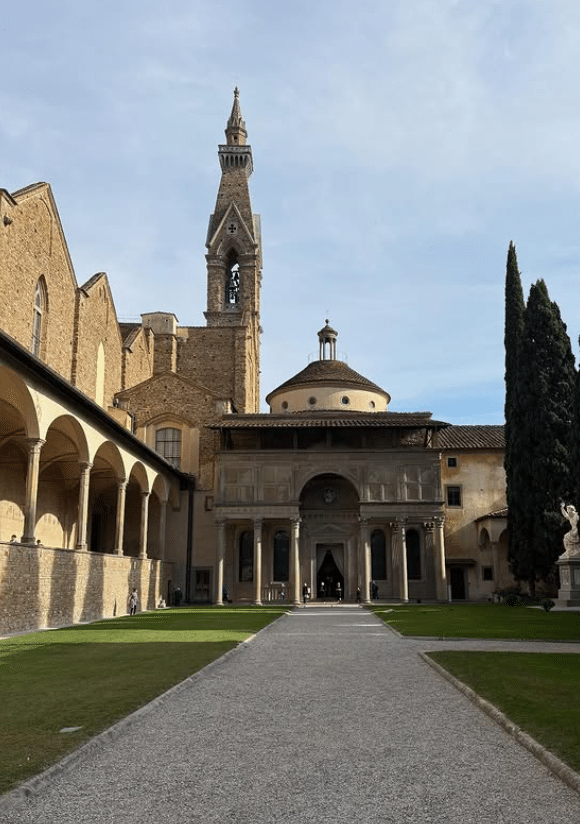
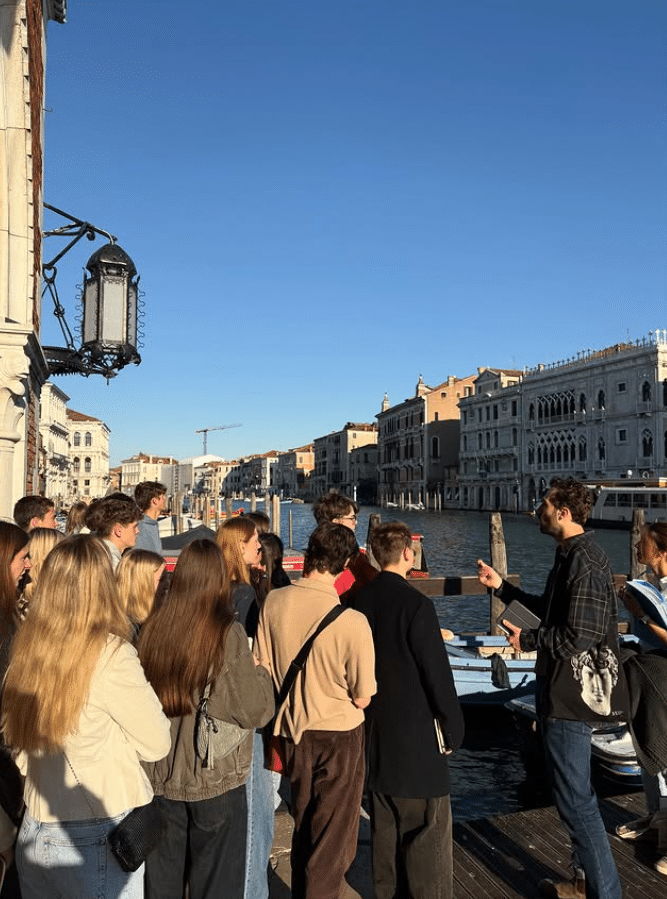
There are organised visits to galleries and museums in London throughout the academic year and opportunities to view works of art abroad. You will most certainly get the chance to travel to enhance your study. In previous years students have visited Rome, Florence, Venice, Padua, Pisa and New York.

Art Historians also develop their passion for the subject through a variety of co-curricular clubs and societies. During the Sixth Form students can:

  • Take part in the national public speaking ‘ARTiculation Prize’ competition.
  • Join our ‘Curators Club’ to organise and host an exhibition.
  • Contribute to and/or simply attend our regular evening Art History Society meetings.
  • Attend and enjoy talks by a range of visiting speakers.


Careers

  • History of Art is the fifth most popular undergraduate course for Bradfield leavers.
  • Oxford, Cambridge and most other Russell Group universities offer History of Art.
  • One important aim of Art History is to produce what may be called ‘visual literacy’, the ability to assess images of all kinds critically and perceptively.
  • Employers value the interpretive, evaluative, discursive and analytical skills that the subject helps to develop.
  • This unique combination of visual sensitivity and intellectual research is valuable in areas such as journalism, advertising, marketing, publishing and law.
  • More directly related careers include those in research, conservation, museum and gallery administration, commercial galleries and auction houses.

Pupil Views

My favourite subject is A-Level History of Art. A lot of people just assume that it is all about artworks and the history of the actual artworks but it goes deeper. The subject explores contextual history in a lot of detail, for example the Northern Rennaissance and Napoleon. It is a lot more interesting than people believe.

Jack (E)


History of Art is the only subject i have ever done where i would still turn up to the classes even if i wasn’t taking the exam.

Latin


Why Study Latin?

Universities and employers highly value this subject due to the way it develops analytical abilities, attention to detail and flexibility of approach. These skills are acquired through study of some of the greatest works of European literature and some of the most fascinating periods of history.

  • Latin is a universally respected course of study and offers highly transferable linguistic and analytical skills.
  • It involves close reading of some of the most influential literature in history.
  • It gives a greater awareness of the foundations of modern European languages and literature, drama, music and art, law and politics, shaping our identities and perceptions of our world.
  • It offers privileged access to courses at the most prestigious universities in the UK and abroad – an impressive feature on an application for any field of undergraduate study.


Course Content

Students take four papers at A Level. The skills tested are exactly the same as at GCSE but students extend the depth and range of their knowledge. The papers are: Unseen Translation, Comprehension or Composition, Prose Literature and Verse Literature.

You will learn to:

  • Read Latin texts, allowing you to access not only Great Literature, but to Roman Culture, History and Philosophy.
  • Demonstrate your command of Latin through your skills in unseen translation and optional composition.
  • Communicate your observations, analysis and evaluation concisely and in excellent English in essays.
  • Become adept at identifying trends and anomalies in partial and incomplete data to build a better and more reliable “big picture”.

Unit 1: Unseen Translation

Students are required to translate a passage of unseen narrative prose, a passage of unseen verse and scan two lines of verse.

Unit 2: Prose Comprehension or Composition

Students either translate unseen material from English into Latin or demonstrate their understanding of a passage of unseen prose text through comprehension, translation and questions on syntax and accidence.

Unit 3: Prose Literature

For 2023-25, students will study a range of texts from Cicero, Tacitus and Pliny.

Unit 4: Verse Literature

For 2023-25, students will study a range of texts from Virgil, Juvenal and Ovid.

If you want to know more about studying Latin in the Sixth Form, why not pop into the department and speak to Mr Armstrong who will be more than happy to give you a course overview. Alternatively, you can find out more about the curriculum here:

A LEVEL latin SPECIFICATION


Beyond the Classroom

Classical subjects offer a wide range of opportunities for trips and societies outside the classroom which bring the subject to life and add colour and enjoyment to the subject.

  • Classical Studies tours to: Rome, Pompeii and Herculaneum; Athens, Delphi and Olympia; Sicily.
  • Sophocles Society provides opportunities for readings of Medea, Bacchae and Hippolytus.
  • Visits to The Ashmolean Museum and The British Museum.
  • Theatre trips to watch Medea (West End) and KCL/UCL/Cambridge Greek Play.


Careers

University options

For students wishing to progress onto Higher Education, Classics qualifications can be extremely useful. Students not only acquire specific knowledge, but also important transferable skills such as analysing sources and developing independent, critical and evaluative approaches. They learn to formulate and support an argument and gain a valuable understanding of cultures very different to their own. Classics qualifications are naturally particularly valued by Classics departments in UK universities, but it is not just Classics departments who value these subjects. The study of A Level Classics qualifications can often lead to the university-level study of Classics, Drama, English, History, History of Art, Philosophy and Politics, however, information from UCAS shows that students who studied Classical Civilisation went on to study in such diverse disciplines as Medicine, Veterinary Science and Chemistry!

Employability

It is not only those looking to attend university who benefit from the study of Classical subjects. As Dr Peter Jones (advisor to Classics For All) states:

… we know that those who have studied the ancient languages are never, in fact, short of job-offers. A top asset-manager recently told me that his firm always employed classicists: they sold more. If Richard Dawkins is right, that is because ‘what Classics has always done is just teach people how to think.

From the proven ability to write a well-structured extended response to the acknowledgement of the views of others and a culturally sensitive approach to these, Classics puts students in an excellent position to seek employment opportunities.

Mathematics


Why Study Mathematics?

The traditional Mathematics course at advanced level gives students the essential tools required to study and understand abstract ideas in a wide range of contexts. This qualification includes pure maths, mechanics and statistics. Students enjoy its challenge, its clarity and the satisfaction of complex problem-solving.

Mathematics A Level was the most popular A Level subject taken nationally in 2025, remaining the top A Level subject choice due to its desirability as a qualification from both universities and employers alike.

A Level Mathematics is a facilitating subject which supports progression to the following degree courses and careers: Mathematics, Physics, Engineering, Architecture, Materials Science, Design, Computing, Business, Chemistry, Geography, Geology, Economics, Accounting, Medicine, Veterinary Medicine, Biology, Psychology, Philosophy, Sociology.

Recommended: 8 or 9 in Mathematics GCSE.


Course Content

Pure Maths – 2/3 of course

Methods and techniques which underpin the study of all other areas of mathematics: proof, algebra, trigonometry, calculus and vectors.

Statistics – 1/6 of course

Analysing and interpreting data, resulting in the ability to infer and critique associated probabilities.

Mechanics – 1/6 of course

The modelling of the world around us, the motion of objects and the forces acting on them. Particularly useful for careers in physics and engineering.

Speak to any Maths teacher to find out more about studying Mathematics in the Sixth Form. You may also want to speak to current Sixth Form students studying the subject.


The Mathematics Department run several enrichment activities for the Sixth Form including:

  • UKMT Senior Maths Challenge from which successful students will continue to compete in the Senior Kangaroo, or even the British Maths Olympiad rounds.
  • Senior Maths Club is run weekly for any keen Sixth Form mathematicians. Focus is given to preparing for the Oxford MAT exam and other university entrance tests at different points in the year.
  • Oxbridge preparation is provided in the form of extra revision periods and interview practice sessions.
  • Student-led participation in the MEI yearly Ritangle competition is encouraged and has provided great interest and challenge for our keen mathematicians.
  • The hotly contested House Maths Challenge is an annual fixture putting House teams head-to-head for a couple of hours of intensive problem-solving.


Careers

The range of careers enabled by a developed understanding of Mathematics in the Sixth Form is extremely broad. Quantitative skills are required in a wide range of occupations, not simply limited to careers in the mathematical and physical sciences but also the social sciences, humanities, and arts.

Careers in:

  • Technology (medical, cryptography, programming, games design and internet security).
  • Engineering (aerospace industries, fluid dynamics, electronics, and civil engineering).
  • Finance (accounting, actuarial professions, banking, and investment)
  • Science (modelling populations, disease, astronomy, forensics)
  • Relating to human behaviours (data science, psychology, law, economics, climate change, environmental modelling, political science).


Pupil Views

When I was choosing my A Levels I was very unsure of what I wanted to do after Bradfield. I am so glad that I chose Maths. The subject allowed me to keep my options open by letting me access a massive number of opportunities when it came to university courses. If you’re unsure of what to do but are considering anything from economics to engineering, maths is a must.


A Level Mathematics is one of the best choices you can do since it opens so many career paths for yourself. Don’t restrict yourself to certain courses and regret not having such a key fundamental A Level on your UCAS form. It is an extremely interesting and rewarding A Level, as you will get out as much as you put in.

Further Mathematics


Why Study Further Mathematics?

This subject can be chosen as a fourth A Level subject and is offered to give further depth and breadth to Sixth Form Mathematics. Students often take it because they want to study Mathematics, Physics or Engineering at degree level and would find a stronger mathematical background helpful.

Mathematically able pupils find the extra challenge of Further Mathematics deeply rewarding and stimulating. It is a natural complement to their A Level Mathematics and the additional time spent studying maths typically boosts the standard A Level grade.

Some universities will give reduced offers for certain courses if a pupil has a Grade B or above in Further Mathematics.

Recommended 9 in Mathematics GCSE.


Course Content

Core Mathematics (pure) – 50%

Covers complex numbers, matrix mathematics, hyperbolic functions, Maclaurin expansions along with further developments in series, and significant developments in calculus including differential equations.

Two additional modules – 50%

Bradfield offers two applied modules: Decision Mathematics and Further Mechanics. Decision Mathematics is covered in the first year and involves optimisation problems using discrete maths, highly relevant in today’s automated world where algorithms and networking are embedded in daily tasks.

Further Mechanics is covered in the second year and builds on A Level mechanics, looking at momentum, kinetic and potential energy and problems involving elasticity.

Speak to any Maths teacher to find out more about studying Maths in the Sixth Form. You may also want to speak to current Sixth Form pupils studying the subject.


The Mathematics Department run several enrichment activities for the Sixth Form including:

  • UKMT Senior Maths Challenge from which successful students will continue to compete in the Senior Kangaroo, or even the British Maths Olympiad rounds.
  • Senior Maths Club is run weekly for any keen Sixth Form mathematicians. Focus is given to preparing for the Oxford MAT exam and other university entrance tests at different points in the year.
  • Oxbridge preparation is provided in the form of extra revision periods and interview practice sessions.
  • Student-led participation in the MEI yearly Ritangle competition is encouraged and has provided great interest and challenge for our keen mathematicians.
  • The hotly contested House Maths Challenge is an annual fixture putting House teams head-to-head for a couple of hours of intensive problem-solving.


Careers

The range of careers enabled by a developed understanding of Mathematics in the Sixth Form is extremely broad. Quantitative skills are required in a wide range of occupations, not simply limited to careers in the mathematical and physical sciences but also the social sciences, humanities, and arts.

Careers in:

  • Technology (medical, cryptography, programming, games design and internet security).
  • Engineering (aerospace industries, fluid dynamics, electronics, and civil engineering).
  • Finance (accounting, actuarial professions, banking, and investment)
  • Science (modelling populations, disease, astronomy, forensics)
  • Relating to human behaviours (data science, psychology, law, economics, climate change, environmental modelling, political science).


Pupil Views

Further Maths A level introduces matrices, linear programming, and various other higher-level integration and differentiation techniques used in econometrics. Studying the subject has made it less intimidating to pick up books or read papers on more analytical economics and has helped prepare myself for degree level economics. Every topic is applied to real world circumstances so you can see how the theory that you are learning is applicable in the real world. You develop problem solving and logical thinking skills by understanding how different aspects of the course are required to solve longer more intricate questions which is very satisfying.

Music


Why Study Music?

Music offers you the opportunity to develop your listening, creative and analytical skills, and encourages cultural understanding. Throughout the course you will be encouraged to explore music in varied and sometimes unfamiliar contexts and you will be challenged to engage practically with music as researchers, performers and creators. Within the subject framework, the content can be tailored to your own personal strengths and interests.


Course Content

Performing (35%)

You will perform for a minimum of ten minutes. You will select the repertoire in consultation with your instrumental/singing teacher. Production as Performance is available for those whose interest lies in music technology.

Composing (25%)

You will create two pieces of music with a combined minimum length of four and a half minutes. These may be produced using traditional notation or a DAW.

Appraising (40%)

A written exam based on your set works which includes questions which required multiple choice answers, short reponses and essay questions.

Examples of the music you will study include: Mozart’s The Marriage of Figaro; the piano music of Chopin, Brahms and Greig; Stevie Wonder; Beyonce; Muse; Louis Armstrong; Miles Davis; and Charlie Parker.

If you want to know more about studying Music in the Sixth Form, why not pop into the department and speak to Mrs Hughes who will be more than happy to give you a course overview.


Beyond the Classroom

You will have the opportunity to:

  • Take leading roles in productions, concerts and gigs
  • Direct a rehearsal and recording of your own composition performed by professional musicians
  • Develop your understanding of how to compose with music technology with lessons from a music technology expert
  • Join co-curicular music ensembles: Sinfonia, Concert Band, Big Band, String Group, Jazz Band, Choir, Chamber Choir, and many more
  • Attend lectures and performances by visiting music teachers
  • Experience performance, musicianship and Alexander Technique classes
  • Develop your music theory skills and take Grades 6-8, if desired


Careers

The varied nature of the course enables students to develop highly desirable skills in areas such as self-management, creativity, analysis, performance, teamwork, problem-solving and communication, all of which makes them an attractive prospect for universities and potential employers. The CBI (Confederation of British Industry) recommends that including a creative subject in your studies will better equip you for the world of work. There are hundreds of roles that are linked to studying Music or Music Technology. Here are just a few:

  • SFX Editor
  • Foley Artist
  • Radio Production
  • Studio Engineer
  • Artist Management
  • Music Therapy
  • Psychology of Music
  • Performer
  • Composer
  • Teacher
  • Session Musician
  • Technician
  • Live Sound Engineer/Stage Crew
  • Sound Recordist
  • Sound Designer

Many Bradfield students go on to study Music at undergraduate level. Recent graduates have gained places at the Royal College of Music, Trinity College, Durham, Birmingham, and BIMM.

There’s a lot of misunderstanding and false information out there about the value of studying Music. The Russell Group, the organisation which represents the UK’s leading 24 universities, no longer places emphasis on a list of ‘facilitating subjects’ (Maths, English, Science, MFL, History and Geography). It has never been the case that facilitating subjects are the only subjects students should consider to get into a Russell Group university.


Pupil Views

Understanding how music is created has definitely created an even deeper interest in the music. Learning about The Marriage of Figarro has been the best part so far as it is incredibly interesting and different from anything else I have studied previously. There have been challenges but the online resources and textbook have really enabled me to help myself if I don’t understand something. I am able to contact my teachers easily for help and they respond quickly. I have loved learning music theory; the learning has been enjoyable and I can see the progress I am making.


The most enjoyable part of the course is the performance side as the course has allowed me to pursue my interest in music production as performance. The most interesting part of the course so far is learning to follow a score whilst listening to the music. Since starting I feel my understanding of music has developed a lot. I have been able to make lots of links between what I am studying in the classroom and my performing as a soloist. My understanding of the way music has been created has most definitely increased my appreciation and enjoyment when listening to music. My biggest challenge has been music theory; however, I have been determined to do it and committed to it which has produced good results!


MORE ON MUSIC

Photography


Why Study Photography?

Photography is an exciting and vastly expanding subject and, with millions of images being uploaded and shared online everyday, it is increasingly one of the most relevant subjects to world we live in. The huge range of genres and technique allows great scope for an enormous amount of creative expression. It is a subject that is relevant across multiple fields and applications.

Photography will help students develop analytical, critical and creative skills, as well as the becoming conversant in the industry standard software found in the Adobe suite. It will give pupils the opportunity for great creative expression and well as helping to learn to work independently.


Course Content

All students in Photography follow the AQA specification and will start by undertaking a skills project where they will build on knowledge from GCSE. Pupils then embark on a series of projects which cover new and exciting areas that they may not have covered before such as cyanotype, animation and analogue photography processes (which could include photograms and liquid light) as well as becoming familiar with flash studio lighting. Each skill is linked to a genre of photography and pupils have the opportunity to study contemporary as well as historic photographers and practices.

The A Level course consists of a personal project, where pupils decide their own area of study and a short essay related to the project. In the past, students have studied a range of diverse areas including fashion, cyanotype animation, landscape photography and installation. Students also complete an exam with a starting point set by the exam board.

Course structure

  • 60% coursework
  • 40% exam

The Photography Department has excellent facilities with a darkroom and photographic studio and its own dedicated Mac suite which students have access to outside of their required lesson time.

Although the department does supply all the materials and media required, at a small termly cost, note-books, colour printing, inkjet printing and extra materials will be recharged. Trips to galleries and other destinations will also be recharged as additional costs.

If you want to know more about studying Photography in the Sixth Form, why not pop into the department and speak to a teacher who will be more than happy to give you a course overview. Alternatively, you can find out more about the curriculum here:

A LEVEL SPECIFICATION


Beyond the Classroom

Beyond the classroom A Level students have regular visits to exhibitions and galleries in addition to visiting photographers who provided lectures and photographic workshops.


Careers

Careers in photography are varied and the rise in demand for images in all aspects of our lives gives those who study it many opportunities to develop diverse careers in content creation, fashion photography, medical imaging and documentary photography to name a few. Recent students have continued to study Photography at BA both in the UK and internationally as well gaining access to Art Foundation courses.


Student Views

Photography feels like the broadest way of expressing your artistic ability. There is so much freedom and experimentation with all mediums, not just a digital camera. Each topic you are doing, you are always able to branch off and find what’s best for you, and the teachers always support that.

Physical Education


Why Study Physical Education?

Do you have a passion for sport? Are you interested in finding out how the body works during physical activity, what personality profile is best for elite performers or where your nearest cheese rolling competition is? A Level PE answers all these questions and more in an immersive and varied course which covers areas ranging from Anatomy and Physiology to Sport Psychology in both theoretical and physical modules.


Course Content

Exercise and Sport Physiology

  • Health components of physical fitness
  • Cardiovascular and respiratory systems

History of Sport

  • Develop a knowledge of recreation pre and post industrial revolution
  • Role of 19th Century Public Schools in Sport

Sport Psychology

  • Information processing during performance
  • Development of motor skills

Socio Cultural Studies

  • Funding and governing bodies
  • Social and cultural factors that affect participation in physical activity

Biomechanics

  • Linear motion
  • Fluid mechanics

If you want to know more about studying Physical Education in the Sixth Form, why not pop into the department and speak to Mr Clark who will be more than happy to give you a course overview. Alternatively, you can find out more about the curriculum here:

A LEVEL PHYSICAL EDUCATION SPECIFICATION


Beyond the Classroom

Physical Education complements a range of subjects (in particular Biology) and relates well to other Advanced GCEs in the Social Sciences, Psychology, Natural Sciences and Business Studies.


Careers

Sport Science is a highly regarded subject by many universities. The fact that the subject has both theoretical and practical components makes it a very attractive subject as universities love their students to have more than one string to their bow. The three main Physical Education degrees are:

  • Sports Science
  • Sports Management
  • Sports Performance and Coaching

You can also study:

  • Sports Journalism
  • Psychology
  • PE Teaching
  • Physical Therapy
  • Events Coordination


Student Views

I really enjoy the different components of A Level PE. Every lesson is different and even if you are struggling in one section you have the other components to look forward to.


A Level PE links nicely with Biology (which I also do) and I find it really interesting to learn about things that happen inside your body when you do sport!

Jess (M)

Physics


Why Study Physics?

Why – the key word in Physics. The main reason to study Physics is because you are curious. If you have ever asked “why?” about the physical world, then often the answer is found in Physics. In addition to understanding the world around us better, you gain an incredibly useful skillset that make you attractive to a wide range of employers. Physics trains you to become an expert problem solver and to be able to break problems down into their constituent parts. Physics explains how the world works and underpins technology.

  • You need to be curious – to want to know how things work.
  • You need to be open-minded – Physics is constantly changing with new understandings challenging the convention.
  • You need to be resilient – while rewarding, Physics is a challenging subject.
  • You need to be innovative – the application of Physics (i.e. engineering) is at the root of all technical innovation.
  • You need to be able to communicate well – success in Physics and engineering requires working in teams, whether that be putting people into space, studying the early days of the universe or solving climate change and the energy crisis.

Skills developed

Physics is able to provide students with opportunities to develop Key Skills such as:

  • Creative problem solving and analysing
  • Investigating
  • Researching
  • Comprehension
  • Presenting information clearly
  • Using IT
  • Working in a team and independently
  • Time management
  • Numeracy

Help solve global challenges

Physics will play a major role in providing the solutions many of the challenges our planet faces such as:

  • Space exploration and travel
  • Energy crisis and climate change
  • Medical diagnosis and treatment
  • Quantum computing and hi-tech materials
  • Advanced theoretical concepts (e.g. dark matter and Grand Unified Theories)

Money and Career

The skills you develop studying Physics (and Engineering) are incredibly useful and are valued by employers.  According to a recent report by PwC, Physics graduates earn around £187,000 more during their career than someone with A Levels/IB Diploma but no degree, whereas History and English graduates increase their earnings by only about half as much.

Practical, Fascinating and Challenging

The course is fascinating and gives you insights to the fundamental nature of the universe and where we come from. Your study will include practicals that underpin modern Physics.

Course content

Our A Level Physics specification takes a content led approach to the course. This is a flexible approach where the specification is divided into topics, each covering different key concepts of physics. As learners progress through the course, they’ll build on their knowledge of the laws of physics, applying their understanding to areas from sub-atomic particles to the entire universe.

If you want to know more about studying Physics in the Sixth Form, why not pop into the department and speak to Mr Coghlan who will be more than happy to give you a course overview. Alternatively, you can find out more about the curriculum here:

A LEVEL PHYSICS SPECIFICATION


Beyond the Classroom

The Physics Department run a number of enrichment activities for the Sixth Form, and over the past few years these have included:

  • British Physics Olympiad/Oxbridge extension classes.
  • Visits to Diamond Light Source and other facilities at the Rutherford Appleton Laboratories (RAL).
  • Problem-solving challenges at Escape Rooms.
  • Astronomy at the on-site observatory.
  • Talks by visiting speakers on topics such as the nuclear deterrent, Formula One and climate change.
  • Regular support and exam workshops.
  • Physics Club that stretches keen Physics students. Recent projects have included developing software that ran on the International Space Station and building robots using raspberry pi computers.
  • Engineering Society – a student run society that organises presentations and discussions on engineering concepts allowing students to develop presentation and communication skills as they explore their varied engineering interests from America’s Cup “wings” to how rifle bores work.

We hope to offer in the near future:

  • Physics events at the University of Oxford
  • A Particle Physics Masterclass at RAL
  • A trip to CERN


Careers

Studying Physics opens up many different options including traditional university undergraduate degrees as well as degree internships with companies such as Dyson. To do well in Physics you need to be numerate and also excellent problems solvers – skills that are hugely attractive and options include:

  • Applied Sciences (Atomic/Nuclear establishments, tech firms, military)
  • Research and Academia (university research, Space Agencies, CERN)
  • Engineering (civil, mechanical, aeronautical, automotive, electronic, materials etc.)
  • Computing
  • Finance


Student Views

Physics is for people who want to know how things work rather than simply doing a task.


I chose to study physics as I have always considered it to be a gateway into a better understanding the world around us and a subject that helped me grow my mathematical and thinking skills.

Politics


Why Study Politics?

If you are looking for a new challenge after GCSE, then Politics is a dynamic and ‘live’ subject. Not a day goes by without a news story appearing that is directly relevant to what you are studying. Politics shapes every aspect of life—from laws and rights to economic policies and international relations. Understanding politics empowers individuals to make informed decisions, engage in democratic processes, and contribute to shaping society. We are living in an ever-changing society, and it is vital for our young people to understand where power comes from and how it is exercised in today’s world.

A Level Politics examines how governments operate, how decisions are made, and how citizens influence power. Students explore the UK and US political systems, ideologies, and institutions.

The subject involves exploring key contemporary political questions about the interactions between people, institutions and nations, and the ideologies that underpin then, both here and in the US. The last 12 months has not been short on issues for both the Starmer and Trump administrations and presents the students with an excellent opportunity to combine case studies with political theory.


Course Content

  • UK POLITICS: Democracy & participation, political parties, electoral systems and voting behaviour.
  • UK GOVERNMENT: Constitution, Parliament, The Prime Minister & Cabinet, the Supreme Court.
  • POLITICAL IDEAS: Socialism, liberalism, conservatism, feminism.
  • COMPARATIVE POLITICS (The United States): The US constitution, Congress versus the Presidency, Republican versus Democrat, Civil rights in the US.


Beyond the Classroom

  • The Politics department has a pupil-led enrichment society called ‘Bentham Society’, which meets bi-termly. These events are varied, including visiting speakers, discussion evenings and documentary screenings, and they are always accompanied with cookies and hot chocolate!
  • We take an annual trip to London to see the Houses of Parliament. This is a brilliant opportunity to visit the central location of power in British Politics and to see, first hand, the institutions that the students are studying. We usually combine the visit to Parliament with a visit to either the Supreme Court, the theatre or a walking tour.
  • In October 2025, the Politics department took a trip to Washington and New York, including Congress, UN Headquarters, Ellis Island & the 9/11 memorial & museum.
  • We organise visiting lectures from serving politicians, university researchers and political advisors.


Careers

The subject keeps many doors open – because it equips students with the skills of evaluation, analysis, communication and building an argument – and Politics graduates have a wide choice of career pathways.

We usually have many students who go on to study Politics or related courses at university. Prospective University courses for some of the current UVI pupils and destinations for our 2022 leavers include:

  • Politics and Economics
  • International Relations and Politics
  • Philosophy and Politics
  • Law and Politics
  • Politics, Philosophy and Economics
  • Business Management


Student Views

A Level Politics is a very current and forever changing subject. The teachers are so good and passionate about their subjects and they still make it interesting and fun which keeps all the pupils engaged.

Lottie (K)


Study it to understand more about our world and how it is run, and to be able to argue your point of view while actually knowing what is going on. You won’t quite understand how much knowledge you gain from the subject until you study it.


Widens your knowledge on current situations/ problems so you can involve yourself in conversations. It is impressive to know politics

Psychology


Why Study Psychology?

Psychology is the scientific study of the brain and behaviour. This dynamic and engaging subject takes an evidence-based approach to explain why we think, feel and act the way we do. Theory, research and real-life examples are studied through multiple lenses to better understand human nature. Through the study of psychology, learners develop critical analysis, independent thinking and research skills that are highly valued in Higher Education and the workplace.

Contemporary topics include:

  • The cognitive biases behind racism and stereotyping
  • Comparative explanations and treatments for mental disorders
  • The biological basis of aggressive behaviour

Students learn to design psychological investigations, analyse and interpret data and develop an understanding of the issues and debates within psychology. They are also asked to develop an understanding of ethical concerns raised by research; this encourages them to reflect on how societies set limits on scientific enquiry.

Studying Psychology is a gateway to better understanding of both self and others. Students will develop the ability to reason and debate and think critically when they read a headline in the media. They learn empathy, are better able to de-centre and make informed decisions that consider multiple perspectives.


Course Content

The course is divided into three components:

Paper 1 – Introductory Topics in Psychology:

  • Social Influence
  • Memory
  • Attachment
  • Psychopathology

Paper 2 – Psychology in Context:

  • Approaches
  • Biopsychology
  • Research

Paper 3 – Issues & Options in Psychology:

  • Issues and Debates
  • Schizophrenia
  • Aggression
  • Cognition and Development

If you want to know more about studying Psychology in the Sixth Form, why not pop into the department and speak to Dr Glynn who will be more than happy to give you a course overview. Alternatively, you can find out more about the curriculum here:

A Level Psychology Specification


Beyond the Classroom

Students will be given many enrichment opportunities including:

  • Engaging with visiting speakers
  • Visits to local university departments
  • Essay competitions
  • Student-led psychology activities


Careers

Studying Psychology opens many doors. It develops essay writing, mathematical and scientific understanding and is a truly interdisciplinary course. Apart from obvious Psychology courses, Psychology is extremely useful for further study of human behaviour, from the Biological Sciences, (Medicine, Neuroscience, Biology) to the Human Sciences (History, Anthropology, Politics, Education and Economics).

Religious Studies


Why Study Religious Studies?

Religious Studies gives you an opportunity to engage with some of the most significant questions that human beings can ask themselves. You will look at arguments for and against the existence of God, the purpose of evil and suffering, whether humans have free will, how people decide whether an action is right or wrong. You will also look at real-life ethical debates such as abortion, IVF and the death penalty.

  • Is abortion ever morally justifiable?
  • Are there good arguments to support belief in a God?
  • If God is omniscient and knows everything, does He know what I will do tomorrow? If He knows what I will do then do I have any choice to do something different?
  • Does Science provide an exhaustive explanation of life?
  • Is it possible to believe in miracles today?

These are questions that people have discussed as long as people have discussed anything at all! Philosophers believe the answers to such questions are not a matter of opinion, but issues of logic or reason. Differentiating what is reasonable from what is not is often not straightforward. Religious Studies is a challenging subject that will teach you to think.

Religious Studies provides opportunities to:

  • Develop the ability to make responsible judgments on significant moral teaching and issues.
  • Consider moral values and attitudes of individuals, faith communities or contemporary society.
  • Study relationships between religion and culture.
  • Develop skills in reasoning on matters concerning values, attitudes and actions.

If you want to know more about studying Religious Studies in the Sixth Form, why not pop into the department and speak to a teacher who will be more than happy to give you a course overview, or ask someone in the Lower Sixth who is currently studying the course what it is like.

You do not have to have studied RS at GCSE to study the subject at A Level.


Careers

Religious Studies is both a highly regarded and popular subject at all universities. It requires analytical, evaluative, critical thinking, problem solving, and discussion skills that set you up for many careers and professions in the future such as:

  • Journalism
  • Law
  • Medicine
  • Business Management
  • Teaching/Lecturing
  • Archaeology
  • Social Work
  • Film/Media


Students Views

RS is my favourite due to my teachers. They know the subject so well and have an amazing passion for it which rubs off on us. I leave each lesson with a smile and having loads more knowledge I didn’t have 55 minutes before.

Josh (D)


I am studying Religious Studies, History and Economics. It is RS that expands my perspective over historical matters and justifies the policies enforced in our economy. By committing to Philosophy and Ethics you are guaranteed to maintain a balanced and open-minded view of different topic areas. This comes in handy when are unsure on what to study at university.

Spanish


Why Study Spanish?

  • Spanish is spoken by 600 million people worldwide, with 500 million native speakers.
  • it is the official language in 23 countries and is the second most spoken language in the world after Mandarin
  • The Spanish-speaking population is one of the fastest growing segments in the world today, comprising of a huge community that shares products, services and culture, while at the same time offering individuals, institutions, and businesses a unique opportunity for growth.
  • Some employers only choose graduates with an MFL qualification – proficiency in Spanish is sought after
  • Learn about current Hispanic culture – not just Spain but Latin American too
  • Not text book centred – fluid, up to date courses with ever changing course material to keep it relevant and current
  • Interesting issues discussed and investigated.

Develop confidence and skill

  • Work as a small group to improve receptive and productive skills
  • Presentations in the target language
  • Classes are gradually eased into using Spanish as the normal language of the classroom
  • Considered by current Upper Sixth to be more interactive than other subjects
  • Encourage understanding and acceptance of cultural diversity
  • Opportunities to enter external competitions such as the Canning House Essay competition

Learning a foreign language is a liberation from insularity and provides an opening and access to other people and cultures. People who speak a foreign language are better placed to get a good job in today’s global workplace but there is, of course, also an enriching side to learning a language. Nobody ever says: “I wish I couldn’t speak a foreign language.” Along with not being able to play a musical instrument, the inability to speak a foreign language is one of the most common regrets amongst adults.

  • Access to other people and cultures – being able to speak a foreign language opens doors and builds connections locally, internationally, globally.
  • Communication skills – according to a UCAS survey, good communication skills were rated by employers as the most important proficiency an employee should have, and the one that is most frequently lacking.
  • Employability – university admissions tutors and employers appreciate languages as they provide students with sought-after soft skills like teamwork, organisation and flexibility.
  • Open-mindedness – linguists appreciate the fact that other nationalities think in different ways, and that there is a responsibility on all of us to accept differences and to build bridges. Learning the language is the first and most important step on this journey.
  • Breadth – learning a language brings with it many things: culture, music, travel, humour, cuisine, art, sport, cinema…. there is so much to discover.
  • Real life – a modern language is not just a school subject, it is used by millions of people every day.


Course Content

The study of Spanish deepens students’ awareness and appreciation of the perspectives of people from diverse cultures in a meaningful way. Moreover, the course helps underpin students’ burgeoning understanding of the importance of language to other areas of knowledge as well as providing a practical foundation for further study, work and leisure in Spanish speaking countries and contexts. This is achieved by students continually growing their knowledge and use of vocabulary and grammar, as well as their conceptual understanding of how the language works so they can communicate on topics relating to Spanish speaking cultures. This is supported through a range of written, audio, visual and audio-visual texts that bring variety but also allow students to develop the receptive, productive and interactive skills needed to communicate.

There are four themes covered in the study of the Spanish A Level. The following is an indication of the sorts of topics explored in each theme in the target language. All of which are broad and engaging, to really bring to life the pupil’s study and development of their language proficiency and cultural awareness.

  • Aspects of Hispanic Society – traditional and modern values, cyberspace.
  • Artistic Culture in the Hispanic World – singers, TV/ film stars, cultural heritage, regional identity in Spain.
  • Multiculturalism in Hispanic Society – immigration, racism.
  • Aspects of Political Life in the Hispanic World – young people of today and tomorrow, monarchies and dictators, popular movements.

If you want to know more about studying Psychology in the Sixth Form, why not pop into the department and speak to Mrs Whitaker who will be more than happy to give you a course overview. Alternatively, you can find out more about the curriculum here:

A LEVEL spanish SPECIFICATION

Beyond the Classroom

Throughout the course there are opportunities for students to experience the language and culture they study in the classroom in different contexts. Examples of these include:

  • Poetry writing competitions;
  • Debating competitions
  • Spain and the Spanish speaking world exhibitions (most recently at the Royal Academy of Arts, London)
  • Spanish film evenings
  • Tapas tasting
  • Spanish specific university open days
  • Residential trips in Spain
  • ‘Pen-Pal’ Teams exchange with partner schools in Spain
  • Student-led assembly presentations


Careers

There are some very exciting courses at universities that include languages:

  • Hispanic Studies
  • Law and Spanish
  • International Relations and Spanish
  • International Business/Management and Spanish
  • Liberal Arts with study abroad
  • Art History with Spanish
  • Arabic and Spanish
  • Film Studies and Spanish
  • Accounting and Spanish


Pupil views

I enjoy languages and i wanted to be able to expand my knowledge of the language further and find out more about the culture of spain.


I have always had a passion for spanish. it is so useful nowadays in a such a multicultural world and it is such a beautiful language.

We aim to offer all of the subjects listed but some combinations may be restricted depending on demand, staffing and time-tabling considerations. Please note that all A Level subjects offered require a minimum of five students to run.


Find out about the IB Programme

Find out about Vocational courses