The International Baccalaureate Diploma Programme (IBDP)

For the IBDP, students are required to study 6 subjects, 3 at Higher Level, and 3 at Standard Level, along with the Core elements: Theory of Knowledge, Extended Essay, and Creativity, Activity and Service (CAS).

Higher Level courses are more challenging, and students will spend more time on these than their Standard Level courses. All subjects are worth a maximum of 7 points, with the Core worth up to a further 3 points, making the highest possible score 45 points. To pass the Diploma, students must achieve at least 24 points.

Find out more about the IB and its Core Components

The Core

The Core represents the heartbeat of the IBDP. All study meets here and an IB education cannot function without it. It is comprised of three equally important components together with the Learner profile and International-mindedness that act as the glue that bonds the Core and all of the subjects across the curriculum.

THEORY OF KNOWLEDGE (TOK)

TOK encourages pupils to consider how we learn, how we know what we know and how the acquisition of knowledge varies across different subjects. Pupils are required to think critically and to analyse all information and knowledge. ToK is assessed through an essay and presentation.

THE EXTENDED ESSAY (EE)

The Extended Essay is a 4,000 word academic document produced as a result of a project on a research question of the pupil’s choice that is linked to one of their Higher Level subjects. This allows him/her to pursue an area of particular interest with one-to-one supervision from a member of the teaching staff. It is invaluable for university interviews and prepares pupils well for the rigours of university study. The EE process starts in November of the Lower Sixth for submission at the beginning of the Michaelmas Term of the Upper Sixth.

THE CREATIVITY, ACTIVITY AND SERVICE PROGRAMME (CAS)

The CAS Programme is a fundamental part of the IBDP, providing counterbalance to its academic requirements. Pupils will have an opportunity to fulfil the requirements of the three elements (Creativity, Activity and Service) through the College’s charities and community service programme, as well as through the co-curricular activities on offer.


What are the educational benefits?

SCOPE – Ideal for those who are all-rounders and who wish to continue with subjects that they love.

MATHEMATICS – We are one of only three developed countries in which young people are not obliged to continue with Mathematics until the age of 18. Most careers require a good grasp of Mathematics.

MOTIVATION – IBDP keeps pupils on their toes, allows for more teacher contact time and teaches pupils how to meet deadlines and how to manage their time.

SKILLS FOR LIFE – IBDP develops the key skills that are essential for employment, university and life in general such as time-management, communication and prioritisation, amongst many others.

PROVIDES CHALLENGE – IBDP provides the opportunity for pupils to push themselves to their potential in many areas.


What Universities think

  • Universities fully appreciate skills developed by the IBDP;
  • 57% greater likelihood of attending one of the 20 top UK universities;
  • 4% higher chance of getting a 1st at university than A Level.
    (Higher Educations Stats Agency)

The IBDP is seen by admissions officers to have some stand-out positive qualities. Pupils are more able to persevere and complete a task, they possess the skills to thrive at university and are able to think and work independently.
(ACS International Schools/IBSCA/IB survey done by MRS)


Standard University Offers

Bath 36
Birmingham 32
Bristol 32-38
Durham 38
KCL 35
Oxford 38-40
Leeds 35
Manchester 32

All may include a Higher Level requirement


Where our pupils go

71% – UK Russell Group universities
75% – UK Sutton Trust 30 Top universities
38% – to QS Top 100 universities
8% – Overseas universities – Europe & USA

(Some of these figures overlap)


Feedback from our pupils

“Gives you broad knowledge and skill base.”

“Universities often give more lenient offers.”

“Puts subjects in an international context for a greater global awareness.”

“Makes you a well-rounded individual.”

“Allows you to compete with the whole world.”

“Offers variety and diversity.”

“Good training for time-management.”

“EE and coursework help with university study.”

“More teacher-pupil contact hours.”

“Unlocks potential.”

“Encourages a love of learning and open-mindedness.”

“Teaches you to question.”

“Improves focus.”

“Teaches you hard work pays off.”

Click on the subjects below to discover more about the courses offered for the IB at Bradfield:

Ab Initio Language


Why Study Ab Initio Language?

The Ab Initio Language course is designed for beginners who have no, or very little formal experience of learning that language. If you have not taken a language for GCSE, Ab Initio Language might be for you.

Learning a foreign language is a liberation from insularity and provides an opening and access to other people and cultures. People who speak a foreign language are better placed to get a good job in today’s global workplace but there is, of course, also an enriching side to learning a language. Nobody ever says: “I wish I couldn’t speak a foreign language.” Along with not being able to play a musical instrument, the inability to speak a foreign language is one of the most common regrets amongst adults.

The benefits of learning another language include:

  • Access to other people and cultures – being able to speak a foreign language opens doors and builds connections locally and globally.
  • Communication skills – according to a UCAS survey, good communication skills were rated by employers as the most important proficiency an employee should have, and the one thing that is most frequently lacking.
  • Employability – University admissions tutors and employers appreciate languages as they provide students with sought-after soft skills such as teamwork, organisation, and flexibility.
  • Open mindedness – linguists appreciate the fact that other nationalities think in different ways, and there is a responsibility on all of us to accept differences and to build bridges. Learning the language is the first and most important step on this journey.
  • Breadth – learning a language brings with it many things: culture, music, travel, humour, cuisine, art, sport, cinema… there is so much to discover.
  • Real life – a modern language is not just a school subject, it is used by millions of people every day.


Course Content

You will study language content from five broad areas in addition to grammar, film, and literature.

  • Identities – health and wellbeing, beliefs and values.
  • Experiences – travel, customs and traditions.
  • Human Ingenuity – communication and media, science and technology.
  • Social Organisation – education, law and order.
  • Sharing the Planet – the environment, human rights, and equality.


Skills Developed

  • Cultural understanding, adding an international dimension to everything you do.
  • Confidence in conversation, presentations, and communication.
  • Teamwork and problem-solving.
  • Flexibility and adaptability.
  • A broader understanding of key global issues.

When you opt for an Ab Initio Language, you will be asked to give your language preference between French, German, and Spanish. Not all of these languages will be offered as an Ab Initio Language – it will depend on the preferences indicated.

If you are interested in studying an Ab Initio Language in the Sixth Form, then please drop into the Languages Department and speak to Mr Hanbury, or any language teacher who will be more than happy to give you a greater insight into the course.

Biology


Why Study Biology?

Biology is a rapidly developing Science, as is evident from the daily reporting of Biology related stories in the media. The advancement in our understanding of the subject is having great impact on our lives. For example, at the cellular and molecular end, developments in neuroscience and modern genetics will have an impact on our laws and ethics. Meanwhile, our understanding of ecology and the economic impact of the rapid decline in global biodiversity is crucial for the sustainability of our own species. Biology provides you with a perspective on the world unlike any other.

Biology is one of the most popular subjects for Sixth Form Bradfieldians. The course covers a wide range of biological topic areas that are the norm for most post-16 programmes of study in this subject. Various teaching and learning styles are used in the department including videos, self-study, presentation and computer research.

The course is very hands-on and includes a large proportion of practical investigative work. ICT is part of the non-assessed practical work and includes data logging, graph plotting, spread sheets, using databases and computer simulations.


Course Content

  • Cellular and Molecular Biology
  • Genetics
  • Ecology
  • Evolution
  • Animal Physiology
  • Plant Biology

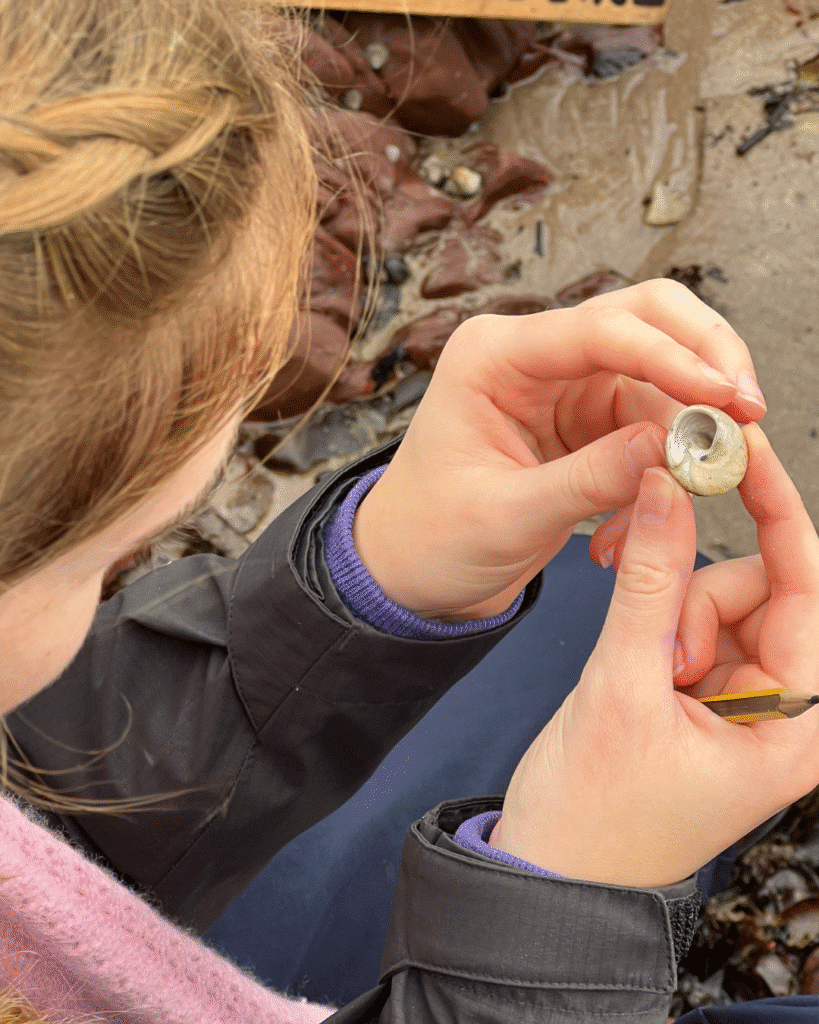
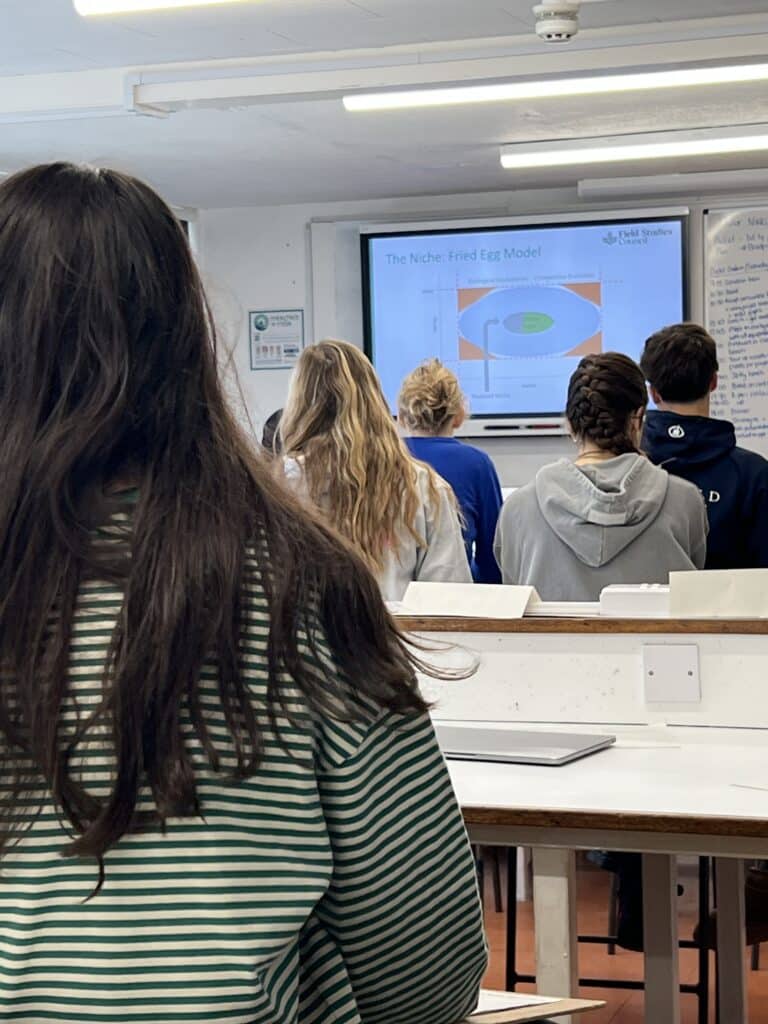
The IB courses include an investigative piece of coursework. This is completed over a short residential field trip in Pembrokeshire. The ecology and statistical analysis sections will also be partly covered when visiting the field studies centre.

If you want to find out more about studying Biology in the Sixth Form why not pop into the department and speak to Miss Rhodes, who will be more than happy to give you a course overview. Alternatively, you can find out more about the curriculum here:

IB Biology Curriculum


Beyond the Classroom

We believe strongly in offering students the opportunities to explore the aspects of Biology that inspire and motivate them; this not only fuels their enthusiasm for the subject but also helps them go above and beyond syllabus requirements, which is something that universities are very keen on.

These opportunities include:

  • BioSoc
  • The Anatomy and Dissection Society
  • MedSoc
  • Biology Olympiad
  • Biology in Action Lectures
  • Gresham College Lectures


Careers

Studying Biology can lead to a range of careers both linked directly to the subject but also building on the transferable skills acquired through such a discipline.

Such careers include:

  • Medical careers
  • Pharmacy
  • Physiotherapy
  • Biomedical Engineering
  • Research Science
  • Microbiology
  • Marine Biology
  • Conservation and Ecology
  • Environmental Management
  • Food Science
  • Agricultural Engineering
  • Zoology
Chemistry


Why Study Chemistry?

Sometimes referred to as the ‘Central Science’, Chemistry helps to connect physical Sciences, like Maths and Physics, with applied Sciences, such as Biology, Medicine and Engineering. In fact, Chemistry is all around us and an understanding of the subject can help to answer many simple questions about everyday life!

Chemistry is one of the Russell Group universities’ ‘facilitating subjects — so called because choosing them in the Sixth Form allows a wide range of options for degree study.


Course Content

  • Physical Chemistry
  • Inorganic Chemistry
  • Organic Chemistry

Specific areas of study may include aspects such as atomic structure, energetics, kinetics, oxidation, alkanes and alkenes, thermodynamics, polymers and amino acids, proteins and DNA.

If you want to find out more about studying Chemistry in the Sixth Form why not pop into the department and speak to Mr Singh, who will be more than happy to give you a course overview. Alternatively, you can find out more about the curriculum here:

IB Chemistry Curriculum


Skills Developed:

As Chemistry is a Science subject, the process of learning it helps a student to learn how to:

  • Be objective
  • Be analytical
  • Be methodical
  • Process, and in turn solve problems

You can apply these skills outside academia, and the study of Chemistry can help to understand current events.


Careers

There are a wide range of Chemistry-related degrees available, including

  • Analytical Chemistry
  • Biochemistry
  • Environmental Chemistry
  • Inorganic Chemistry
  • Organic Chemistry
  • Physical Chemistry
  • Polymer and Materials Chemistry

These degrees can in turn lead to a range of Scientific careers as varied as:

  • Medicine
  • Dentistry
  • Forensic Chemistry
  • Geochemistry
  • R&D Management
  • Pharmacy
  • Chemical Engineering
  • Petroleum Engineering
  • Perfumery

Chemistry teaches you to be numerate, logical, and analytical, so many Chemistry graduates are well-suited to careers in finance, management, engineering, and business if they want to explore routes outside of the Sciences.


Student Views


I enjoy studying Chemistry as it enables me to understand how biological processes happen and we are able to explore the subject at far greater depth than GCSE.

Computer Science


Why Study Computer Science?

We all use computers every day. In all likelihood, you have one in your pocket right now! There are limits to what a computer can do, but these are pushed every year by students like you.

The Computer Science course focuses on the skills students need to progress to higher education or thrive in the workplace. It is not just about programming, although that is a major component. The emphasis is also on computational thinking – a kind of reasoning used by both humans and machines. Thinking computationally is an important life skill and means using abstraction and decomposition.

If you want to find out more about studying Computer Science in the Sixth Form why not pop into the department and speak to Mr Gumbs, who will be more than happy to give you a course overview. Alternatively, you can find out more about the curriculum here:

IB Computer Science Curriculum


Beyond the Classroom

  • School of Coding deliver workshops covering Virtual Reality and Robotics which enhances students’ problem-solving skills.
  • A trip to Bletchley Park to understand how encryption and the Turing Machine are linked.
  • Previous Minevra Lectures have included Machine Learning and VR.
  • Robotics Club using Raspberry Pis is run weekly.
  • Bebras Challenge is run once a year which introduces computational thinking to students. There are different stages depending on student performance.

Learn to code interactively for free on Codecademy, linked below. Students can build their confidence in programming prior to completing their NEA (Non-Exam Assessment)

Codecademy

There are several free online course to develop programming skills and learn programming concepts. You will need to keep up to date with technology advances via the news and have a keen interest in what is happening around the world.

Computer Science Journals provide information on all the recent breakthroughs within technology and Computer Science.


Careers

  • Software Development
  • Games Development and Testing
  • Armed Forces
  • Project Management
  • Teaching
  • Website Development

And many more!


Economics


Why Study Economics?

Economics is a modern, dynamic and relevant subject, which focuses on the events of the last decade. It is an interesting mixture of current affairs, the more abstract field of Economic Theory and the role of specific institutions such as the EU, the World Bank, the MPC at the Bank of England, the IMF, the WTO, OAFC, etc.

Anyone studying the subject at Bradfield is not simply taught Economics; they should expect to develop skills of investigating, understanding, analysing, interpreting and evaluating the arguments put forward by Economists and Politicians.


Course Content

  • What is the most efficient way to organise the world’s resources?
  • Why are some countries wealthier than others?
  • What does Brexit mean for the UK economy?
  • What sort of economic policies are being offered by different political parties?
  • Who wins and who loses from globalisation?
  • Are we likely to have higher living standards than our parents?

If you want to find out more about studying Economics in the Sixth Form why not pop into the department and speak to Mrs Chia, who will be more than happy to give you a course overview. Alternatively, you can find out more about the curriculum here:

IB Economics Curriculum


Beyond the Classroom

  • Each term, the student-led Econ Society invites in guest speakers to delve deeper into what is going on around the world from an Economics perspective.
  • Our Lower Sixth also head into London for two days in the Summer Term, and have the opportunity to visit various leading industries and get a taste of what it’s like working in the city.
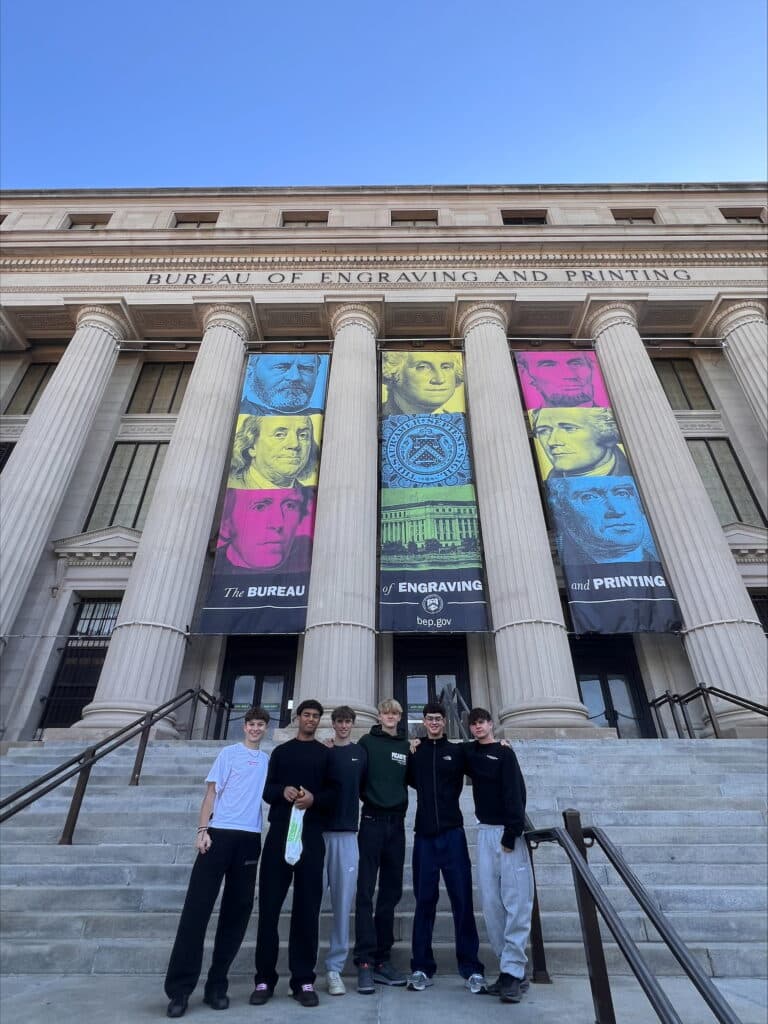
  • In the Autumn of 2025, our Economics students headed to Washington DC and New York City and visited Union Market, the Bureau of Engraving and Printing, the Statue of Liberty and the 9/11 Memorial and Museum.


Careers

Studying Economics is highly regarded by Universities, and it can lead to many different degree courses in:

  • Economics
  • Business Studies
  • Accountancy
  • Law
  • Management

And many more! It also opens doors to a wide range of careers.


Student Views

Economics has given me a better idea of what’s going on in the global economy. I now have a deeper understanding of terms like inflation, interest rates and economic growth.


It is not about making money at all, the subject is all about the choices we make on a micro and macro scale. It definitely makes you think more about what’s going on around you.

English Language and Literature


Why Study English Language and Literature?

IB English Language and Literature allows students to explore the world around them through the lens of both literary and non-literary works. If you have, or would like to have, a wider appreciation of how global issues are explored by writers, the media and journalists, you would very much enjoy the study of IB English Language and Literature. You will read texts from around the world, learn about new cultures and issues, both historical and contemporary, which are tackled within the texts and complementary non-literary texts including adverts, posters, sculpture, lyrics and articles.

This is a subject that rewards students with inquisitive minds and encourages independent thought. There are numerous opportunities to have a strong personal engagement with the texts and issues being studied which will suit students with a creative or interesting perspective on the world.


Course Content

Students study six literary texts at Higher Level, and four at Standard Level, along with a wide array of supporting and complementary non-literary texts. Both courses benefit from Internal Assessment, consisting of an Individual Oral assessment, worth 30% at Standard Level and 20% at Higher Level, while the Higher Level will also complete a Higher Level Essay also worth 20% of their overall grade. Both levels will sit two exams at the end of the course which contribute to the rest of the grade. There is a significant amount of student autonomy in their selection of titles and text focus for their assessments, guided by their teachers.

Students will consider how writers influence their readers/audience in their presentation of global issues and contextual challenges such as poverty, identity, gender, race, attitudes to class etc.

If you want to find out more about studying English Language and Literature in the Sixth Form why not pop into the department and speak to Mrs Stegeman, who will be more than happy to give you a course overview. Alternatively, you can find out more about the curriculum here:

IB English Language and Literature Curriculum

Beyond the Classroom

  • Students are invited to attend numerous academic enrichment societies and events to engage in exciting student-guided discussions of both classical and contemporary literature and issues raised by writers past and present.
  • There are also screenings and theatre trips for set texts and enriching off-curriculum plays.
  • The Department’s Minevra Lectures on wider literary ideas and thought-provoking concepts are thoroughly enjoyed by all students.


Careers

English is a versatile subject which compliments many others and adds a critical, expressive and creative approach to engagement with external material making it an incredibly adaptable course when considering careers. English fosters and develops empathy and emotional intelligence, essential to any career in any sector.

Thanks to the adaptability of the skills offered through literary study, careers can include, but are not restricted to:

  • Broadcasting
  • Publishing
  • Journalism
  • Teaching
  • Law
  • Recruitment
  • Marketing and Public Relations
  • Business Management
  • Media


Student views

I really enjoyed English in Fifth Form and I really liked annotating texts which linked with prominent issues in society, so I chose it for Higher Level.


The variety of texts we cover and the link to the real world. This means our analysis can go beyond explaining the effect on the reader as we can bring global purpose in.


It helps with being able to communicate fluently and has many transferable skills such as essay writing and analysing writing.

English Literature


Why Study English Literature?

IB English Literature allows students to explore the world around them through the lens of literary works. If you have, or would like to have, a wider appreciation of how global issues are explored by writers you would very much enjoy the study of IB English Literature. You will read texts from around the world, learn about new cultures and issues, both historical and contemporary, which are tackled within the texts.

This is a subject that rewards students with inquisitive minds and encourages independent thought. There are numerous opportunities to have a strong personal engagement with the texts and issues being studied which will suit students with a creative or interesting perspective on the world.


Course Content

The English Department only offer IB English Literature at Higher Level. Students who pick this subject will study 13 texts from a range of literary forms, time periods, and geographical locations, including texts translated from their original language into English. Students work towards two end of course examinations (an unseen close reading of literary extracts and comparative exam referencing the texts they have studied across the course) and complete a portfolio of two Internal Assessments (an Analytical Essay and an Individual Oral assessment, collectively worth 40% of their grade). There is a significant amount of student autonomy in their selection of titles and text focus for their assessments, guided by their teachers.

Students will consider how writers influence their readers/audience in their presentation of global issues and contextual challenges such as poverty, identity, gender, race, attitudes to class etc.

If you want to find out more about studying English Literature in the Sixth Form why not pop into the department and speak to Mrs Stegeman, who will be more than happy to give you a course overview. Alternatively, you can find out more about the curriculum here:

IB ENGLISH LITERATURE CURRICULUM


Beyond the Classroom

  • Students are invited to attend numerous academic enrichment societies and events to engage in exciting student-guided discussions of both classical and contemporary literature and issues raised by writers past and present.
  • There are also screenings and theatre trips for set texts and enriching off-curriculum plays.
  • The Department’s Minerva Lectures on wider literary ideas and thought-provoking concepts are thoroughly enjoyed by all students.


Careers

English is a versatile subject which compliments many others and adds a critical, expressive and creative approach to engagement with external material making it an incredibly adaptable course when considering careers. English fosters and develops empathy and emotional intelligence, essential to any career in any sector.

Thanks to the adaptability of the skills offered through literary study, careers can include, but are not restricted to:

  • Broadcasting
  • Publishing
  • Journalism
  • Teaching
  • Law
  • Recruitment
  • Marketing and Public Relations
  • Business Management
  • Media

Student views

I love it, because in the IB we focus on a wide range of literature from different cultures and areas of the world. Through this, we get to study good literature from very differing cultures, and open discussion is always encouraged in the classroom, which I very much enjoy.

Paula (I)


It is one of the only subjects where you can learn about history, culture and have a viewpoint into the minds and hearts of people through time.

Environmental Systems and Societies


Why Study Environmental Systems and Societies

As a transdisciplinary subject, Environmental Systems and Societies is designed to combine the techniques and knowledge associated with group 4 (the experimental sciences) with those associated with group 3 (individuals and societies). By choosing to study a transdisciplinary course such as this as part of your diploma, you are able to satisfy the requirements for both groups 3 and 4 of the IBDP hexagon, thus allowing you to choose another subject from any hexagon group, including another group 3 or 4 subject. Transdisciplinary subjects therefore introduce more flexibility into the IB Diploma Programme.

ESS involves practical investigations and also develops an understanding of how socio-economic, cultural and political factors help to shape environmental behaviour.

ESS works for you if:

  • You are a scientist who wants to study more Science.
  • You find Science difficult.
  • You want practical applications for your scientific knowledge.
  • You want the opportunity to study an extra language or arts subject.


Course Content

  • Topic 1: Foundation (Perspectives, Systems and Sustainability)
  • Topic 2: Ecology
  • Topic 3: Biodiversity and Conservation
  • Topic 4: Water
  • Topic 5: Land
  • Topic 6: Atmosphere and Climate Change
  • Topic 7: Natural Resources
  • Topic 8: Human Populations and Urban Systems
  • Environmental Law (Higher Level Only)
  • Environmental and Ecological Economics (Higher Level Only)
  • Environmental Ethics (Higher Level Only)

If you want to know more about studying the course in the Sixth Form, why not pop into the department and speak to Mrs Foad and Mr Hill who will be more than happy to give you a course overview. Alternatively, you can find out more about the curriculum here:

IB Environmental Systems and Societies Curriculum


Beyond the Classroom

  • Students get the opportunity to go on a residential field drip to Dale Fort FSC, West Wales, to fully immerse themselves in environmental issues and complete the IA coursework during the second year of the course.
  • Students are encouraged to attend the Minerva Lectures arranged through the Geography and Biology Departments that link to the subject.


Careers

Students who take Environmental Systems and Societies go on to a variety of University courses and careers. Due to its subject content and international nature, many students are interested in:

  • International Development
  • Politics
  • Conservation
  • Biology/Marine Biology
  • Geography
Film


Why Study Film?

In an increasingly media-saturated world, the study of Film is integral to a critical understanding of our society. The IB Film course aims to develop proficient, discerning interpreters and makers of Film texts. You will study British, American, European and Global Films from early cinema to the digital era. Through the analysis of a broad range of Film texts and through practical exercises in Film production, the course will develop your critical abilities and your appreciation of artistic, cultural, historical and global perspectives in Film. You will examine Film concepts, theories, practices and ideas from multiple perspectives, challenging your own viewpoints and biases in order to understand and value those of others.

Over the course you will experiment with techniques and technology, acquiring the skills and creative competencies required to successfully communicate through the language of Film. You will develop your artistic voice and learn how to express personal perspectives through Film. The course provides the opportunity for you to develop creative ideas and see them through to the end. You will create a video essay on a subject of your choice and build a portfolio of Shorts, experiencing different Film roles and experimenting with sophisticated equipment and technology.

The IB Film course emphasises the importance of working collaboratively. In the process of developing your production portfolio, you will collaborate as a core member of a production crew and gain essential project management skills. You will also acquire the ability to reflect and analyse your own work; all valuable traits for any profession.

Bradfield’s Film Department has been recognised by the exam board as a Centre of Excellence for Film Production. Many of our students have won national Film awards and go on to have careers in the industry.

The following short Film was produced by Ava (I) in 2025. It has been shortlisted at 7 national Film festivals and won the Best Student Short Film at Dorking Film Festival this year.

Course Content

Areas of Assessment:

Assessment is 100% coursework. By the end of the course, students will have produced the following:

  • A textual analysis of a prescribed Film text based on a chosen extract.
  • A recorded multimedia comparative study.
  • Film portfolio pages and reels.
  • A collaborative Film project and report (Higher Level only).

If you want to know more about studying Film in the Sixth Form, why not pop into the department and speak to Ms Stables who will be more than happy to give you a course overview. Alternatively, you can find out more about the curriculum here:

IB Film Curriculum


Beyond the Classroom

Students are offered both academic and practical enrichment opportunities, which include:

  • Independent and multiplex cinema trips.
  • Study days at London’s British Film Institute (BFI).
  • Off-site location shoots.
  • Opportunities to attend bespoke masterclass workshops, talks, and Q&A sessions from industry professionals.
  • The highlight of the year is the Annual Bradfield Film Production Awards (BRAFTAs), featuring guest judges from the industry.


Careers

Film students develop excellent reading, writing, research, and communication skills, providing the foundation for a wide range of career opportunities, as well as for careers directly connected with Film and media. These include:

  • Film and TV Production, Distribution, and Curation.
  • Media and Content Producer
  • Videographer
  • Screenwriter
  • Producer and Director
  • VFX Specialist
  • Actor
  • Digital Content Creator
  • Cinema and Business Management
  • Film Festivals and Arts Programmer
  • Advertising and Public Relations
  • Marketing, Digital and eCommerce
  • Journalism and Media
  • Publishing and Education

Students have gone on to study Film on the following University courses:

  • Film
  • Film and TV Production
  • Film and Photography
  • Film and Theatre
  • Film and English Literature
  • Film and Archeology
  • Media and Communications
  • Journalism
  • Business and Marketing
  • International Development
  • Liberal Arts
  • Photography and Media
  • Digital Media Production
  • Media Arts

Students have gone on to study Film, Media and Communications at the following Univerisites:

  • Bournemouth
  • Bristol
  • Boston (US)
  • Cardiff
  • Chapman (US)
  • Edinburgh
  • Exeter
  • Falmouth
  • Leeds
  • Madrid (Spain)
  • Manchester
  • NYU – Tisch (US)
  • Newcastle
  • Oxford
  • Queen Mary’s
  • Trinity (Ireland)
  • Westminster
  • York


Student views

I adore the creative freedom you get, and how many films you can make. The department is also incredible, it has almost everything you could think of for filming from things like Cranes to Gimbels”

Scarlett (K)


Film gives us the chance to experience life, in the most creative way possible. Not only does it depict art that satisfies the senses, it also depicts how imaginative and expressive our minds and hearts can be.

French B


Why Study French?

  • Learning a World Language: More than 200 million people speak French on the five continents. French is the second most widely learned foreign language after English.
  • A Language for the Job Market: An ability to speak French and English is an advantage on the international job market, opening doors to French companies around the world. France is a key economic partner of the UK.
  • The Language of Culture: French is the international language of cooking, fashion, theatre, the visual arts, dance, and architecture. French is the language of Victor Hugo, Molière, Edith Piaf, Jean-Paul Sartre, Alain Delon and Zinedine Zidane.
  • The Other Language of International Relations: French is both a working language and an official language of the United Nations, the European Union, UNESCO, NATO, the International Olympic Committee, the International Red Cross and international courts.
  • A Language for Learning Other Languages: French is a good base for learning other languages, as well as English, since 50% of current English vocabulary is derived from French.
  • The Language of Love and Reason: First and foremost, learning French is the pleasure of learning a beautiful, rich, melodious language, often called the language of love. French is also an analytical language that structures thought and develops critical thinking, a valuable skill for discussions and negotiations.

Learning a foreign language is a liberation from insularity and provides an opening and access to other people and cultures. People who speak a foreign language are better placed to get a good job in today’s global workplace but there is, of course, also an enriching side to learning a language. Nobody ever says: “I wish I couldn’t speak a foreign language.” Along with not being able to play a musical instrument, the inability to speak a foreign language is one of the most common regrets amongst adults.

The benefits of learning another language include:

  • Access to other people and cultures – being able to speak a foreign language opens doors and builds connections locally and globally.
  • Communication skills – according to a UCAS survey, good communication skills were rated by employers as the most important proficiency an employee should have, and the one thing that is most frequently lacking.
  • Employability – University admissions tutors and employers appreciate languages as they provide students with sought-after soft skills such as teamwork, organisation, and flexibility.
  • Open mindedness – linguists appreciate the fact that other nationalities think in different ways, and there is a responsibility on all of us to accept differences and to build bridges. Learning the language is the first and most important step on this journey.
  • Breadth – learning a language brings with it many things: culture, music, travel, humour, cuisine, art, sport, cinema… there is so much to discover.
  • Real life – a modern language is not just a school subject, it is used by millions of people every day.


Course Content

You will study language content from five broad areas in addition to grammar, film, and literature.

  • Identities – health and wellbeing, beliefs and values.
  • Experiences – travel, customs and traditions.
  • Human Ingenuity – communication and media, science and technology.
  • Social Organisation – education, law and order.
  • Sharing the Planet – the environment, human rights, and equality.


Skills Developed

  • Cultural understanding, adding an international dimension to everything you do.
  • Confidence in conversation, presentations, and communication.
  • Teamwork and problem-solving.
  • Flexibility and adaptability.
  • A broader understanding of key global issues.


If you want to know more about studying French in the Sixth Form, why not pop into the department and speak to Mrs Rowntree-Beech, or any French teacher, who will be more than happy to give you a course overview. Alternatively, you can find out more about the curriculum here:

IB French B Curriculum


Beyond the Classroom

  • Foreign language debating event – test your debating skills against other non-native speakers of French from Sixth Forms in the UK.
  • MFL Club – get creative as you help to enthuse about languages with the lower year groups.
  • MOSAIC Night – showcase a part of your culture, such as music, art and literature or enjoy as others perform.
  • Working closely with Foreign Language Assistants – regular speaking practice with native speakers of French.
  • Memrise Competition – win prizes for learning your vocabulary.
  • Trip to London Institut Francais – an immersive French-speaking trip to London to see a French film with relevant themes to the course of study.
  • Trip to France – a chance to experience France and French culture with your peers.


Careers

Possible courses that include French at university:

  • French Studies
  • European Law and French
  • International Relations and French
  • French and International Business
  • French and Politics
  • Art History with French
  • Accounting and French

Beyond Higher Education – possible jobs as a French graduate after university:

  • Education (teaching both French and English in English speaking countries and English abroad)
  • The Diplomatic Service
  • Security Services
  • Accountancy
  • Business
  • Journalism
  • Law
  • Industry
  • Finance
Geography


Why Study Geography?

Geography provokes and answers questions about the natural and human worlds, using different scales of enquiry to view them from different perspectives. It develops knowledge of places and environments throughout the world, an understanding of maps, and a range of investigative and problem-solving skills both inside and outside the classroom.

Geography is a focus within the curriculum for understanding and resolving issues about the environment and sustainable development. It is also an important link between the natural and social sciences.

As students study Geography, they encounter different societies and cultures. This helps them to realise how nations rely on each other. It can inspire them to think about their own place in the world, their values, and their rights and responsibilities to other people and the environment.


Course Content

Geographical Questions:

  • How might the UK benefit from global warming?
  • What are the consequences of the growing demand for water in California?
  • Is Curitiba in Brazil still the envy of urban planners throughout the world?
  • What are the causes to illegal trafficking of goods and people and how can it be solved?
  • Is China recolonising Africa by stealth?
  • How do multinational companies cater for the needs of local populations?

If you want to know more about studying Geography in the Sixth Form, why not pop into the department and speak to Mr Kidson who will be more than happy to give you a course overview. Alternatively, you can find out more about the curriculum here:

IB Geography Curriculum


Beyond the Classroom

Field Trips to:

  • Manchester
  • Christchurch Bay
  • East London
  • Pang Valley


Careers

Studying Geography at university

Why you should study Geography

The Bradfield College Geography Department has had numerous students go on from the IB course to study Geography at universities including Oxford, St Andrews, Durham, Exeter, Bristol, Leeds and Newcastle amongst others.


German B


Why Study German?

  • Knowledge of German opens doors to business, science, academia, arts, media, tourism and a rich and colourful cultural heritage, not to mention green and creative industries.
  • German and English share the same roots, with many similar words, the structure is logical and pronunciation is straightforward.
  • German is the language employers look for and German companies are global market leaders.
  • Course content is flexible, adaptable and relevant.

Learning a foreign language is a liberation from insularity and provides an opening and access to other people and cultures. People who speak a foreign language are better placed to get a good job in today’s global workplace but there is, of course, also an enriching side to learning a language. Nobody ever says: “I wish I couldn’t speak a foreign language.” Along with not being able to play a musical instrument, the inability to speak a foreign language is one of the most common regrets amongst adults.

  • Access to other people and cultures – being able to speak German opens doors and builds connections locally, internationally, globally.
  • Communication skills – according to a UCAS survey, good communication skills were rated by employers as the most important proficiency an employee should have, and the one that is most frequently lacking.
  • Employability – university admissions tutors and employers appreciate languages as they provide students with sought-after soft skills like teamwork, organisation and flexibility.
  • Open-mindedness – linguists appreciate the fact that other nationalities think in different ways, and that there is a responsibility on all of us to accept differences and to build bridges. Learning the language is the first and most important step on this journey.
  • Breadth – learning German brings with it many aspects: culture, music, travel, humour, cuisine, art, sport, cinema…. there is so much to discover.
  • Real life – German is not just an interesting school subject, it is used by millions of people every day.


Course Content

Students develop the ability to communicate in the target language through the study of language, themes and texts. In doing so they also develop conceptual understandings of how German language works. Communication is evidenced through receptive, productive and interactive skills across a range of contexts and purposes that are appropriate to the level of the course.

The German Language B syllabus is organised into five prescribed themes: identities, experiences, human ingenuity, social organization and sharing the planet. Optional recommended topics and possible questions for each theme are presented in the guide but are not prescribed.

Students benefit from:

  • Learning about German society – films and cultural events.
  • Interactive lessons with a chance to see current issues from a new perspective, debate and understand cultural diversity.
  • Small groups, teamwork and support from native speakers.
  • Going on an individual exchange.

If you want to know more about studying German in the Sixth Form, why not pop into the department and speak to Mr Broz who will be more than happy to give you a course overview. Alternatively, you can find out more about the curriculum here:

LANGUAGE B IB COURSES

FLUENTU – Why Study German?

GEOTHE INSTITUT IN THE UK


Beyond the Classroom

We have a link with a grammar school in Munich which allows us to organise trips and exchanges on a flexible basis.

Wilhelmsgymnasium (Munich)


Careers

Apart from a straight languages degree with or without literature, there are many exciting courses at university which can be combined with German:

  • International Relations/International Business/ European Studies/International Management/Politics/Law.
  • Music/Art History/Philosophy/Film/Theatre.
  • Other languages and Liberal Arts with German and study abroad.


Student Views

German has not just proved extremely useful for my career. Above all, we just had lots of fun and German in the Sixth Form is something I would never want to miss.

German Literature


Why Study German Literature?

Literature reflects our world from many different perspectives and engages with key issues such as identity, gender, society and culture in the past and present. Reading literary works in their original German as well as in translation will allow you to broaden your outlook on a variety of global issues, ideas and experiences that writers from all over the world explore. German Literature can be chosen by German native and bilingual students and will lead to a bilingual diploma.


Course Content

Students who take German Literature at Higher Level study 13 texts from a range of literary forms, time periods and geographical locations, including texts translated from their original language into German. Students work towards two final examinations: an analysis of unseen extracts and a comparison of texts studied. They also complete a portfolio of two Internal Assessments (a Higher Level essay and an Individual Oral assessment, together worth 40% of the final grade) which allow students significant autonomy in the selection of texts, titles, and focus on global issues.

If you want to know more about studying German Literature in the Sixth Form, why not pop into the department and speak to Mrs D’Cruz who will be more than happy to give you a course overview. Alternatively, you can find out more about the curriculum here:

IB German Literature CURRICULUM


Careers

German Literature not only allows native and bilingual students to keep in touch with their native or second language and culture but also develops analytical and communicative competencies. These are skills that are essential in most careers and the added benefit of a bilingual diploma opens doors internationally to a huge variety of industries.

Global Politics


Why Study Global Politics?

If you are looking for a new challenge after GCSE, then Global Politics is a dynamic and ‘live’ subject.

We are living in an ever-changing society, and it is vital for our young people to understand where power comes from and how it is exercised in today’s globalised world. We have seen change in the UK’s domestic politics and, in a broader sense, turbulence for nations around the globe managing post-pandemic recovery, inflation, food scarcity and conflict. Studying Global Politics involves exploring key contemporary political questions about the interactions between people, institutions, nations and non-state actors across the globe.

We draw upon a number of case studies, from Sino-US tensions over Taiwan to #MeToo as a social movement, to understand power and sovereignty in the world today. Our case studies must be drawn from within the students’ lifetimes, and we are regularly use current affairs as examples in lessons. Not a day goes by without a news story appearing that is directly relevant to what you are studying.


Course Content

There are four core units:

  • Power
  • Sovereignty
  • Legitimacy
  • Interdependence

Thematic studies covered are:

  • Rights and Justice
  • Development and Sustainability
  • Peace and Conflict

Students studying at Higher Level also produce case studies relating to global political challenges – topics include Borders, Identity, Environment, Technology, Equality, Poverty, Health and Security.

If you want to know more about studying Global Politics in the Sixth Form, why not pop into the department and speak to Mr Grinham who will be more than happy to give you a course overview. Alternatively, you can find out more about the curriculum here:

IB Global Politics Curriculum


Beyond the Classroom

  • The Politics Department has a student-led enrichment society called ‘Bentham Society’, which meets bi-termly. These events are varied, including visiting speakers, discussion evenings and documentary screenings, and they are always accompanied with cookies and hot chocolate!
  • We take an annual trip to London to see the Houses of Parliament. This is a brilliant opportunity to visit the central location of power in British Politics and to see, first hand, the institutions that the students are studying. We usually combine the visit to Parliament with a visit to either the Supreme Court, the theatre or a walking tour.
  • In October 2025, the Politics department took a trip to Washington DC and New York, including Congress, UN Headquarters, Ellis Island & the 9/11 memorial & museum.


Careers

The subject keeps many doors open because it equips students with the skills of evaluation, analysis, communication and building an argument, and Politics graduates have a wide choice of career pathways.

Undergraduate options related to Global Politics include:

  • International Relations
  • Politics
  • Law and Politics
  • International Development
  • Politics, Philosophy & Economics
  • International Management
  • Gender Studies
  • International Business, Finance & Economics
  • International Disaster Management & Humanitarian Response


Student Views

It offers a more global view on Politics than A Levels and gives an opportunity to look at different countries and cultures. The lessons are very engaging and interesting. We study loads of different case studies which help shape your perspective and political views on the world.


I enjoy learning how the world functions, the reality of it and what is really going on in less known states.

Harry (E)


It offers a more global view on Politics than A Levels and gives an opportunity to look at different countries and cultures

History


Why Study History?

History is a superb subject choice for the vast majority and is accessible to all. Not only is it a fantastically interesting subject, filled with numerous stories and arguments which arise from the past, but it also teaches valuable skills of research, evaluation of material and argument. Equally, an appreciation of different cultures is fostered through studying the experiences and perspectives of people who lived in different places and times. It complements an array of different subjects and is looked upon extremely favourably by both universities and potential employers.


Course Content

Paper 1: Standard and Higher Level

  • Comparison of US Civil Rights and Apartheid in South Africa.

Paper 2: Standard and Higher Level

  • Single Party States; Hitler, Mao, Stalin, Castro
  • Cold War

Paper 3: Higher Level

  • France 1770-1815
  • Russia 1855-1953

Independent Assessment: Standard and Higher Level

  • An essay on a topic of the student’s choice

If you want to know more about studying History in the Sixth Form, why not pop into the department and speak to Mr Booth who will be more than happy to give you a course overview. Alternatively, you can find out more about the curriculum here:

IB COURSE SPECIFICATION


Beyond the Classroom

The department runs numerous opportunities to engage with history and extend your knowledge beyond the classroom. Lectures are arranged regularly, recently including Earl Spencer, Old Bradfieldian historians, and a Holocaust Survivor. The Moulsdale Committee is an opportunity for interested Sixth Form students to take a leadership role in the department, by playing a role in publishing 1850 and all that, the department magazine, arranging speakers and running the Junior History societies, for example. In addition, every year several students also choose to write their Extended Essay on a History related topic.


Careers

History is a highly regarded subject by all universities, it requires analytical and decision making skills that set you up for almost any career in the future such as business, journalism, banking, law, or accountancy, to name a few popular careers for Old Bradfieldians.

As a History graduate you will have gained skills highly valued by employers, such as analytical and critical reasoning, oral and written communication, and research skills. Well known History graduates making the headlines recently include King Charles III, US President Joe Biden, comedian Sacha Baron Cohen, US Supreme Court Justices Elena Kagan and Sonia Sotomayor, documentary-maker Louis Theroux and former Reading FC manager Steve Coppell.

History of Art


Why Study History of Art?

history of art encourages us to learn about cultures from the past through painting, sculpture and architecture and consequently explains why our society is what it is today.

History of Art is a life enhancing study of works of art throughout the history of civilization; from ancient Greece to the 21st Century. Art is a visual language that can tell us as much about our past and present cultures as any written word.


Course Content

  • Reconstruct the past and understand present cultures through works of art.
  • Consider why works of art were produced and for whom.
  • Unlock the meanings of works of art.
  • Discover how works of art have been created.
  • See how art explains why our society is what it is today.
  • Discover powerful themes such as love, sex, death, war, poverty, slavery, freedom and morality to name but a few.

Topic one: Art and Architecture of the Renaissance c.1400- c.1550 CE

We explore the most significant and celebrated period in the history of Western art and how it gave birth to some of the world’s most famous artists, architects and patrons. We examine how artists such as Michelangelo and Leonardo da Vinci were able to create extraordinary levels of realism by combining their interest in the art of ancient Greece and Rome with scientific developments and artistic innovation.

Topic two: Modern Art and Architecture in Europe and America c.1860- c.1950 CE

We investigate the social, cultural and technology developments of the late 19th century and early 20th century and explore the myriad of artistic movements which emerged in response to these as artists sought to reflect the changing world around them. We also learn about the ground-breaking practical and aesthetic developments in architecture through the lens of a handful of significant buildings from the period.

Internal Assessment

The coursework component allows students to focus on a topic that really fascinates them It takes the form of a comparative investigation which requires a visual comparison between two art historical periods or artists.

If you want to know more about studying History of Art in the Sixth Form, why not pop into the department and speak to Mrs Borthwick and Mr Goad who will be more than happy to give you a course overview. Alternatively, you can find out more about the curriculum here:

IB COURSE SPECIFICATION


Beyond the Classroom

There are organised visits to galleries and museums in London throughout the academic year and opportunities to view works of art abroad. You will most certainly get the chance to travel to enhance your study. In previous years students have visited Rome, Florence, Venice, Padua, Pisa and New York.

Art Historians also develop their passion for the subject through a variety of co-curricular clubs and societies. During the Sixth Form students can:

  • Take part in the national public speaking ‘ARTiculation Prize’ competition.
  • Join our ‘Curators Club’ to organise and host an exhibition.
  • Contribute to and/or simply attend our regular evening Art History Society meetings.
  • Attend and enjoy talks by a range of visiting speakers.


Careers

  • History of Art is the fifth most popular undergraduate course for Bradfield leavers.
  • Oxford, Cambridge and most other Russell Group universities offer History of Art.
  • One important aim of Art History is to produce what may be called ‘visual literacy’, the ability to assess images of all kinds critically and perceptively.
  • Employers value the interpretive, evaluative, discursive and analytical skills that the subject helps to develop.
  • This unique combination of visual sensitivity and intellectual research is valuable in areas such as journalism, advertising, marketing, publishing and law.
  • More directly related careers include those in research, conservation, museum and gallery administration, commercial galleries and auction houses.


Student Views

History of Art is the only subject i have ever done where i would still turn up to the classes even if i wasn’t taking the exam.

Latin


Why Study Latin?

Universities and employers highly value this subject due to the way it develops analytical abilities, attention to detail and flexibility of approach. These skills are acquired through study of some of the greatest works of European literature and some of the most fascinating periods of history.

  • Latin is a universally respected course of study and offers highly transferable linguistic and analytical skills.
  • It involves close reading of some of the most influential literature in history.
  • It gives a greater awareness of the foundations of modern European languages and literature, drama, music and art, law and politics, shaping our identities and perceptions of our world.
  • It offers privileged access to courses at the most prestigious universities in the UK and abroad – an impressive feature on an application for any field of undergraduate study.

If you want to know more about studying Latin in the Sixth Form, why not pop into the department and speak to Mr Armstrong who will be more than happy to give you a course overview. Alternatively, you can find out more about the curriculum here:

IB Latin Curriculum


Beyond the Classroom

Classical subjects offer a wide range of opportunities for trips and societies outside the classroom which bring the subject to life and add colour and enjoyment to the subject.

  • Classical Studies tours to: Rome, Pompeii and Herculaneum; Athens, Delphi and Olympia; Sicily.
  • Sophocles Society provides opportunities for readings of Medea, Bacchae and Hippolytus.
  • Visits to The Ashmolean Museum and The British Museum.
  • Theatre trips to watch Medea (West End) and KCL/UCL/Cambridge Greek Play.


Careers

University options

For students wishing to progress onto Higher Education, Classics qualifications can be extremely useful. Students not only acquire specific knowledge, but also important transferable skills such as analysing sources and developing independent, critical and evaluative approaches. They learn to formulate and support an argument and gain a valuable understanding of cultures very different to their own. Classics qualifications are naturally particularly valued by Classics departments in UK universities, but it is not just Classics departments who value these subjects. The study of A Level Classics qualifications can often lead to the university-level study of Classics, Drama, English, History, History of Art, Philosophy and Politics, however, information from UCAS shows that students who studied Classical Civilisation went on to study in such diverse disciplines as Medicine, Veterinary Science and Chemistry!

Employability

It is not only those looking to attend university who benefit from the study of Classical subjects. As Dr Peter Jones (advisor to Classics For All) states:

… we know that those who have studied the ancient languages are never, in fact, short of job-offers. A top asset-manager recently told me that his firm always employed classicists: they sold more. If Richard Dawkins is right, that is because ‘what Classics has always done is just teach people how to think.

From the proven ability to write a well-structured extended response to the acknowledgement of the views of others and a culturally sensitive approach to these, Classics puts students in an excellent position to seek employment opportunities.

Mathematics: Analysis


Why Study Mathematics: Analysis?

The IB Mathematics: Analysis and Approaches (Maths AA) course recognises the need for analytical expertise in the world where innovation is increasingly dependent on a deep understanding of Mathematics.

In comparison to the Maths Applications and Interpretations (Maths AI) course, Maths AA focuses on more abstract and theoretical concepts than AI. This means a stronger emphasis on topics like calculus (the mathematics of change), and a greater overall focus on the idea of proof, mathematical theorems and mathematical argument. It can be thought of as a more ‘Pure Mathematics’ course, whilst Maths AI is a more applied course.

Students excited about abstract mathematical thinking with strong analytical skills will enjoy the content of the Maths AA course and those considering further study after Bradfield in Mathematics, Engineering, Physics and certain branches of Economics, should consider Maths AA. Some degree courses will require Maths AA at Higher Level so consideration should be given to this when choosing.

Students considering Maths AA at Higher Level should be expecting a Grade 9, and an additional Y11 Maths qualification such as OCR FSMQ Additional Maths or AQA Level 2 Further Mathematics would be greatly beneficial.


Course Content

Recommended Teaching Hours
Syllabus component Higher Level
Number and Algebra 39
Functions 32
Geometry and Trigonometry 51
Statistics and probability 33
Calculus 55

In addition to the above, all students will submit an internally assessed independent exploration in an area of Mathematics that interests them, allowing them to demonstrate application of their skills and knowledge without the time limitation constraints of written examinations.

If you want to know more about studying Maths in the Sixth Form, why not pop into the department and speak to any Maths teacher, who will be more than happy to give you a course overview. You could also speak to a current sixth form student studying Maths. Alternatively, you can find out more about the curriculum here:

IB Mathematics Analysis Curriculum


Beyond the Classroom

The Mathematics Department run several enrichment activities for the Sixth Form including:

  • UKMT Senior Maths Challenge from which successful students will continue to compete in the Senior Kangaroo, or even the British Maths Olympiad rounds.
  • Senior Maths Club is run weekly for any keen Sixth Form mathematicians. Focus is given to preparing for the Oxford MAT exam and other university entrance tests at different points in the year.
  • Oxbridge preparation is provided in the form of extra revision periods and interview practice sessions.
  • Student-led participation in the MEI yearly Ritangle competition is encouraged and has provided great interest and challenge for our keen mathematicians.
  • The hotly contested House Maths Challenge is an annual fixture putting House teams head-to-head for a couple of hours of intensive problem-solving.


Careers

The range of careers enabled by a developed understanding of Mathematics in the Sixth Form is extremely broad. Quantitative skills are required in a wide range of occupations, not simply limited to careers in the mathematical and physical sciences but also the social sciences, humanities, and arts.

Careers in:

  • Technology (medical, cryptography, programming, games design and internet security).
  • Engineering (aerospace industries, fluid dynamics, electronics, and civil engineering).
  • Finance (accounting, actuarial professions, banking, and investment)
  • Science (modelling populations, disease, astronomy, forensics)
  • Relating to human behaviours (data science, psychology, law, economics, climate change, environmental modelling, political science).


Student Views

Fun to explore the proof behind maths phenomena, a challenge, work does require time so be prepared for that, you use the calculator but learn many maths skills without it, really interesting.


For the HL course I really like how all the topics lead you to think logically, to improve your ability to solve problems and how it is more about elegance in your working than brute force. It is focussed on the pure aspects of maths which, in my opinion, are the most beautiful bits. It is quite important though to understand concepts quickly and to be able to apply them to scenarios where you might not expect them which makes it (at HL) a good choice for those mathematicians looking for real challenge.

Mathematics: Applications


Why Study Mathematics: Applications

The IB Mathematics: Applications and Interpretations (Maths AI) course recognises the increasing role that mathematics and technology play in a diverse range of fields in a data-rich world. This course emphasises how mathematical concepts can be applied to solve practical problems in the sciences, finance and many other aspects of human life.

In comparison to the Maths AA course (see above), the Maths AI course is a more technology-focused course, where the use and understanding of graphical calculators is essential to the course. Wherever possible the practical application of technology to quickly solve or graph problems is incorporated into the course. In contrast, Maths AA develops a deeper theoretical understanding of the underlying mathematical processes involved.

At Standard Level, Maths AI is a highly accessible course, suitable to all students expecting a Grade 6 or above at GCSE

Students considering Higher Level for Maths AI should be expecting a strong Grade 8 or 9 at GCSE.


Course Content

As with Maths AA the Standard and Higher Level courses are split over the five key areas of Mathematics as shown below. The difference in the courses is the recommended number of teaching hours (150 for SL versus 240 for HL) and the weights, and resultant depth of knowledge, required in each topic area.

Recommended Teaching Hours
Syllabus component Standard Level Higher Level
Number and Algebra 16 29
Functions 31 42
Geometry and Trigonometry 18 46
Statistics and probability 36 52
Calculus 19 41


The Internal Assessment, known as the Mathematical Exploration, is a piece of individual written work in which each student investigates an area of mathematics that interests them. It is a personal and independent exploration of a mathematical topic, applied to a real-world context or an area of personal interest. Students are expected to formulate a clear aim or question, use appropriate mathematical reasoning and techniques at a level consistent with the course, interpret their results, reflect on their findings, and evaluate any limitations. The emphasis is on personal engagement, mathematical communication, and the meaningful application of mathematics to explore a problem or pattern, rather than on advanced or original mathematics.

If you want to know more about studying Maths in the Sixth Form, why not pop into the department and speak to any Maths teacher, who will be more than happy to give you a course overview. You could also speak to a current sixth form student studying Maths. Alternatively, you can find out more about the curriculum here:

IB Mathematics Applications Curriculum


Beyond the Classroom

The Mathematics Department run several enrichment activities for the Sixth Form including:

  • UKMT Senior Maths Challenge from which successful students will continue to compete in the Senior Kangaroo, or even the British Maths Olympiad rounds.
  • Senior Maths Club is run weekly for any keen Sixth Form mathematicians. Focus is given to preparing for the Oxford MAT exam and other university entrance tests at different points in the year.
  • Oxbridge preparation is provided in the form of extra revision periods and interview practice sessions.
  • Student-led participation in the MEI yearly Ritangle competition is encouraged and has provided great interest and challenge for our keen mathematicians.
  • The hotly contested House Maths Challenge is an annual fixture putting House teams head-to-head for a couple of hours of intensive problem-solving.


Careers

The range of careers enabled by a developed understanding of Mathematics in the Sixth Form is extremely broad. Quantitative skills are required in a wide range of occupations, not simply limited to careers in the mathematical and physical sciences but also the social sciences, humanities, and arts.

Maths AI, as opposed to Maths AA, lends itself more to careers in humanities, statistics or business, or in certain scientific fields (at Higher Level) such as chemistry, biology and medicine, where more abstract knowledge is not a necessity.

Careers in:

  • Technology (design, data modelling).
  • Finance (economic modelling, accounting, banking, and investment).
  • Science (modelling populations, disease, medicine).
  • Relating to human behaviours (data science, psychology, law, economics, climate change, environmental modelling, political science).


Student Views

When I started the IB, most of my subjects were new and ones I haven’t done for GCSE. However, in my standard level maths course I was able to apply skills I have acquired in Maths GCSE and further develop them throughout the course. I was surprised that some of the syllabus has already been covered in GCSE and was therefore not as hard as I imagined. Furthermore, the syllabus focuses specifically on maths that can be applied in real life, which makes the maths application course much more interesting. For example, we have covered financial maths, which involved discussing loans and investments.


The Higher Level Math AI course is equal parts challenging and engaging. Every new piece of math builds on the last in a way that allows us Students to approach more complex problems by combining topics previously considered unrelated. The heavy focus on applying the math learned to real-life situations has also helped me realise how useful math can be to all parts of my daily life and has helped me develop my problem solving skills, which I hope to use later on when I become an engineer.


The SL course for maths IB is not as hard as everyone thinks, we can use the graphic calculator which really helps because it means you don’t need to learn loads of formulae and we also have a formula sheet for the those which we do need to use. All of these things mean that the maths we learn is much more realistic to the real world as you would usually be able to search things up and use calculators. The topics we learn are mostly things that are applicable to the real world so, for me at least, it is more encouraging to learn them as I think I may actually use these things in my future life, unlike some GCSE topics. Maths at IB isn’t something crazy impossible and I think it’s a great course so I would recommend it to everyone because this isn’t a maths course in which you need to be a maths genius for.

Music


Why Study Music?

IB Music is a really exciting and innovative course. There are no exams and you are assessed on coursework only. You will perform, create and research music from a varied range of cultures and time periods and have the opportunity to specialise in what most interests you. The course suits traditional instrumentalists/vocalists, as well as those whose interest lies in music technology. You do not need to have taken GCSE Music to study the IB course, but you should have a conversation first with the Head of Academic Music (Mrs Hughes).


Course Content

You will explore a diverse range of musical styles and create a portfolio of work as a researcher, creator, and performer. The music you will investigate will come from different eras and cultures.

The areas of study are:

  • Music for dramatic impact
  • Music for listening and performance
  • Music for sociocultural and political expression
  • Music technology

From your portfolio you will decide the types of music which most interest you and create a series of performances, compositions and written reports to demonstrate your understanding.

Music technology is a compulsory part of the course and IB Music is 100% coursework.

If you want to know more about studying Music in the Sixth Form, why not pop into the department and speak to Mrs Hughes who will be more than happy to give you a course overview. Alternatively, you can find out more about the curriculum here:

IB RESOURCES


Beyond the Classroom

You will have the opportunity to:

  • Take leading roles in productions, concerts and gigs
  • Direct a rehearsal and recording of your own composition performed by professional musicians
  • Develop your understanding of how to compose with music technology with lessons from a music technology expert
  • Join co-curicular music ensembles: Sinfonia, Concert Band, Big Band, String Group, Jazz Band, Choir, Chamber Choir, and many more
  • Attend lectures and performances by visiting music teachers
  • Experience performance, musicianship and Alexander Technique classes
  • Develop your music theory skills and take Grades 6-8, if desired


Careers

The varied nature of the course enables students to develop highly desirable skills in areas such as self-management, creativity, analysis, performance, teamwork, problem-solving and communication, all of which makes them an attractive prospect for universities and potential employers. The CBI (Confederation of British Industry) recommends that including a creative subject in your studies will better equip you for the world of work. There are hundreds of roles that are linked to studying Music or Music Technology. Here are just a few:

  • SFX Editor
  • Foley Artist
  • Radio Production
  • Studio Engineer
  • Artist Management
  • Music Therapy
  • Psychology of Music
  • Performer
  • Composer
  • Teacher
  • Session Musician
  • Technician
  • Live Sound Engineer/Stage Crew
  • Sound Recordist
  • Sound Designer

Many Bradfield students go on to study Music at undergraduate level. Recent graduates have gained places at the Royal College of Music, Trinity College, Durham, Birmingham, and BIMM.

There’s a lot of misunderstanding and false information out there about the value of studying Music. The Russell Group, the organisation which represents the UK’s leading 24 universities, no longer places emphasis on a list of ‘facilitating subjects’ (Maths, English, Science, MFL, History and Geography). It has never been the case that facilitating subjects are the only subjects students should consider to get into a Russell Group university.


Student Views

When I started the course I hadn’t done GCSE music and could not read music notation so I was quite nervous, but I really loved music and knew that I wanted to pursue it further. The IB music course enabled me to learn how to read music and also create music with just my voice and music technology. It can really be adapted to suit your own strengths but it also teaches you to appreciate all different types of music through understanding the context and the way it is created.


The most enjoyable part of the course has been creating an underscore for an extract of a film. I’ve learnt so much musical vocabulary which has allowed me to describe and explain the context of the music I am listening to, as well as giving me inspiration for the music I wish to compose. The opportunity to hear live demonstrations from visiting music teachers has really enhanced my understanding of the music we are analysing.


MORE ON MUSIC

Physics


Why Study Physics?

Why – the key word in Physics. The main reason to study Physics is because you are curious. If you have ever asked “why?” about the physical world, then often the answer is found in Physics. In addition to understanding the world around us better, you gain an incredibly useful skillset that make you attractive to a wide range of employers. Physics trains you to become an expert problem solver and to be able to break problems down into their constituent parts. Physics explains how the world works and underpins technology.

  • You need to be curious – to want to know how things work.
  • You need to be open-minded – Physics is constantly changing with new understandings challenging the convention.
  • You need to be resilient – while rewarding, Physics is a challenging subject.
  • You need to be innovative – the application of Physics (i.e. engineering) is at the root of all technical innovation.
  • You need to be able to communicate well – success in Physics and engineering requires working in teams, whether that be putting people into space, studying the early days of the universe or solving climate change and the energy crisis.

Skills developed

Physics is able to provide students with opportunities to develop Key Skills such as:

  • Creative problem solving and analysing
  • Investigating
  • Researching
  • Comprehension
  • Presenting information clearly
  • Using IT
  • Working in a team and independently
  • Time management
  • Numeracy

Help solve global challenges

Physics will play a major role in providing the solutions many of the challenges our planet faces such as:

  • Space exploration and travel
  • Energy crisis and climate change
  • Medical diagnosis and treatment
  • Quantum computing and hi-tech materials
  • Advanced theoretical concepts (e.g. dark matter and Grand Unified Theories)

Money and Career

The skills you develop studying Physics (and Engineering) are incredibly useful and are valued by employers.  According to a recent report by PwC, Physics graduates earn around £187,000 more during their career than someone with A Levels/IB Diploma but no degree, whereas History and English graduates increase their earnings by only about half as much.

Practical, Fascinating and Challenging

The course is fascinating and gives you insights to the fundamental nature of the universe and where we come from. Your study will include practicals that underpin modern Physics.


Course Content

Much of Physics rests on observations. A student must build models from these observations which then go on to become theories. Students are expected to understand and apply scientific concepts, terminologies, methodologies and techniques as well as be able to communicate scientific results concisely. They must be able to formulate appropriate and engaging research questions and hypotheses and build on their predictions with primary and secondary data from simulated/hands-on experiments. They must also be able to produce scientific explanations of their investigations.

If you want to know more about studying Physics in the Sixth Form, why not pop into the department and speak to Mr Coghlan who will be more than happy to give you a course overview. Alternatively, you can find out more about the curriculum here:

IB COURSE SYLLABUS


Beyond the Classroom

The Physics Department run a number of enrichment activities for the Sixth Form, and over the past few years these have included:

  • British Physics Olympiad/Oxbridge extension classes.
  • Visits to Diamond Light Source and other facilities at the Rutherford Appleton Laboratories (RAL).
  • Problem-solving challenges at Escape Rooms.
  • Astronomy at the on-site observatory.
  • Talks by visiting speakers on topics such as the nuclear deterrent, Formula One and climate change.
  • Regular support and exam workshops.
  • Physics Club that stretches keen Physics students. Recent projects have included developing software that ran on the International Space Station and building robots using raspberry pi computers.
  • Engineering Society – a student run society that organises presentations and discussions on engineering concepts allowing students to develop presentation and communication skills as they explore their varied engineering interests from America’s Cup “wings” to how rifle bores work.

We hope to offer in the near future:

  • Physics events at the University of Oxford
  • A Particle Physics Masterclass at RAL
  • A trip to CERN


Careers

Studying Physics opens up many different options including traditional university undergraduate degrees as well as degree internships with companies such as Dyson. To do well in Physics you need to be numerate and also excellent problems solvers – skills that are hugely attractive and options include:

  • Applied Sciences (Atomic/Nuclear establishments, tech firms, military)
  • Research and Academia (university research, Space Agencies, CERN)
  • Engineering (civil, mechanical, aeronautical, automotive, electronic, materials etc.)
  • Computing
  • Finance


Student Views

I find that Physics is a good subject to study not just for people wanting to do it later on in life but also everybody interested in developing their critical thinking in a wide array of ways. Aside from this I also find the subject very interesting, from the frustration caused by not being able to get the right answer to the euphoria of finally getting the result each step along the journey is highly engaging in its own way.

Psychology


Why Study Psychology?

Psychology is the systematic study of behaviour and mental processes. We examine the interaction of biological, cognitive and sociocultural influences on human behaviour. Students investigate these areas by learning a variety of research designs which they are asked to doggedly critique. By verifying whether theory is backed up by hard ‘scientific’ data, students can begin to collate evidence. The question we constantly visit in our lessons is: “Is Psychology a Science?.” We ask that students get involved actively in the classroom, debating and discerning information in order to understand and think critically. The best students have an interest in how their new knowledge might be applied to real world settings. Students are also asked to develop an understanding of ethical concerns raised by research; this encourages them to begin to reflect on how societies set limits for scientific inquiry.

Contemporary topics range from the cognitive biases behind racism and stereotyping, the appropriateness of giving drugs to those with mental disorders and the influence of technology/the internet on cognition, attention and relationship formation. Whilst Psychology IB is placed in the humanities column in the IB, it requires scientific principles to be applied. It is worth noting that most Psychology degrees are Science qualifications (BSc).

Students often find that they develop a greater understanding of themselves and those around them during their studies. By the end of the course, accomplished students will be able to give evidence to explain behaviour and may be able to recommend ways to use this information to affect change in modern society for the better.


Course Content

Paper 1 – Integration of Concepts, Context and Content (SL and HL)

Students study content from the Biological, Cognitive and Sociocultural approaches to behaviour. The content is integrated within the contexts:

  • Health and Wellbeing
  • Human relationships
  • Learning and Cognition
  • Human development

Paper 2 – Applying Concepts and Context to Research (SL and HL)

Students apply the following concepts to their own class practicals and an unseen research study:

  • Bias
  • Causality
  • Change
  • Measurement
  • Perspective
  • Responsibility are applied

Paper 3 – Research Methods

Students are given source-based questions based on quantitative and qualitative research methods.

Internal Assessment

The internal assessment (IA) asks students to consider the power of psychology to lead to real improvement in people’s quality of life. The task focuses on the design of a research proposal using one of the research methods from their class practicals. The IA enables students to demonstrate the application of their skills and knowledge, and to pursue their personal interests without the time limitations and other constraints that are associated with written examinations.

If you want to know more about studying Psychology in the Sixth Form, why not pop into the department and speak to Dr Glynn who will be more than happy to give you a course overview. Alternatively, you can find out more about the curriculum here:

IB COURSE OVERVIEW


Beyond the Classroom

Students will be given many enrichment opportunities including:

  • Engaging with visiting speakers
  • Visits to local university departments
  • Essay competitions
  • Student-led psychology activities


Careers

Studying Psychology opens many doors. It develops essay writing, mathematical and scientific understanding and is a truly interdisciplinary course. Apart from obvious Psychology courses, Psychology is extremely useful for further study of human behaviour, from the Biological Sciences, (Medicine, Neuroscience, Biology) to the Human Sciences (History, Anthropology, Politics, Education and Economics).


Student Views

I love learning and evaluating all the different theories. I also really enjoy the science side of it and comparing the biological aetiologies with the cognitive and sociocultural factors.

Abby (I)


It is by far the most interesting subject I take and I feel it’s applicable to every aspect of life. It is also very insightful leaning about the way in which we think, behave and act.

Charlie (A)

Spanish B


Why Study Spanish?

  • Spanish is spoken by 600 million people worldwide, with 500 million native speakers.
  • it is the official language in 23 countries and is the second most spoken language in the world after Mandarin
  • The Spanish-speaking population is one of the fastest growing segments in the world today, comprising of a huge community that shares products, services and culture, while at the same time offering individuals, institutions, and businesses a unique opportunity for growth.
  • Some employers only choose graduates with an MFL qualification – proficiency in Spanish is sought after
  • Learn about current Hispanic culture – not just Spain but Latin American too
  • Not text book centred – fluid, up to date courses with ever changing course material to keep it relevant and current
  • Interesting issues discussed and investigated.

Develop confidence and skill

  • Work as a small group to improve receptive and productive skills
  • Presentations in the target language
  • Classes are gradually eased into using Spanish as the normal language of the classroom
  • Considered by current Upper Sixth to be more interactive than other subjects
  • Encourage understanding and acceptance of cultural diversity
  • Opportunities to enter external competitions such as the Canning House Essay competition

Learning a foreign language is a liberation from insularity and provides an opening and access to other people and cultures. People who speak a foreign language are better placed to get a good job in today’s global workplace but there is, of course, also an enriching side to learning a language. Nobody ever says: “I wish I couldn’t speak a foreign language.” Along with not being able to play a musical instrument, the inability to speak a foreign language is one of the most common regrets amongst adults.

  • Access to other people and cultures – being able to speak a foreign language opens doors and builds connections locally, internationally, globally.
  • Communication skills – according to a UCAS survey, good communication skills were rated by employers as the most important proficiency an employee should have, and the one that is most frequently lacking.
  • Employability – university admissions tutors and employers appreciate languages as they provide students with sought-after soft skills like teamwork, organisation and flexibility.
  • Open-mindedness – linguists appreciate the fact that other nationalities think in different ways, and that there is a responsibility on all of us to accept differences and to build bridges. Learning the language is the first and most important step on this journey.
  • Breadth – learning a language brings with it many things: culture, music, travel, humour, cuisine, art, sport, cinema…. there is so much to discover.
  • Real life – a modern language is not just a school subject, it is used by millions of people every day.


Course Content

The study of Spanish Language B deepens students’ awareness and appreciation of the perspectives of people from diverse cultures in a meaningful way. Moreover, the course helps underpin students’ burgeoning understanding of the importance of language to other areas of knowledge as well as providing a practical foundation for further study, work and leisure in Spanish speaking countries and contexts. This is achieved by students continually growing their knowledge and use of vocabulary and grammar, as well as their conceptual understanding of how the language works so they can communicate on topics relating to Spanish speaking cultures. This is supported through a range of written, audio, visual and audio-visual texts that bring variety but also allow students to develop the receptive, productive and interactive skills needed to communicate.

There are five themes covered in the study of Language B Spanish. The following is an indication of the sorts of topics explored in each theme in the target language. All of which are broad and engaging, to really bring to life the student’s study and development of their language proficiency and cultural awareness.

  • Identities – lifestyles, subcultures, beliefs and values.
  • Experiences – leisure activities, customs and traditions, life stories, migration and population, travel and events.
  • Human ingenuity – entertainment, art, technology, invention and the media.
  • Social organization – relationships, education, work, law and order and community.
  • Sharing the planet – the environment, globalisation, ethics, urban and rural environments, peace and conflict.

If you want to know more about studying Psychology in the Sixth Form, why not pop into the department and speak to Mrs Whitaker who will be more than happy to give you a course overview. Alternatively, you can find out more about the curriculum here:

LANGUAGE B IB COURSES


Beyond the Classroom

Throughout the course there are opportunities for students to experience the language and culture they study in the classroom in different contexts. Examples of these include:

  • Poetry writing competitions;
  • Debating competitions
  • Spain and the Spanish speaking world exhibitions (most recently at the Royal Academy of Arts, London)
  • Spanish film evenings
  • Tapas tasting
  • Spanish specific university open days
  • Residential trips in Spain
  • ‘Pen-Pal’ Teams exchange with partner schools in Spain
  • Student-led assembly presentations


Careers

There are some very exciting courses at universities that include languages:

  • Hispanic Studies
  • Law and Spanish
  • International Relations and Spanish
  • International Business/Management and Spanish
  • Liberal Arts with study abroad
  • Art History with Spanish
  • Arabic and Spanish
  • Film Studies and Spanish
  • Accounting and Spanish


Student Views

I enjoy languages and i wanted to be able to expand my knowledge of the language further and find out more about the culture of spain.


I have always had a passion for spanish. it is so useful nowadays in a such a multicultural world and it is such a beautiful language.

Sports, Exercise and Health Science


Why Study Sports, Exercise and Health Science?

Modern sport is widely viewed as a science, which incorporates many aspects such as Psychology, Physiology, Biomechanics and Skill Acquisition. It is this science that also provides a foundation for physical health and well-being, which has a significant relevance to everyday life. In a world where many millions of people are physically inactive and afflicted by chronic ill health, the sport and exercise scientist should be equally proficient when prescribing exercise for the promotion of health and well-being.


Course Content

The SEHS curriculum explores three themes:

  • Exercise physiology and nutrition of the human body
  • Biomechanics
  • Sports psychology and motor learning

Through these, SEHS students will develop long-enduring knowledge and understanding of the science at play in human physiology, biomechanics and psychology.

The course is broken down as follows:

A. Exercise physiology and nutrition of the human body
A.1—Communication
A.2—Hydration and nutrition
A.3—Response

B. Biomechanics
B.1—Generating movement in the body
B.2—Forces, motion and movement
B.3—Injury

C. Sports psychology and motor learning
C.1—Individual differences
C.2—Motor learning
C.3—Motivation
C.4—Stress and coping
C.5—Psychological skills

Experimental Programme
Practical work
Collaborative sciences project
Scientific investigation


IB SEHS Assessment

Type of AssessmentFormatTimeWeighting of final grade
External Exams
Paper 1Paper 1A: Multiple-choice questions

Paper 1B: Data-based questions and questions on experimental work
1½ hours (SL)1¾ hours (HL)36%
Paper 2Short answer and extended-response questions1½ hours (SL)2½ hours (HL)40%
Internal
The scientific investigation is an open-ended task in which the student gathers and analyses data in order to answer their own formulated research question.
The outcome of the scientific investigation will be assessed through the form of a written report. The maximum overall word count for the report is 3,200 words.
24%


SEHS is not a soft option and there are no marks awarded for being good at sport. The best way to describe the course is ‘applied physiology of human performance’, which means there are elements of Biology, Chemistry and Physics but they are all related to Sport, Health and Fitness. It will suit students who are interested in sport and health, and who would like an opportunity to gain a greater understanding of the anatomy of the human body.

A requirement of studying SEHS is that the student has at reached Grade 7 in GCSE Biology.

If you want to know more about studying Psychology in the Sixth Form, why not pop into the department and speak to Mr Clark who will be more than happy to give you a course overview. Alternatively, you can find out more about the curriculum here:

IB COURSE CURRICULUM


Careers

Sport Science is a highly regarded subject by many universities. The fact that the subject has both theoretical and practical components makes it a very attractive subject as universities love their students to have more than one string to their bow. The three main Physical Education degrees are:

  • Sports Science
  • Sports Management
  • Sports Performance and Coaching

You can also study:

  • Sports Journalism
  • Psychology
  • PE Teaching
  • Physical Therapy
  • Events Coordination

Student Views

I find it really interesting learning how our bodies function and how it can enhance performance.

Emma (K)

Visual Arts


Why Study Visual Arts?

The IB Visual Arts course offers an opportunity for students to develop a uniquely independent studio practice and pursue entirely self-determined concepts, methods and aims. Students will have the opportunity to discover new skills, refine ideas and present their work ambitiously; in course designed more like an Art Foundation or degree. As such, IB Visual Arts is the best preparation for future endeavours in the creative arts beyond Bradfield.

The course encourages students to engage with the world around them, with global issues and events through the lens of their own interests. For many, this subject provides welcome moments of detachment from other traditional classroom-based study and a sense of collaboration and community provides a shared sense of accomplishment. Most of all what this course offers is freedom. Freedom to explore methods, ideas and interests important to you.


Course Content

The course is divided in to three components. The ‘Art Making Inquiries’ Portfolio (40% at SL, 30% at HL), essentially illustrates your interests, influences and charts the development of skills and ideas. In essence, it is the journey you took through the course.

The ‘Resolved Artworks’ (40% at SL and HL) is an online display of 5 resolved works at Standard Level, and 8 resolved works at Higher Level. In the past, issues around politics, inequality, the environment, architecture, even a simple topic of ‘Hands’ have yielded outstanding exhibitions. This is the culmination of all your technical and conceptual hard work.

The Standard Level ‘Connections Study’ (20%) or Higher Level ‘Artist’s Project’ (30%) is a visually based written assignment that compares, and contrasts work by two artists you have chosen and most likely explored in your own practice. This represents your ability to critically analyse and examine art in context.

Although the department will supply all the materials and media required at a small termly cost, sketchbooks, colour printing and extra materials will be recharged, but at a significantly lower cost than if bought elsewhere. Trips to galleries and other destinations will also be recharged as additional costs.

Find out more about the curriculum here:

VISUAL ARTS CURRICULUM


Beyond the Classroom

Outside of the classroom, most students will choose to complete their work in our excellent Art Schools facilities where teachers are always on hand on days of their choice. They will learn of its great benefits and atmosphere.

All will be able to see Art first hand on trips to exhibitions locally, nationally and internationally. Every Sixth Form student who opts for the trip will be able to go to New York to see the very best in contemporary work.


Careers

While Art continues to be a desirable and obvious option for students wishing to pursue ‘traditional’ creative careers, such as Fine Art related courses, Architecture or Design, the internet has seen an explosion of new roles emerge. Demand for web designers, app designers, software designers, graphic designers, digital illustrators, multimedia artists, video producers, online publishers, animation artists and game designers.

Art is also a subject that enhances fine motor skills, hand-eye coordination, problem solving skills, lateral thinking, complex analysis and critical thinking skills. No matter what career you choose, those who can arrange, present and display material in a way that is aesthetically pleasing have an advantage.


Student Views

Art seems like a break in the day. It allows you to express yourself and study topics of your own choice in materials you most enjoy. It seems like a subject that is as much student-led as possible.


Subjects are divided into 6 groups, and students choose 1 subject from each group to provide a well-rounded Diploma. The groups are as follows:

Higher LevelStandard Level
Group 1English Language and Literature
English Literature
German A Literature
English Language and Literature
Group 2French B
German B
Latin
Spanish B
French B
German B
Latin
Spanish B
Ab initio language (pupils can indicate a preference)
Group 3Economics
Environmental Systems / Societies*
Geography
Global Politics
History
Psychology
Art History
Environmental Systems / Societies*
Geography
Global Politics
History
Psychology
Group 4Biology
Chemistry
Environmental Systems / Societies*
Physics
Sports, Exercise and Health Science
Biology
Chemistry
Computer Science
Environmental Systems / Societies*
Sports, Exercise and Health Science
Group 5Maths: Applications & Interpretations

Maths: Analysis & Approaches
Maths: Applications & Interpretations
Group 6Film
Music
Visual Arts

Or a second subject from Groups 2, 3 or 4
Film
Music
Visual Arts

Or a second subject from Groups 2, 3 or 4

*Environmental Systems and Societies meets the requirements of Groups 3 and 4 through the study of a single subject. This means an additional subject must be chosen to make a total of six. This can be taken from Groups 2, 3 or 4.

We aim to offer all of the subjects listed, but some combinations may be restricted depending on demand, staffing and time-tabling considerations. A subject may be withdrawn if there are insufficient students to justify a set. Please note that all IB subjects offered require a minimum of 3 students to run.

Find out about the A Level Programme

Find out about Vocational Courses