Building Confidence, Communication and Performance Skills for Life
LAMDA at Bradfield
LAMDA lessons at Bradfield play an integral role in the development of every pupil who takes part. Designed to nurture confidence and enhance communication, lessons are delivered in a supportive, creative and engaging environment that is both enjoyable and educational.
Whether a pupil is new to performance or already confident on stage, LAMDA provides the tools, structure and guidance to help them grow as communicators and performers.
A Thriving Programme
LAMDA at Bradfield began in 2010 with just one teacher and ten pupils. Today, it has grown into a thriving programme involving five specialist teachers and approximately 120 pupils, with three examination sessions offered each academic year.
This growth reflects the College’s clear understanding that strong communication skills are essential, not only for academic success, but for life beyond school.
Why Choose LAMDA?
In today’s world, the ability to communicate clearly and confidently is one of the most valuable skills a pupil can develop. LAMDA lessons encourage pupils to express themselves with clarity, present ideas thoughtfully, and engage with others in a meaningful and confident way.
Through regular practice, pupils develop both verbal and non-verbal communication skills, learning how posture, gesture and eye contact can be just as important as the words they speak. These skills help pupils perform under pressure, think on their feet, and approach challenges with confidence – qualities that are invaluable in education, career pathways, and everyday life.
The LAMDA Teaching Faculty
The LAMDA teaching team at Bradfield comprises of Mr Ben Ashton, Mrs Anna Hanbury, Ms Bonnie Hurst, Dr Alex McWilliam and Mrs Jane Schreiber.
All members of the faculty are current or former professional actors and performers, bringing a wealth of industry experience into every lesson. Their expertise ensures that pupils benefit from high-quality, professional-level training in both performance and communication.
Bradfield actively supports its LAMDA teachers in maintaining professional practice. This connection to the industry ensures that lessons remain dynamic, relevant and informed by current performance trends, providing pupils with a rich and authentic learning experience.
The LAMDA Syllabi at Bradfield
LAMDA is for everyone. It supports those who are looking to build confidence and communication skills, as well as those who are already confident performers and wish to refine their abilities further. Lessons can either be 1:1 individual sessions or in pairs for duologues and shared practice.
At Bradfield, pupils can choose to study within three core areas:
Performance Syllabus, which includes Acting
Communication Syllabus, which includes Speaking Verse and Prose, Reading for Performance and Speaking in Public
Shakespeare Syllabus, which focuses specifically on the performance and interpretation of Shakespeare’s works.
Lessons can be taken with or without examinations, allowing flexibility to suit individual goals. Pupils may also continue beyond Grade 8 by exploring different syllabi, and the skills developed support GCSE, A Level and IB study, as well as audition preparation and public speaking.
Course Overview
The LAMDA curriculum offers a wide range of pathways, each designed to develop confidence, communication and performance skills in a structured and engaging way.
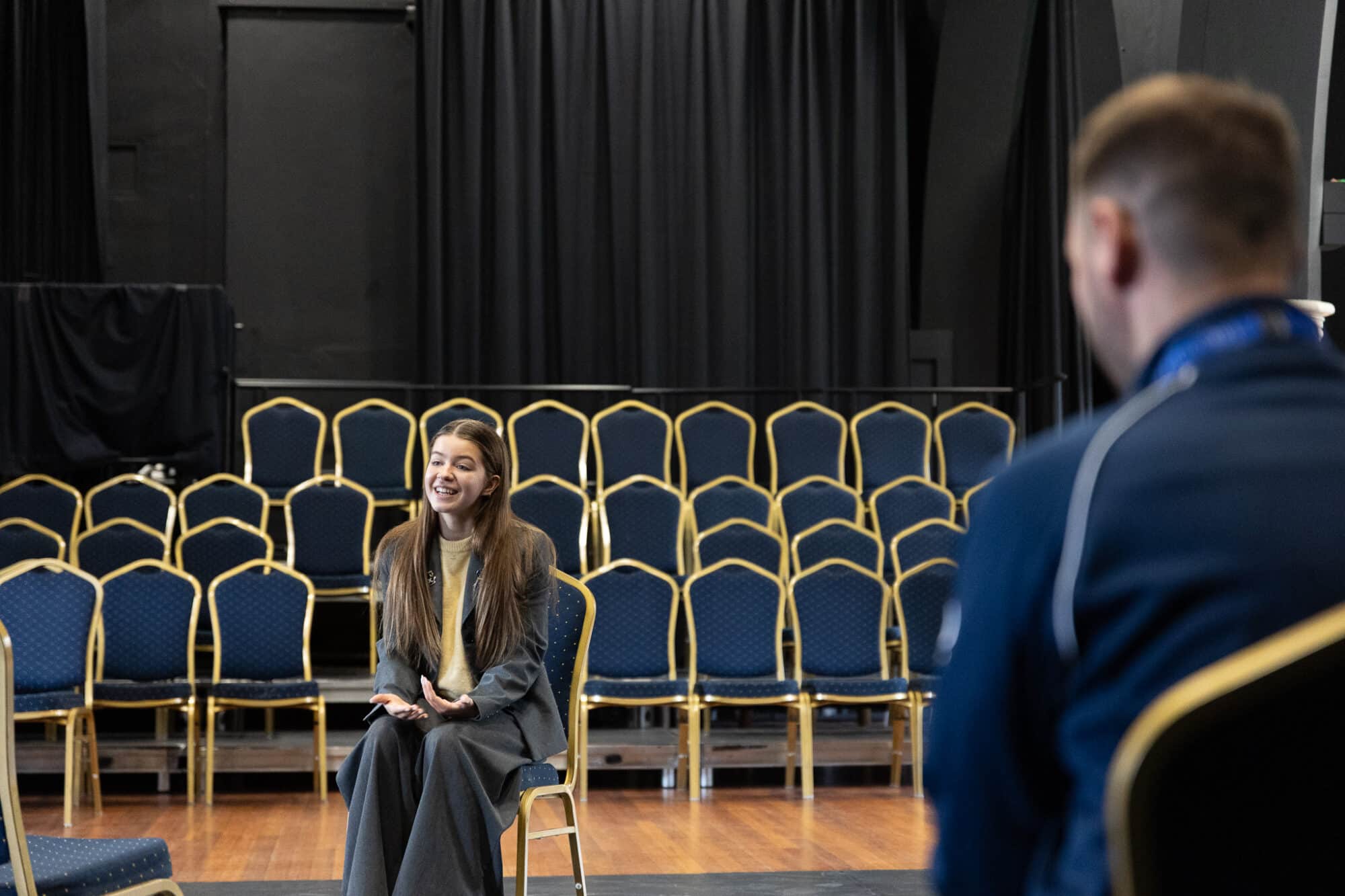
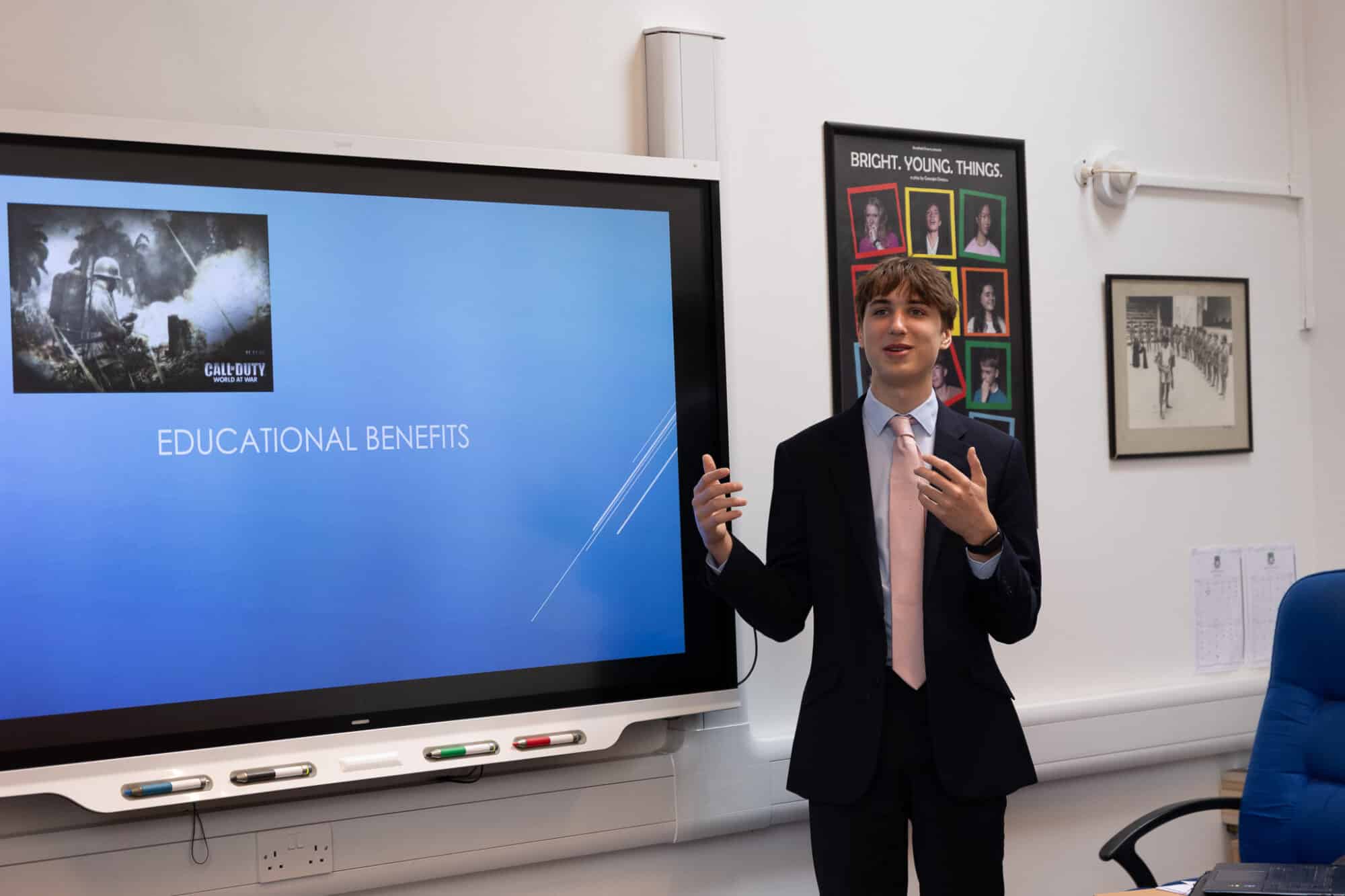
Speaking in Public lessons focus on developing the ability to construct and deliver speeches with clarity and confidence. Pupils learn how to organise ideas effectively, engage an audience, and use both voice and body language to enhance communication. At higher levels, learners are also introduced to impromptu speaking, encouraging them to think critically and respond confidently under pressure. These skills are particularly valuable for pupils preparing for IB presentations, where clear structure and delivery are essential.
LAMDA helped me with my presentations, interviews and also helped me find the courage to stand up in front of a crowd and share my views with the rest. I learned so much during the time I attended LAMDA lessons including the dos and don’ts of a powerful and interesting presentation; the right way to address a crowd, the art of manipulating pitch and voice and the importance of body language. I gained skills I would not have been able to get without their help. I will continue to use these skills throughout university and my career.
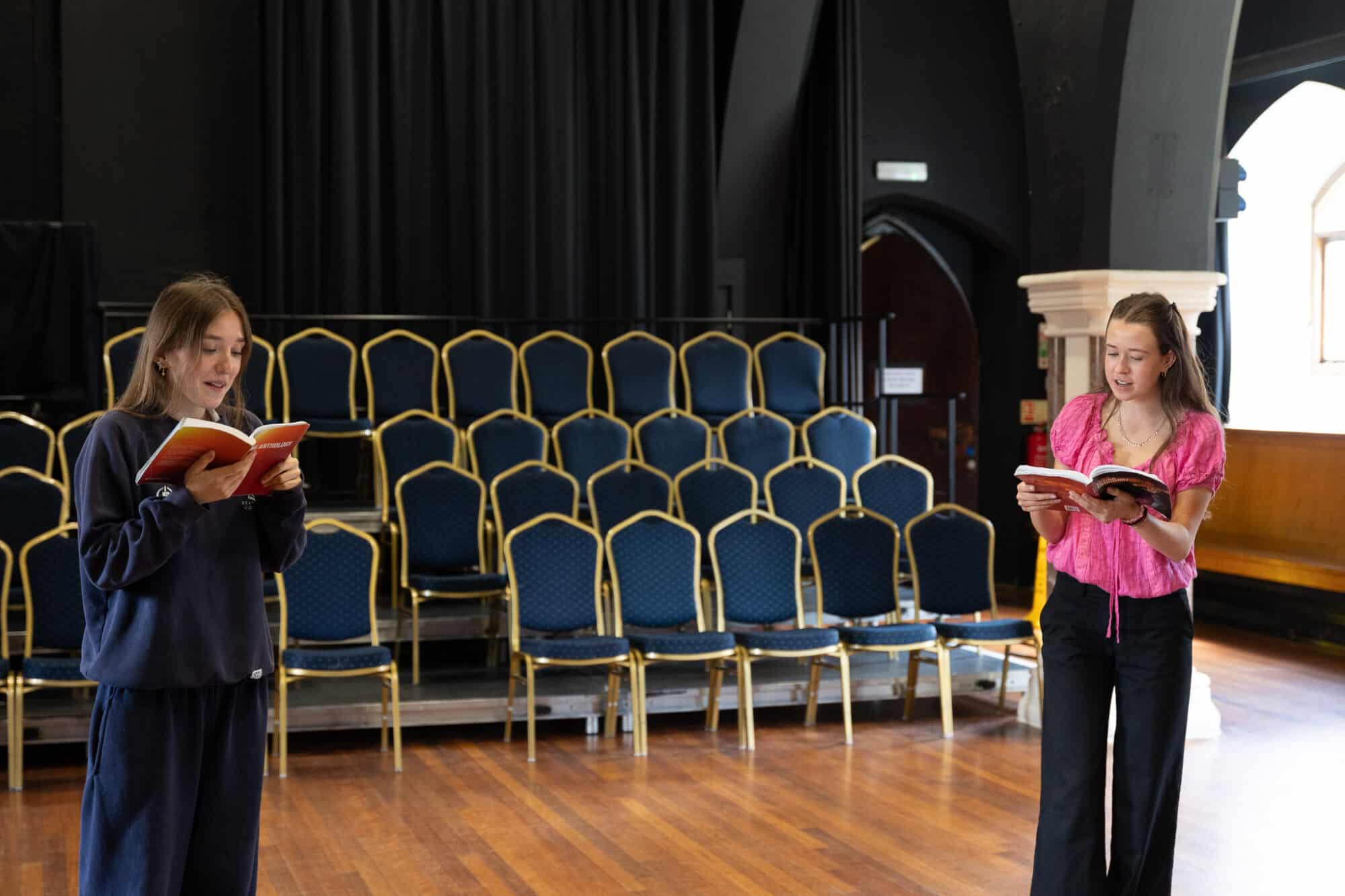
Acting lessons focus on the communication of dramatic text, helping pupils to develop creativity, empathy and self-awareness. Through character exploration and performance, pupils build strong vocal technique, physical presence and emotional understanding. These skills not only enhance performance ability but also support GCSE and A Level Drama studies.
Reading for Performance develops the important skill of reading aloud with clarity, fluency and expression. Pupils learn how to maintain engagement with an audience while working from a text, developing both interpretative and technical skills. This is a highly transferable skill, useful in academic presentations and professional environments.
Speaking Verse and Prose allows pupils to explore poetry and prose in a practical and engaging way. Through memorisation and performance, pupils develop vocal control, discipline and a deep understanding of literary texts. This pathway strengthens both communication skills and literary appreciation.
The Shakespeare syllabus offers pupils the opportunity to delve into the works of one of the most influential writers in the English language. Through performance, pupils explore Shakespeare’s language, characters and themes, developing both analytical and interpretative skills. This pathway is particularly beneficial for pupils studying English and Drama, as it bridges academic study with performance.
Across all pathways, LAMDA supports wider learning. It plays a valuable role in preparing pupils for IB presentations by building confidence and clarity in speech, and it can also contribute towards the Duke of Edinburgh’s Award (DofE) Skills section, providing a structured and rewarding way to demonstrate personal development.
LAMDA was a crucial part of my personal development at Bradfield. Whilst at the College I only had a minor involvement with the Drama Department, concerning myself more with House events. However, the education LAMDA provided wasn’t confined to the dramatic arts. My lessons and the examination process developed my elocution and general command of language, skills that I used in the debating chamber and have since utilised in university assessments and society AGMs.
What is LAMDA?
The London Academy of Music and Dramatic Art (LAMDA) has over 130 years of experience delivering world-class communication and performance qualifications. Its examinations are internationally recognised and aim to foster a love of literature, theatre and the spoken word.
Beyond subject-specific learning, LAMDA’s primary aim is to build confidence and equip pupils with essential life skills that will support them in all future pathways.
LAMDA Qualifications and UCAS
LAMDA Level 3 qualifications (Grades 6–8) carry UCAS tariff points, which can support applications to higher education.
| Attainment Level | Grade 6 | Grade 7 | Grade 8 | Shakespeare |
|---|---|---|---|---|
| Distinction | 12 points | 16 points | 30 points | 12 points |
| Merit | 10 points | 14 points | 27 points | 8 points |
| Pass | 8 points | 12 points | 24 points | 4 points |
UCAS points are awarded for the highest grade achieved within each discipline, with the opportunity to gain additional points across different syllabi. It is important to note that not all universities use the UCAS tariff system, and entry requirements may vary.
A Final Note
LAMDA lessons provide far more than exam results—they equip pupils with confidence, adaptability, and the ability to communicate effectively in any situation. Whether presenting in an IB assessment, contributing to DofE, performing on stage, or speaking in everyday life, these are skills that last a lifetime.
If you are interested in finding out more about LAMDA lessons at Bradfield, please contact the LAMDA Coordinator, Mr Ben Ashton, at bashton@bradfieldcollege.org.uk.